By Isaac AIDOO, in Accra, Ghana
- Ghana’s lithium
- A game changer or another resource curse?
THE narrative around the exploitation of Ghana’s hydrocarbons in the last 13 years has not been that positive. This is due to the fact that many are disappointed the sector has not produced the intended economic boom.
Even though there were incessant calls by the experts, coupled with media advocacy to protect Ghana from the ‘oil curse’ or potential adverse socio-economic effects of oil production, oil production has partly resulted in tendencies that have undermined democratic development, including politics of resource-patronage; excessive borrowing that has increased the national debt to unsustainable levels and culminated in Ghana running back to the International Monetary Fund (IMF) for a $3 billion Extended Credit Facility.
Ghanaian researchers say they have not found significant impacts of Ghana’s off-shore oil discovery and production on employment in the agricultural and service sectors where a large proportion of individuals below the poverty line are engaged.
From oil to LITHIUM
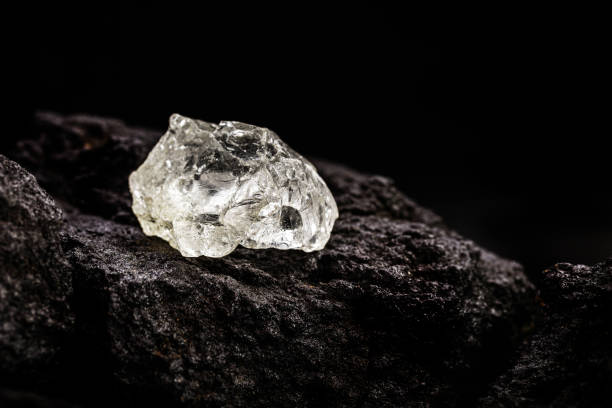
Just as it was with the discovery of oil, Ghana’s discovery in 2018 of lithium in commercial quantities was widely publicised to the excitement of many stakeholders. With further exploration ongoing, lithium deposits have been discovered in the Central, Western and Volta regions of the West African nation.
Lithium is a rare earth mineral that has gained prominence in recent times owing to the critical role it plays in the growing electric vehicle (EV) revolution which relies on lithium-ion (Li-ion) batteries.
Lithium is also widely used in the production of several electronic devices such as smartphones and computers. Hence, Li-ion batteries will be more in demand as mobile electronic devices like smartphones, tablets, laptops, and other wearable devices proliferate with growing access to the internet.
For a country with a long history of natural resource extraction dating back to pre-colonial times, (gold, bauxite, manganese, diamonds) the discovery of lithium came as a welcome surprise.
Investment advisory firm, C-NERGY Ghana Limited as part of its production of what it calls Thought Leadership Series has done in-depth research on lithium in Ghana and across other jurisdictions.
Felicia Akyaa Owusu, a senior analyst with the firm, discloses that Ghana’s proven 180,000 tonnes of lithium reserves ranks the country fourth place on the African continent behind DR Congo (3,000,000 tonnes), Mali (840,000 tonnes) and Zimbabwe (690,000 tonnes). Australia is currently the premier producer of lithium worldwide while Bolivia has the largest proven reserves of 21 million metric tonnes.
Ghana is set to begin mining its lithium deposits once Atlantic Lithium Ltd’s Ewoyaa Lithium project’s first mine comes on stream next year. A mining concession has been granted to Australia’s Atlantic Lithium Ltd which has partnered some locals via a JV to exploit the rich lithium deposits in the Ewoyaa (Mankessim) area of the Central region of Ghana.
According to analyst Owusu, Atlantic Lithium has obtained an exploration licence for the project, which gives the mining company access to 139.23 square km of the lithium-rich site. The company aims at a targeted first production of spodumene concentrate in Q3 2024, subject to receipt of a mining licence in Q3 2023 and the project meeting all other statutory requirements.
“The project comprises deposits in Ewoyaa, Abonko and Kaampakrom approximately 100 km south-west of Ghana’s capital Accra. The project was initially estimated to hold 18.9 million tonnes of probable petalite and spodumene ore grading of 1.24 percent lithium oxide (Li2O) containing 109 kilotonnes of lithium (109,000 tonnes) metal as of March 2022,” she disclosed.
Atlantic Lithium’s latest mineral resource estimate for the project however suggests the lithium deposit in the area is up to 30.1 million tonnes grading at 0.26 percent lithium oxide.
Two million tonnes are expected to be mined annually, which implies that Ghana’s lithium deposit would be completely exhausted in about twelve years if more discoveries are not made.
Electronic automobiles justify development of lithium
Countries around the world are adopting the G7 goal of cutting greenhouse gases by 40% to 70% by 2050 from 2010 levels and phasing out the use of fossil fuels by the end of the century. To achieve this, a two-pronged approach consisting of progressive legislation on one hand and incentivization of electric automobile manufacturers via subsidies on the other hand has been implemented. Significant subsidies for electric vehicles have resulted in the success of EV manufacturers Tesla and more recently China’s BYD.
The exponential growth in EV sales attests to the rapid rate of adoption of viable electric substitutes for petrol-fuelled cars such that tech giants Apple and Google are preparing to enter the fray with smart electric vehicles.
In terms of legislation, landmark policy decisions around the world include the EU’s recent complete ban on diesel and petrol cars by 2040 and the commitment of major automobile manufacturers like Toyota to produce hybrid and fully-electric vehicles only by 2030.
The rapid adoption of electric cars in developed economies has informed the policy shift in Western countries and China to gradually phase out fossil fuel-powered vehicles.
According to the International Energy Agency (IEA), demand for lithium could grow to more than 40 times current levels if the world is to meet its Paris Agreement goals. By 2040, Mackenzie estimates that the world will need 800,000 tonnes of lithium per annum for car battery production alone.
The strategic importance of lithium can therefore reasonably be expected to grow in lockstep with prices due to demand outstripping supply as the global electric vehicle market explodes. These altogether indicate that lithium producing countries and lithium-ion battery manufacturers are set to earn billions from lithium mines and battery factories for the next two decades at least, all other things being equal.
“It is against this backdrop that Ghana’s strategic positioning as regards the exploitation of its lithium deposits deserves scrutiny,” Owusu maintains.
Lithium fast gaining acceptability and growth
According to the analyst, the price of lithium has grown exponentially since the introduction of lithium-ion electric vehicle batteries in 2017 rising from $9,100 to $19,000 per tonne in January 2023.
Other uses of lithium include pharmaceutical use, production of alloys, fuel, desiccant, glass, ceramics and automotive parts to name a few. In 2012, the automotive sector accounted for 14 percent of the Li-ion battery market. By the end of 2016, this had grown to as much as 25 percent and presently exceeds 50 percent.
“It is projected that Ghana will generate about $4.8 billion over the life of the mine based on a 5% carried interest in the project. The carried interest of 5% is similar to the government’s interest in other decades-old mineral mining agreements which have failed to yield notable benefits to the state or surrounding communities thus far,” the C-NERGY analyst submits.
According to the US Geological Survey, at the current rate of global production, proven reserves may be exhausted in about 135 years if demand remains the same. In the more likely scenario of accelerating demand, proven reserves would be exhausted in less than 50 years.
The lithium value chain consists of mining companies, refineries and downstream electronics manufacturers. A considerable amount of value is added at the processing and manufacturing stages where lithium carbonate, lithium hydroxide and other lithium compounds are derived for end stage manufacturers who primarily make lithium-ion batteries as well as other products like pharmaceuticals. Some lithium rich countries like China and the US, have opted to participate in the value chain mainly at the refinery and manufacturer level thereby maximising value from domestic lithium extraction.
The alternative, the expert notes, is to take the path of least resistance as Ghana and some African countries like Congo are doing by carrying on business-as-usual with mining and exporting spodumene/petalite ore.
Under the Atlantic lithium deal, lithium – containing petalite and spodumene ore will be mined and exported, a continuation of a model that has denied the country value from its precious minerals like gold, diamond and bauxite.
She contends that the government’s policy orientation towards resource extraction without value addition has made Ghana a net loser in the extractive industry.
The laws governing the extractive industry grant the government of Ghana a maximum 10 percent carried interest in the rights and obligations of mineral operations at no cost. The government is free to participate further in any mineral operation subject to agreement with the mining company (rights holder). Moreover, the Ministry of Lands and Natural Resources may require mining companies to issue special shares to the Republic for no consideration. The rights accompanying the special shares shall be agreed upon between the mining company and the Ministry of Lands and Natural Resources.
“It is therefore puzzling why the government has not made moves to increase its stake beyond the initial allotment in any of the extractive industries to date. GNPC’s recent move to acquire the Pecan oil field is commendable; however, increasing the state’s stakes in the gold mining and emerging lithium industry may prove to be equally profitable ventures requiring less upfront financial investment,” notes senior analyst Owusu.
Nigeria, others are strategic about their lithium deposits
She maintains that countries like Nigeria, Mexico and Bolivia have applied novel approaches to lithium extraction for strategic reasons.
According to a news article published by The Nation, Nigeria recently rejected a bid by American electric car company, Tesla, to mine raw lithium in the country because it does not want foreign companies to mine natural resources without value addition via processing.
In a similar vein, Mexico has recently declared its lithium deposits as a strategic national asset and therefore prohibited private investment in the extraction of lithium. The government of Mexico cited the growing importance of the rare element vis-à-vis exploding demand as lithium is poised to be the “new oil” of the energy transition in coming decades.
For analyst Owusu, “if we must limit the role Ghana will play in the emerging green economy to lithium ore extraction and export, it is imperative that we maximise returns to the State by negotiating more significant carried and participating interest.”
The example of Bolivia which successfully negotiated royalties of about 11% in addition to a majority (51%) stake in its lithium mines (49% belongs to the concessionaire/operator) in 2019 is worth investigating.
No functioning gold refinery yet
After 133 years of gold exports, Ghana has neither a functioning gold refinery nor economic development directly traceable to gold export receipts. Even the major mining communities of Obuasi, Prestea and Tarkwa do not reflect any of the wealth produced from gold mining.
If Ghana is to realise lasting benefit from its extractive sector there is the need to increase the State’s equity in these assets. GNPC’s planned acquisition of the Pecan Oil Field represents a move in the right direction. However, there are many reasons to take advantage of the novelty of the lithium opportunity to secure a bigger piece of the pie which is bound to grow larger.
Challenges with the “Business as Usual” approach to exploiting Ghana’s lithium
Experts are worried about:
- the lack of transparency on some critical aspects of Atlantic Lithium’s mining concession;
- the failure to develop a comprehensive, modern framework to guide the nascent industry to maximise long-term value for the country;
- the Failure to position the country as a viable location for manufacturing of downstream lithium compounds and or lithium-ion batteries