By Pushan Dutt
The global economy will bear the consequences of an all-out economic war between the United States and China should the latter try to shut off Taiwan.
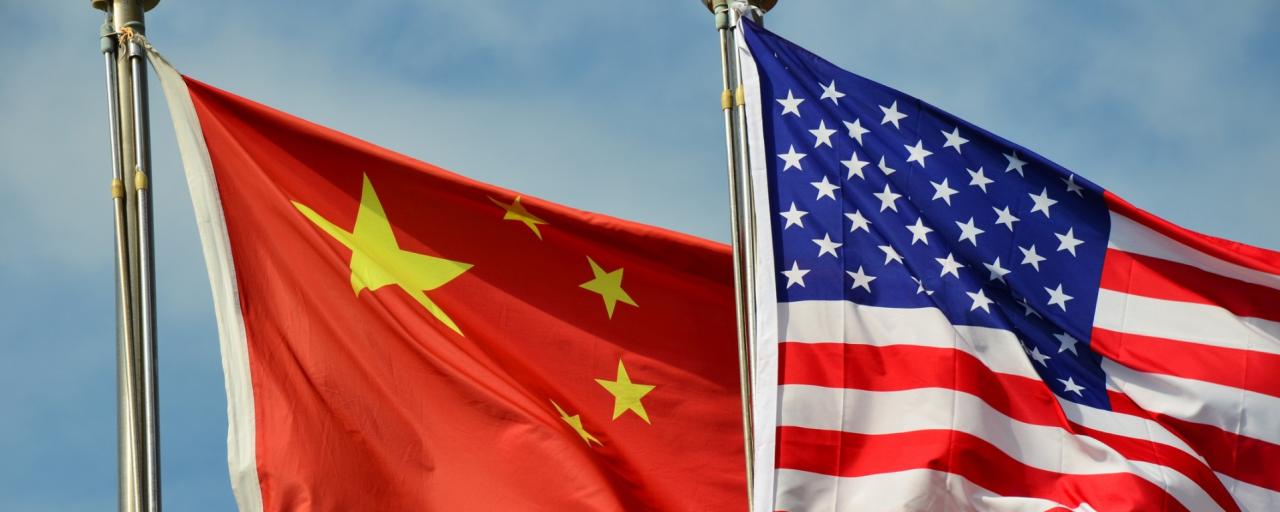
While it remains unclear whether Beijing would make good on its threat, the world must brace itself for an all-out economic war between the China and the United States should a Taiwan blockade come to pass.
A cold economic war, while not as devastating as a “hot” conflict, would be disruptive and costly for the global economy and almost all of us. Ships would have to divert from the Taiwan Strait, the primary route between East Asia and the rest of the world. Consumers and companies would pay more for goods that would take longer to ship. Like in the Russia-Ukraine conflict, governments and multinationals would be forced to take sides and bear the consequences as the US and its allies impose sanctions on China.
China, after all, sits at the heart of the global economy. Commodity prices have been falling as a result of faltering growth in the world’s second-largest economy due to strict Covid lockdowns and a crisis in its real estate sector. The world also looks to China and the US to cooperate in order to tackle critical global challenges including climate change, AI ethics and pandemics.
But perhaps the biggest losers would be the two superpowers themselves. The US and China remain connected by a dense web of mutual dependence despite their “decoupling” and years of hawkishness by Washington towards Beijing. The two countries are still each other’s top trading partner – an estimated US$650 billion worth of goods flowed between them last year. Nearly 350 US multinationals run operations in China where they employ some 2 million workers. A cold economic war would be catastrophic for both sides.
Trouble at home
Next month may prove pivotal to how simmering tensions play out. The Chinese Communist Party will hold its twice-a-decade congress, during which President Xi Jinping is expected to be endorsed for an unprecedented third term. But even though China’s most powerful leader since Mao Zedong has long signalled his determination to restore China to its rightful place on the world stage, the real decider of the crisis may well be China’s internal problems.
The Chinese economy is struggling to grow at levels necessary to generate enough jobs for millions of young Chinese graduates. Traditional fiscal and monetary policy tools no longer do the trick. The International Monetary Fund now predicts only a 3.3 percent expansion this year (with ripple effects on region trading partners), much lower than Beijing’s own target of 5.5 percent – the lowest since 1991. Conversely, unemployment among Chinese youths aged 16 to 24 has spiked to a record 20 percent.
Underlying the sluggishness is the collapse of a housing market that had been a driver of growth, a crackdown on the tech sector, and periodic pandemic lockdowns, all of which are tied to the Xi administration’s policies. Whether Beijing resolves these issues internally or plays the Taiwan and nationalistic card to divert people’s attention will be key to developments in the Taiwan Strait.
Competitive interdependence
To keep the peace both China and the US would have to reframe their relationship as one of competitive interdependence. No doubt they compete in some realms but in others they are mutually dependent. Competition should not be the sole or defining attribute of the relationship as it skews the picture and creates a zero-sum mindset where each side perceives the other’s every action as threatening even if it does not affect its own vital interests.
With their interlinked economies and inevitable collaboration on global challenges, the US and China ought to recognise that neither can impose its will on the other. The US does not get to decide China’s future, its regime or the size of its economy. Furthermore, both countries must be realistic about their differences in governance style, economic model, values and global alliances. Each side has tremendous internal problems and should focus on solving their own problems.
Keeping lines of communication open between Xi and his US counterpart Joe Biden and at all levels of government will be critical. This is where countries like Singapore have an important role to play.
Singapore as peacemaker
Singapore is one of the closest bilateral partners of the US in South-east Asia while also maintaining deep historical ties to China. For decades the city-state has skilfully negotiated a delicate balance in its relationships with the two powers. Successive Singaporean prime ministers have served as a valuable sounding board for US leaders and the foreign policy establishment; Singapore’s foreign policy wonks have far deeper insights into China than any foreign policy hand in Washington.
Going forward, Singapore should add a dose of realism to US-China tensions. It can emphasise that both parties have everything to gain from keeping the status quo and everything to lose from going to war. It should emphasise cooperation over competition. Singapore can tell the US that it does not get to impose its will on China and convince China that it has benefitted immensely from the current world order and stability is in its own best interests. Cooler heads can yet prevail.