By Ken Amaeshi
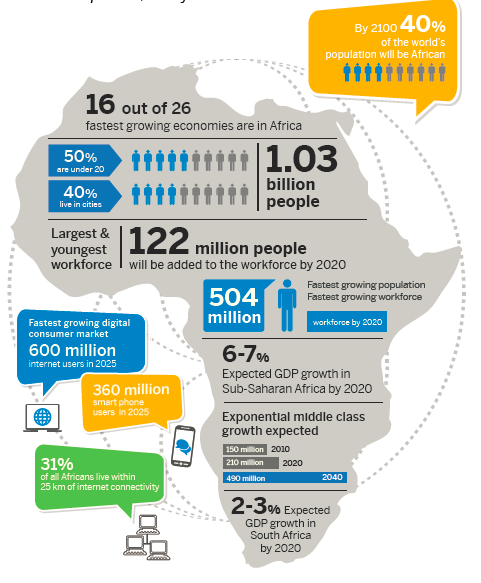
There is a growing interest in entrepreneurs as the solution to contemporary global challenges—climate change, poverty, and disease. This view of entrepreneurs is also awash in Africa. Back in 2011, a number of books and articles proclaimed that Africa was emerging as a major player in the world economy. Four years later, the continent’s GDP per capita has increased significantly, but the gains have gone largely to elites and foreign investors. Much of the recent investment in infrastructure, rather than opening new avenues of growth, merely reinforces Africa’s longstanding reliance on exporting natural resources. And as the United Nation’s 2014 Human Development Report indicates, most Africans have seen little improvement and continue to live in harsh poverty.
We have, however, made progress in understanding what has held Africa back. Through our study of business leaders and entrepreneurs in Africa, we have identified three main classes of entrepreneurs (or entrepreneurial mindsets) in Africa: the survivalist entrepreneur, the success-driven entrepreneur, and the society-minded entrepreneur.
Survivalist entrepreneurs in most African countries are mainly driven by survival instincts to avoid threats and challenges (such as poverty, diseases, unemployment, and corruption) orchestrated by weak institutions, poor infrastructure, under-developed markets, and bad governance. These entrepreneurs are often reactive, short-term-oriented, and helpless. They measure their survival on a daily basis, and the slightest shock—such as a fluctuation in exchange rates, drop in commodity prices, or change in government policies—can send them packing. They are often unable to think beyond themselves and their needs.
They blame others and see themselves as victims of a failed socio-economic system.
Conversely, success-driven entrepreneurs creatively exploit the opportunities created by the so-called failed socio-economic systems. They are usually innovative and may have access to governments and natural resources. They wield power and exploit the system for private gains. They are the quintessential entrepreneurs of the literature and developed economies that are driven by self-interests and wealth creation. They are often focused on their success. Most of the time, they do the minimum required by law, and are usually ambivalent toward societal problems and challenges, which they (perhaps fairly) see as the responsibilities of governments and NGOs.
The third type of entrepreneur, society-minded, is not only success-driven, but also impactful and purpose-driven.
They seek to positively address the ills and challenges of society through their enterprises. Like success-driven entrepreneurs, they are innovative and imaginative. However, unlike the former, they are driven by enlightened self-interest. They recognize the societal challenges and risks around them, but are never deterred by them. Instead, they see them as opportunities. In that regard, one can argue that they are optimistic and courageous, because they can see opportunities where others see risks and frustrations. They have a positive image of themselves and try to be the change they want to see in Africa. They are long-term-oriented and patient.
For decades, the World Bank and other institutions believed that major investments in infrastructure would jumpstart the economy and drive progress. Now we know that although direct investments are important, they may not be as important as impactful entrepreneurs who are purpose-driven and socially aware of their environments. These are the entrepreneurs Africa needs right now, given the challenges of entrepreneurship in Africa. Unfortunately, there aren’t many of them.
Africans need not just the structural foundations of growth, but also the motivation to do the hard work of purposeful entrepreneurship. Decades of colonial rule, followed by paternalistic governments and well-meaning foreign assistance, have left too many Africans passively waiting for others to bring about development for them or to engage in survivalist and self-centred entrepreneurship.
And Africa is hardly such a special case. Westerners tend to assume that people naturally pursue economic development to escape poverty (survivalist entrepreneurship epitomizes this in saying: “Necessity is the mother of inventions”). But external pressure often plays a role in jumpstarting these efforts. One reason industrialization took off first in Western Europe, for example, was because there was ongoing competition among relatively small countries for military pre-eminence that only development could fund. Japan likewise began to invest aggressively in commerce only after Western warships arrived with advanced technology. Elites eager to build up the nation were more likely to allow good commercial institutions than their counterparts in more complacent countries.
No doubt entrepreneurs are critical to social progress. However, Africa must develop according to notions of place and heritage that are common to much of the continent, and it needs entrepreneurs who can relate to the tenets of Africapitalism—a new economic philosophy for Africa championed by Nigerian banker and entrepreneur Tony Elumelu. According to Elumelu, Africapitalism “describes the process of transforming private investment into social wealth.” Entrepreneurs need cultural, as well as structural, foundations for growth. The more they can take intellectual and practical ownership of their development, the more they’ll be motivated to accept the risks of entrepreneurship.
We live in a much more peaceful world now (despite the headlines), but there are positive ways to motivate Africans forward. Important to this effort will be framing socio-economic development in terms that resonate with local cultures and values, including a sense of progress and prosperity, parity and inclusion, peace and harmony, and place and belongingness.
These values are core to Africapitalism.
That’s not to say that Western investors should stay away from Africa or that all philanthropy must be homegrown.
Africa still needs outside capital and expertise, and lots of it. Yet we’ll know that Africa is truly rising not when bigger, glitzy projects arrive, but when there is a flowering of a multitude of impactful entrepreneurs and enterprises. There is abundant research evidence suggesting that entrepreneurs who pursue collective interests to create economic and social wealth perform better than other types of entrepreneurs. This is where Africapitalism comes in as a new economic philosophy for Africa and why Africa needs society-minded entrepreneurs to address her many socio-economic challenges.