SENEGAL, A COUNTRY ONCE lauded as West Africa’s most stable democracy and a beacon of political stability, is in turmoil. The present wave of political crisis which has been rocking the country since 2022 seems to have come to a head in these past two weeks. This is one country that, for its history of democracy and record of internal stability, has become a regional base for many international and multilateral organisations. But, since the recent outbreak of protests that have turned violent, the windows of many of those multilateral organisations have been shuttered and their offices closed for safety reasons. Condemnation and calls for restraint have been pouring in, particularly in recent days from the United Nations, the Economic Community of West African States (ECOWAS) and by African Union Commission chairman, Moussa Faki Mahamat. Apart from the long-term but low grade protracted Casamance resistance – mostly restricted to the southern part – Senegal has been largely and relatively calm and stable politically and economically, at least since the post-Diouf years. But the past two years have been different as they have been characterised by protests and agitations that have political colouration. The brutal crackdowns on political opposition by the government have failed to suppress them or to force them into submission. Rather, the camp appears even more resolute to take on the government.
During the protests in June a year ago, there was another twist in Senegal’s political atmosphere that betrayed the democratic façade of the present government. The brutal treatment meted out to the protesters by the government caught the attention of the United Nations Special Rapporteur on Freedom of Association as well as Amnesty International, which condemned what was described as arbitrary arrests during the protests. The “repeated bans on demonstrations, together with the deaths of people during such protests” were considered as a “real threat to the right to protest in Senegal.” All of these began to happen and had been sustained under a democratically elected Macky Sall who purportedly intends to run for a third term in office. President Sall, who is presently in the eye of the storm, was a beneficiary of the protests against President Abdloulaye Wade’s third term bid in 2012. The scenario bears some similarities with the political crisis that occurred in Côte d’Ivoire over a decade earlier. Allasane Ouattara who earlier told the Senate and National Assembly in March of 2020, that he would not run again for a third term, promising to “transfer power to a young generation,” had named his ailing Prime Minister, Amadou Gon Coulibaly, as his successor, in what could be construed as a subterfuge which subsequent events were to confirm. After Coulibaly died of a heart attack in July, President Ouattara announced that he would make the “true sacrifice” of running again, a decision that triggered outrage, leading to violent protests against his candidacy across the country.
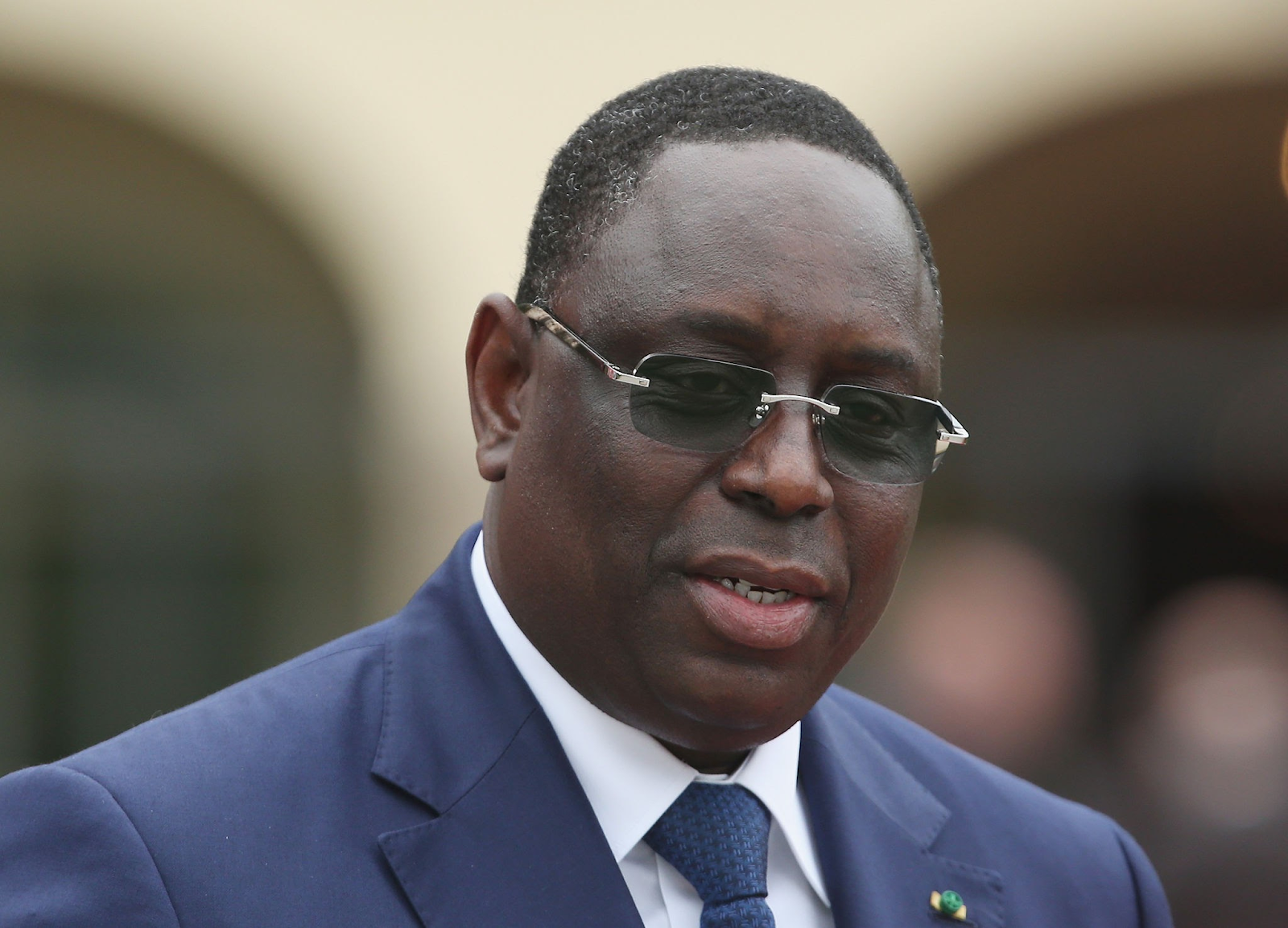

Ouattara got to power after the successful dislodgement of his predecessor, Laurent Gbagbo, who stubbornly held on to power, refusing to concede defeat. Ouattara, who was a beneficiary of popular outrage against Gbagbo, now became fixated on the ambition to continue in power beyond the constitutional provisions of two terms. He had to use brute force and instruments of the state to suppress the dissents as he launched the campaign and change in constitution that brought him back into office for the third term later in the October election of 2020. The calm in polity in Côte d’Ivoire after Ouattara’s third coming may at best be superficial as old discontent remains under a veneer. Senegal’s own deceptive leadership stunt is also about to unfold. With Macky Sall as the AU chair while Senegal’s crisis was brewing cuts a bad image for him as a president. For him to be associated with instability in his home country under his watch sends a bad message to the continent-wide and the international community. Sall himself does not seem any different from the poet president Léopold Sédar Senghor who ruled the country for 20 years with vice grip and banned opposition parties. Under Sall, opposition members have been banned, jailed or threatened since his bid for a second term in 2019. An electoral law had been enacted in 2018 that played a key role in this exclusion game.
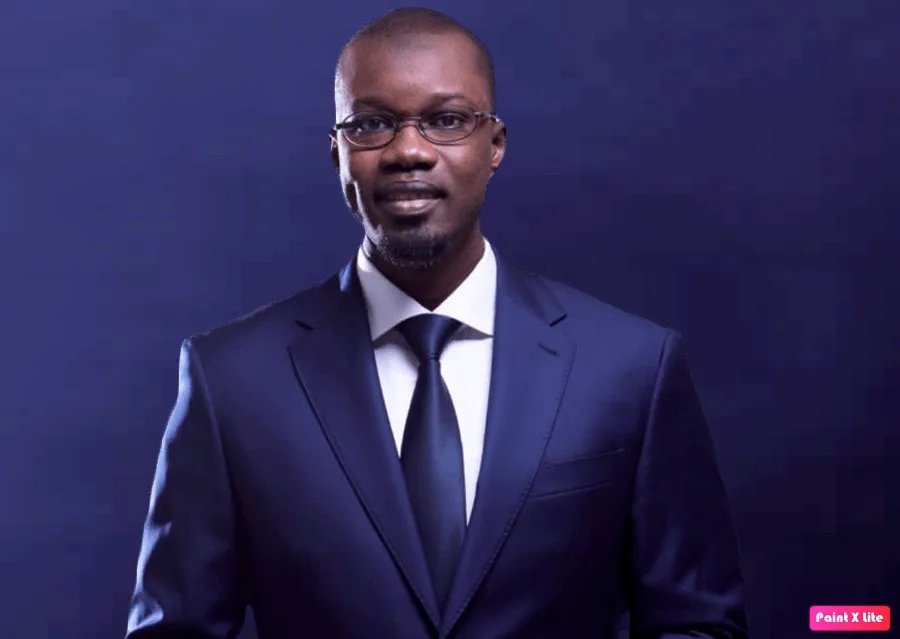
What sparked off a new wave of protests began in 2021 when an opposition leader called Ousmane Sonko was charged with rape. Sall appeared ready for a showdown as Sonko’s followers have taken to the street in protest before on previous Sonko’s legal and political challenges. Such protests have been met with official security measures. Although Sonko was acquitted on charges of raping a woman, he was nonetheless convicted earlier this month in absentia on charges of corrupt acts and handed a sentence of two years in prison. This decision has led to an upsurge in violence and riots in which the casualties have risen in number to over a dozen dead. There have been reports suggesting that about 500 protesters have been arrested. The protesting supporters of Sonko are aware that he is considered President Macky Sall’s main competition and that Sonko has persuaded Sall to make a public declaration that he won’t seek a third term in office. The onslaught against Sonko has therefore been interpreted as a strategy to prevent him from running in the 2024 presidential election.
African leaders seem adept in using the instruments of the state to weaken credible opposition to their rule. Such instruments, used in the breach, could be an abuse of constitution – as done by Ouattara – or the use of the gun as is currently the case in Sudan. The current war that has disrupted the socio-economy of Sudan is a product of single individuals’ selfish political ambitions, implemented by the use of brute and lethal force in which over 100 innocent civilians have been killed. Natural resources extraction has been mentioned as a major issue in many cases of political upheavals in Africa. In Sudan, in particular, extraction of gold has been identified as a motivation as the head of Rapid Support Forces has been accused of illegal involvement and self enrichment through informal mining activities. It has been surmised that the current crisis in Senegal also has some links with the resource economy that is gaining more relevance in the country. Recently, Senegal has become a new alternative source of oil and natural gas for Europe in the wake of its newly discovered gas deposit.
The problem of not letting go of power by African political actors is a problem that needs an urgent solution. It is doubtful if the African Union (AU) can truly be led on the path of unity, economic prosperity, stability and peace by a leader that cannot maintain these attributes in his own country. Although President Azali Assoumani of the Union of Comoros, took Over from Macky Sall as successor during the AU meeting of the heads of governments in February, the current political turmoil in Senegal casts aspersions on the leadership of Sall and calls to question his democratic credentials. As a sovereign nation, it is difficult to force any decision on Senegal from outside. But more worrisome is when the man at the helm of a troubled country also doubles as the leader of a continental inter-governmental body. Already, the protests that swept the country since March 2021 has undermined its reputation as a stable democracy. While a politically difficult decision will have to be made by Sall, it appears like Sall is not choosing his battles rightly, judging from unfolding events. The use of heavy handed interventions can only worsen Senegal’s already heated up polity. In March 2022, the Movement of Democratic Forces of Casamance (MFDC) rebel bases next to the Gambian border came under attack by Senegalese army aiming also to combat illegal logging and wood trafficking, forcing 691 Senegalese people to seek refuge in Gambia. Last August, Senegal signed a preliminary peace agreement with a faction of the MFDC, committing them to disarm and allowing refugees to return home. How effective that has been should be subject to thorough scrutiny. The threat to freedom of assembly in Senegal is a bad omen for a country that is ruled by a government that claims to be democratic. The refusal of Sall’s government to obey
the March 31 decision of the ECOWAS Court of Justice stating that Senegal’s Ministerial Order number 7580 of July 20, 2011, violates the rights to freedom of expression and peaceful assembly smacked of dictatorship. ECOWAS Court, in that decision, had asked the Senegalese authorities to repeal the obnoxious order which prohibits “demonstrations of a political nature” in the centre of the capital, Dakar. It remains unknown whether the Sall government had agreed to implement the ECOWAS Court judgement till today.
Prohibiting several demonstrations led by the opposition in a build up to a consequential election as done by the Sall administration in June 2022 was clearly anti-democratic and political persecution. On one of the occasions, security forces arrested at least three opposition leaders and prevented others from leaving their homes, with the aim of preventing a banned protest in Dakar the same day. Dethié Fall, the national representative of the opposition parliamentary list, was given a six-month suspended sentence for “participating in an unauthorised protest,” This year, however, has witnessed months of sporadic demonstrations before violent protests erupted once again immediately after Sonko was tried and sentenced in absentia to two years in prison on charges of “corrupting” youth. For its relevance, it is worth emphasising again that the verdict has been construed as a political ploy to prevent Sonko from participating in Senegal’s presidential elections next year. This approach to weakening opposition is an anathema to the ideals of democracy.
The current crisis in Senegal is therefore one of those orchestrated by selfish leaders who are bent on remaining in office despite constitutional provisions. To recap, it is worth reminding other pro-democracy political activists and political actors that African leaders have a predilection for hanging on to power against established norms and rules. Sall, for instance, was previously an outspoken proponent of term limits, who came to power in 2012. His strategic silence on his intentions about the 2024 presidential elections notwithstanding, political opponents believe that he intends to run for a third term in office, despite the country’s constitution, ignoring people’s anger and frustration and young people’s hope in Sonko as the last chance to potentially topple Sall. It is also evident that the influence of France on Senegal is waning with a lot of anti-French discourse and a lot of pro-nationalist discourse, currently prevalent among the youth. It has become both an imperative and a matter of great urgency to redefine political leadership and democracy in Africa with clear-cut national development plans that prevent political leaders from transforming into anti-people despotic leaders. Africa needs to move forward, but political leaders should stop standing its way of progress.