BY ISAAC AIDOO, IN ACCRA, GHANA
IN the evening of December 4, 2022, Ken Ofori Atta, Ghana’s finance minister, announced on national television that holders of Ghana’s domestic debt were from Monday December 5, 2022 being invited to voluntarily exchange approximately GH¢137 billion of the domestic notes and bonds for a package of New Bonds to be issued by the Republic.
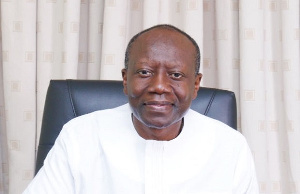
The country’s debt servicing is now absorbing more than half of total government revenues and almost 70 percent of tax revenues, while its total public debt stock, including that of State-Owned Enterprises and all, exceeds 100 percent of Ghana’s gross domestic product (GDP).
The debt exchange programme is to help restore Ghana’s capacity to service her debt, deal with high interest payments on the public debt, as part of a four legged approach adopted by the government in its 2023 budget aimed at alleviating the pressures on the national budget and restoring debt sustainability.
Dubbed, ‘The Domestic Debt Exchange,’ it involves an exchange for new Ghana bonds with coupons of a longer average maturity.
According to the ministry’s statement, the domestic debt operation involves an exchange for new Ghana bonds with a coupon that steps up to 10 percent as soon as 2025 (with a first interest payment in 2024) and longer average maturity. Existing domestic bonds as of 1st December 2022 will be exchanged for a set of four new bonds maturing in 2027, 2029, 2032 and 2037.
Predetermined allocation ratios are as follows: 17% for the short bonds, 17% for the intermediate bond, 25% for the medium-term bond and 41% for the long-term bond. The annual coupon on all of these new bonds will be set at 0% in 2023, 5% in 2024 and 10% from 2025 until maturity. Coupon payments will be semi-annual.
External debt repayments suspended
Meanwhile, Ghana has since followed this with a suspension in debt service payments on certain categories of its external debt, pending an orderly restructuring of the affected debt obligations.
A statement issued by the finance ministry described the move as an additional emergency measure necessary to prevent a further deterioration in the economic, financial and social situation in Ghana. The statement revealed that financial resources, including the Central Bank’s international reserves were limited and needed to be preserved, “at this critical juncture.”
Fight to save workers’ pensions
The Trades Union Congress (TUC) and affiliate labour unions have announced public sector workers will from December 27 2022 embark on a sit-down strike after it accused the government of failing to heed to its calls to exempt the pensions of workers from the Debt Exchange Programme.
Experts, analysts on Debt Exchange Programme
Raziel Oben-Okoh, a senior lecturer in public accounting at the Ghana Institute of Management and Public Administration (GIMPA) says, “as a Fund Manager myself , I am particularly against the 2023 zero-interest because I get my fund management fee due to the returns that I am able to get for my clients.
“Zero interest is too harsh for comfort. I think the government should provide something better. If the 2023 starts from at least the 5% and projected upwards across the other tenures it would have been better”.
Notwithstanding, the lecturer cum fund manager said Ghana will be a big loser if the IMF bailout does not go through so “we need proper education to get all hands on deck starting from the government itself.”
Oben-Okoh demanded, “we need to see more serious fiscal cuts from the politicians and the government as a whole. There must be equity because the pensioner should not be short-changed to favour the high net-worth individual investors who have invested directly as individuals on the CSD because they are excluded. It is important to note that we manage retail funds on behalf of individuals and therefore any cut affects the individual directly.”
For the lecturer and fund manager, the good thing about the new bonds was in the area of receiving multiple payments of the principals within 2 to 5 years because “it allows you to reinvest the cash inflows from principal repayments as opposed to the normal yearly repayments.”
In Lagos, Egie Akpata, investment banker, debt market expert and chairman of Skymark Partners in a short take to Business A.M. described the development coming out of Ghana as a “disaster,” adding that the plan is “great for the government, not great for everyone else.”
He further said what will play out is that “market price of the bonds will crash since they pay well below the market yield.”
Investment banking firm, C-NERGY, noted that even though the government had anticipated the debilitating impact of the debt restricting exercise on Ghanaians amidst current economic difficulties, the following effects were expected.
-
It will affect the performance of the financial sector, particularly the banking industry. The quality of banks’ capital and their profitability will drop in the short term.
-
Confidence in the financial sector will drop further. Domestic depositors would be wearier about depositing their money in these banks and investing their surplus capital. International financial sector partners (particularly correspondence banks) are likely to cut back on their exposure to Ghana’s financial system.
-
International capital market interest in Ghana will dwindle further. There may be further capital flight as international investors may decide to cut their losses and hold off any further interest in domestic bonds.
-
Pensioners should expect reductions in returns on their Tier 2 and 3 investments managed by Pension Fund Managers. The Social Security and National Insurance Trust (SSNIT) should expect returns on its exposure to GoG bond holdings to drop.
-
Collective Investment Schemes (Mutual Fund and Unit Trusts) will suffer. Funds Under Management will drop as investor panic withdrawals in the short term will happen.
-
Ultimately, it will take a significant amount of time to restore confidence in Ghana’s financial system. Just when the recent bank crisis headwinds were abating, investors have been hit with this.
GH¢15bn Ghana financial stability Fund set up
Meanwhile, to support and encourage full participation of financial institutions in the voluntary Debt Exchange programme, Ghana’s Central Bank announced the establishment of the Ghana Financial Stability Fund (GFSF) worth GH¢15 billion.
The fund will provide liquidity to financial institutions that participate fully in the debt exchange.
A statement issued by the Financial Stability Council of the Central Bank said, “all financial institutions (banks, savings and deposit-taking institutions, pension schemes, collective investment schemes, fund managers, broker/dealers and insurance firms) that fully participate in the debt exchange could access the Fund for augmented liquidity support, with effect from the date of completion of the debt exchange.”
The finance minister, not oblivious of the consequences of a botched deal with the IMF due to failure on Ghana’s part to successfully restructure its debt, has been urging actors and stakeholders – labour , financial institutions and the general public to support the debt exchange programme.
Since the government changed course and turned to the Bretton Woods lender of last resort, Ofori-Atta has pointed out that the government’s commitment to Ghanaians and to the investor community was to restore macroeconomic stability in the shortest possible time and enable investors to realise the benefits of the Debt Exchange.
It is hoped that the government would, as some experts have suggested, go about the problem in a more tolerant way, reaching out and engaging the agitated so they can come along.