Apple’s first iPhone was released 10 years ago this week — on June 29, 2007. While it wasn’t the first smartphone, it leapfrogged far beyond the competition and launched the mobile revolution. Few industries or societies have been left unchanged.
Here are 10 charts that show some of the profound effects the iPhone-led — and Google Android-fueled — mobile boom have caused over the past decade.
1. The iPhone put the internet in everyone’s pocket
When Steve Jobs first unveiled the iPhone, he described it as a “a revolutionary mobile phone,” a “widescreen iPod with touch controls” and a “breakthrough Internet communications device.”
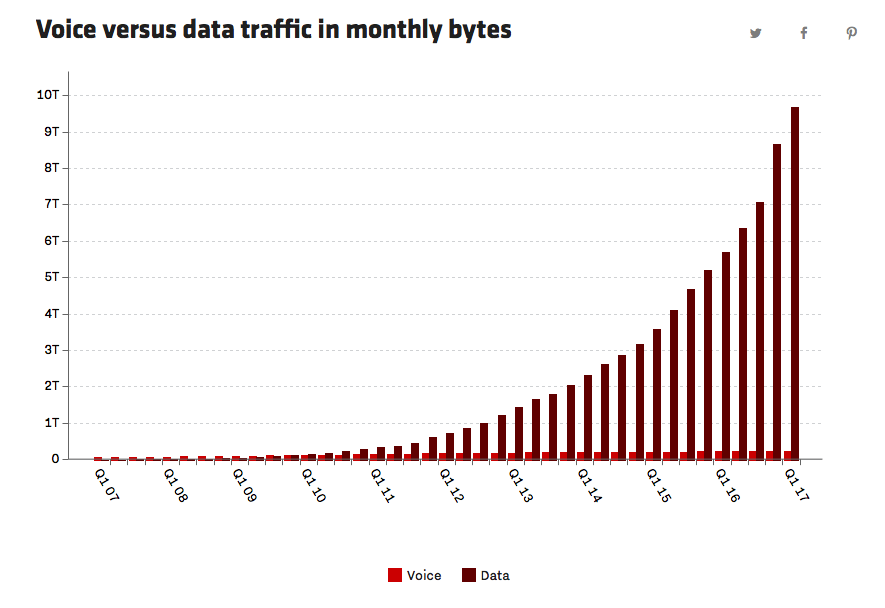
While it’s called the iPhone, it’s that last part — the internet device — that has had the biggest effect on the world. That’s most obvious in this Ericsson chart showing the usage of mobile voice — relatively steady growth — and exploding mobile internet traffic — boosted by iOS and Android apps, photos and especially video — over the years.
2. The iPhone transformed photography from a hobby to a part of everyday life
Smartphones, along with their attendant photo-editing apps, put good cameras in everybody’s pockets and we all became prolific photographers. The simultaneous rise of social media platforms, in turn, gave us a place and a reason to post our photos.
This year, 1.2 trillion digital photos will be taken worldwide, and most of those — 85 percent — will be taken on phones, according to market research firm KeyPoint Intelligence (formerly known as InfoTrends). That’s up from the 400 billion digital photos taken in 2011.
/cdn.vox-cdn.com/uploads/chorus_asset/file/8712667/Iphone_10_photos_01.png)
3. The iPhone App Store changed the way software was created and distributed
Apple launched its App Store in 2008 — a year after the iPhone’s launch — with 500 apps. Now there are 2.1 million on the App Store and 3.4 million on its Android competitor Google Play, according to app measurement company App Annie.
Apps have turned phones into everything from a bank to a motion-sensitive video game device. Indeed, a warehouse of nostalgia could be stuffed with the everyday items that smartphones replaced: Maps, flashlights, clocks, scanners, video cameras, calendars, calculators, computers, iPods and more.
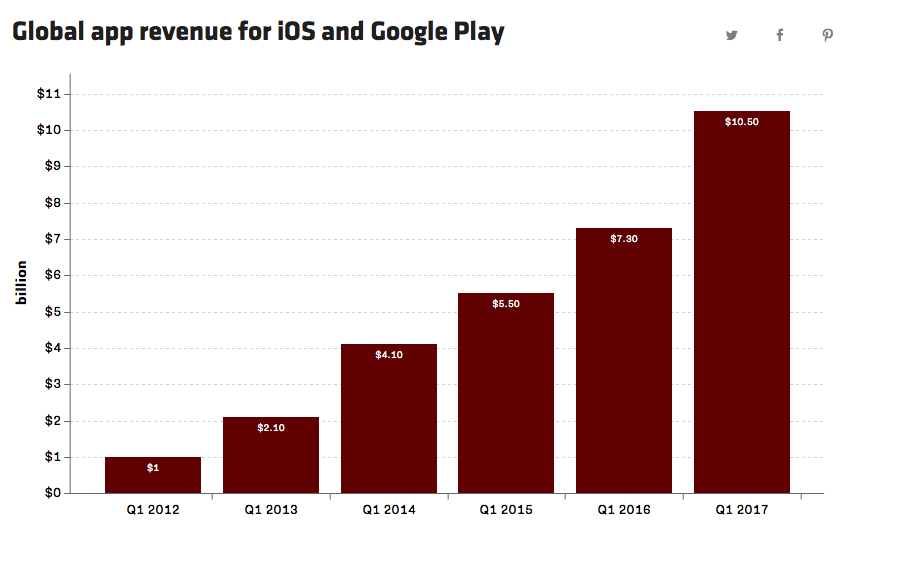
In the first quarter of 2017, the combined publisher revenue for downloads and in-app purchases in the App Store and Google Play grew to $10.5 billion — not including revenue from in-app advertising or commerce, such as Amazon purchases or Uber rides.
4. iPhone apps changed everything, even how people work
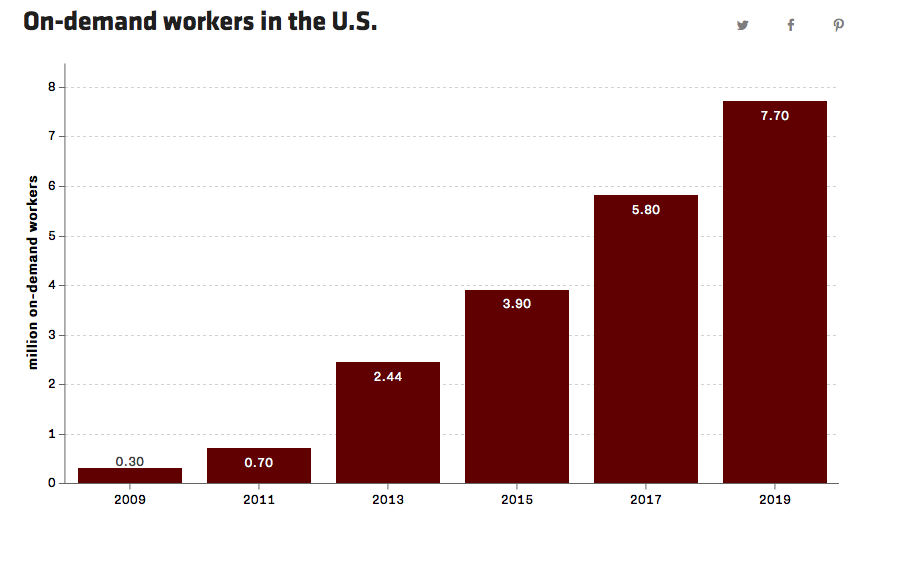
On-demand work began with the first internet boom in the late 1990s. But their numbers didn’t become substantial until the advent of smartphones with GPS chips and on-demand marketplace apps like Uber, according to Steve King, a partner at Emergent Research, which collects on-demand workforce data along with tax-prep company Intuit.
Currently there are about four million on-demand workers in the U.S., a number that is expected to double in the next four years.
5. iPhones have changed little things, too, like gum sales
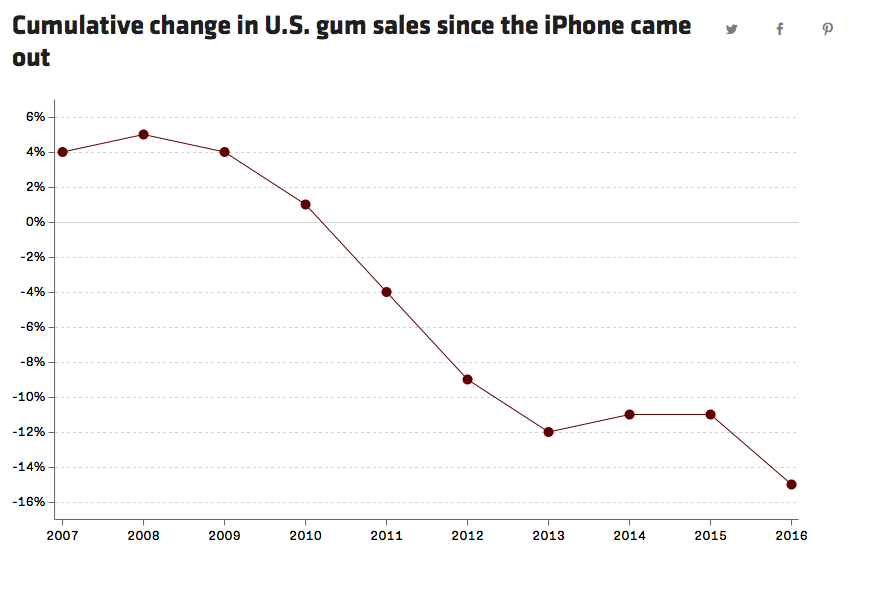
Supermarket checkout lines — strategically stocked with magazines and candy — were for a long time a major point of sale for gum. Consumers waiting on line to pay would look around and make impulse buys. Now, however, we’re so consumed with our phones that we’re not reaching for a pack of gum to stave off our boredom. Indeed, gum sales have declined 15 percent since 2007, the year the iPhone came out, according to market research firm Euromonitor International.
6. iPhones became our fastest-growing obsession — not always for the better
People spent more time consuming media last year than ever before thanks to smartphones. Socializing, which used to be a non-media activity, now occurs on social media and over mobile connections. Time spent on the mobile web has also cut into other media activities, such as reading physical papers and watching TV.
/cdn.vox-cdn.com/uploads/chorus_asset/file/8726083/iphone_10_consumption_01.png)
7. Shifting attention transformed the advertising industry — making Google and Facebook the big winners
Advertising dollars go to where the eyeballs are. Not only is the internet supplanting traditional advertising platforms like TV for the most ad spending worldwide, but internet advertising itself is in transition. Mobile advertising spending is expected to surpass desktop this year.
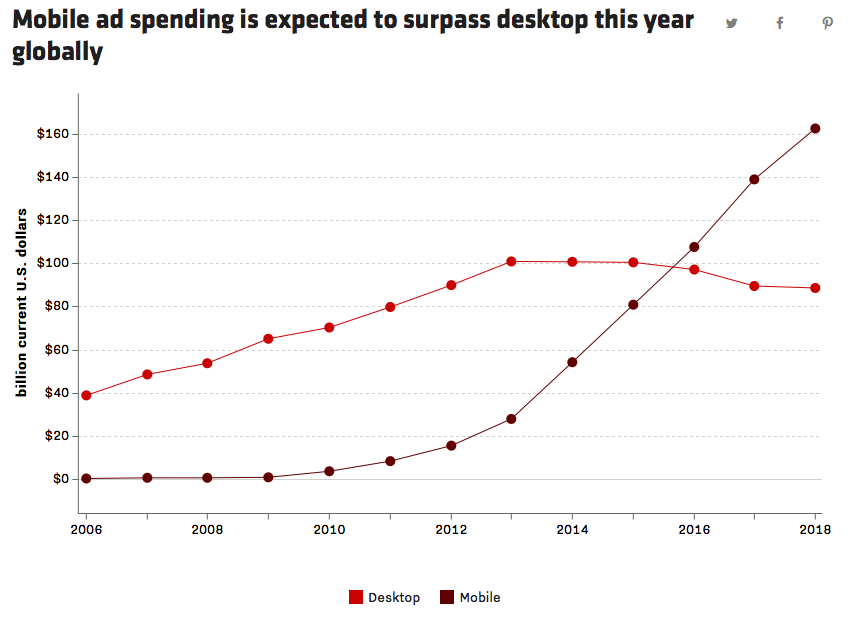
8. The iPhone transformed Apple’s business — and drove massive growth
In its 2006 fiscal year, Apple generated $1.9 billion of profit on $19.3 billion of revenue — mostly from the iPod and Mac. Its business grew 10 times over the next decade. Last year, it generated $45.6 billion of profit on $215.6 billion of revenue. The iPhone drove 63 percent of its sales last year — and likely even more of its profit.
/cdn.vox-cdn.com/uploads/chorus_asset/file/8752165/iphone_revenue_then_and_now_01.png)
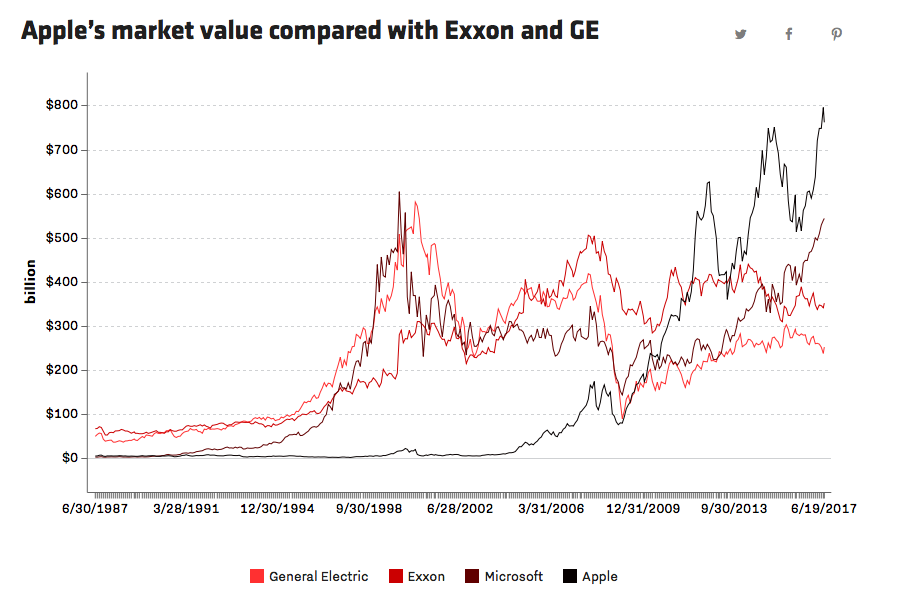
9. The iPhone made Apple the world’s most valuable company
In the years before the iPhone’s launch, Apple was still struggling. The iPod was a big growth driver, but it was nothing like what the iPhone would do starting in around 2008. These days, Apple is worth more than twice as much as Exxon Mobil and three times as much as General Electric, traditional blue chip stocks.
10. The iPhone also led to the Android ecosystem, boosting companies like Samsung — and ruining BlackBerry and Nokia
These days, iPhones have a lot of cheaper competition and sales have shrunk. In 2018, Apple is expected to sell 241 million phones, compared with Samsung’s 404 million, according to data from research firm Canaccord Genuity. Remember that iPhones are more expensive than most smartphones, so while Apple’s unit sales aren’t the biggest, its revenue per phone is.
/cdn.vox-cdn.com/uploads/chorus_asset/file/8752831/Canaccord_Genuity_Handset_Unit_Sales_Estimates_by_OEM_billions_01.png)
Perhaps more interesting: The many things the iPhone has changed that are a degree or two away, and perhaps difficult to isolate or measure.
Have drug dealing and other illegal activities become more efficient thanks to the smartphone’s discreet payment model? Has English become more prominent as English-language-based mobile apps connect the developing world? Have smartphones and the omnipresent connectedness they provide enabled the rise of helicopter parents, niche communities or better literacy?
Courtesy Recode.net