After multiple terror attacks, a snap election with a surprise result, and a devastating fire in London, UK officials had plenty on their minds going into the start of Brexit negotiations last month. They are tasked with brokering an exit from the EU at the same time that the British economy is showing signs of stress.
It was the worst-performer among all advanced economies, with a paltry 0.2% growth in the first quarter of 2017, accompanied by a fall in the value of the pound and rising inflation.
So one might assume that going into the Brexit talks, billed as “the most important negotiations in the country’s history”, the UK is
negotiating from a fractured position. As the talks take shape, commentators have even started listing different forms of “national humiliation” for the UK. The presumption is that the UK is weak, while the EU is strong. But that isn’t entirely true — especially if one considers the digital economy.
In the digital economy landscape, the EU would be losing a genuine star. The digital sector is one of the most dynamic and innovative elements of the economies of the UK and the EU – and of countries anywhere; in the UK alone it accounts for 16% of domestic output, 10% of employment, and 24% of exports. As part of the analysis behind our Digital Evolution Index 2017 (we wrote about the broader results of that report here), developed by The Fletcher School and Mastercard, we analyzed how the UK performs relative to its major European peers.
We studied the UK’s performance along four critical dimensions in comparison to the other European counterparts (these include: Austria, Belgium, Czech Republic, Denmark, Estonia, Finland, France, Germany, Greece, Hungary, Ireland, Italy, Latvia, Lithuania, Netherlands, Norway, Poland, Portugal, Slovakia, Slovenia, Spain, Sweden and Switzerland). The four dimensions we examined were supply, demand, institutions, and innovation.
Each country is scored along each of these four dimensions, where a higher score represents a higher level of performance.
We found that the UK performs better on these four dimensions relative to its most significant peers (Germany, France, Spain, and Italy), while the Nordics (Denmark, Finland, Norway, and Sweden) average around the same performance as the UK.
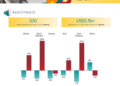
When one factors in how the UK’s digital economy performs over time, its strengths become even more apparent. The chart below shows the rate of change in the Digital Evolution Index over 2008-15 and how the UK performs in comparison to Germany, France, Spain, Italy, and the Nordic countries. This is an indicator of the momentum of the digital economy overall and offers more evidence that the UK is a digital powerhouse.
How might a “hard” Brexit disrupt this distinctively strong digital performance? In this scenario, the UK makes a clean break from the EU and rejects the “four freedoms” that EU members enjoy: free movement of people, goods, capital and services. As negotiators consider these issues, they ought to keep sight of a fifth freedom: how would Brexit have an impact on the free movement of data?
The UK’s digital sector rests solidly on a cross-border value chain. A recent techUK commissioned study, conducted by Frontier Economics, offers some data on what could be at stake for the future of the UK digital strengths in the Brexit negotiations. Fifty percent of the inputs for digital goods and services in the UK are imported, while 20% of the final demand for goods and services in the entire digital sector is exported – many of these linkages being European. Almost a fifth of the digital workers in the UK are foreign, with 6% of the sector’s talent from EU countries. Half of all trade in services is digitally enabled and reliant on data flows. The UK accounts for 11.5% of global cross-border data flows (three-quarters are between the UK and EU countries). All of these are at risk after a “hard” Brexit, where the “four freedoms” are restricted; the restraint on services, in particular, would constrain data flow as well.
The UK is a top online cross-border shopping location. According to a PayPal commissioned study done by The Nielsen Company, the UK was the second-most popular online cross-border shopping destination, according to shoppers across six key markets: the USA, the UK, Germany, Brazil, China, and Australia. Only the U.S. did better. Germany came in 7th among the seven top destination countries. Forty-six percent of Germans surveyed said that they shop on UK websites, almost as much as the 48% of Germans who said that they shop on U.S. sites. A “hard” Brexit would cut into this core area of digital strength for the UK and have a deleterious impact on German shoppers, as well as those from other parts of the EU.
As the UK’s performance across the four dimensions in our study suggests, a key area of strength is in that of innovation. I have argued earlier that Brexit would have five risk factors for the digital economies affected by the change. Each of these risk factors has a disproportionate impact on the ability to innovate: the potential for fast decision-making; talent shortages; barriers to scaling up; fragmentation of innovation clusters; and regulatory hostilities that impede access to markets and customers.
It is essential that Brexit negotiators and the British public keep in mind both the drivers of the UK’s digital strengths and the extent of dependence of its digital sector on cross-border flows. Arguably, a UK freed of the EU would develop other sources of strengths to power up its post-Brexit digital economy; for now, much of that is unclear. The Brexit negotiations may hinge on which and how much of the EU’s “four freedoms” are retained. It is critical that the fifth freedom proposed here – that of data – is not overlooked. The UK’s digital economy strengths and vulnerabilities are a reminder of how much is at risk when these freedoms are taken away.
By Bhaskar Chakravorti (Culled from World Economic Forum publication)