By Onome Amuge
Insects have been found to provide a variety of functions and benefits to humans, ranging from agriculture to medicine, industries and research. Their usefulness in areas such as direct consumption, feed and silk production and dye making also makes insects significant to human existence.
Researches have shown that palm weevil, termites, crickets, grasshopper and pallid emperor moth are unique insects that can be farmed with high demand as food in Nigeria. The maggot of housefly and Black soldier fly have also been recommended for animal feed and silk warm for the textile industry.
In addition, edible insects are considered an environmentally attractive alternative to conventional livestock as they require less feed and water, produce lower levels of greenhouse gases and can be raised in smaller spaces.
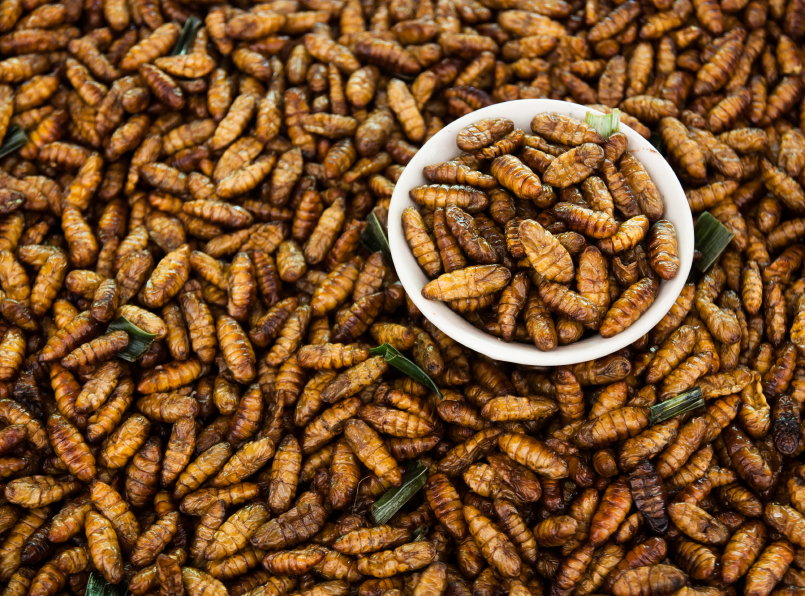
Though a lot of attention has been drawn worldwide to the usefulness of insects in the food and feed industry as a result of their high nutritional content and environmental sustainability, only few entrepreneurs currently engage in insect farming in Nigeria. More so, the willingness of Nigerians to fully accept its consumption has not been generalised, while only a few feed industries in Nigeria use insect inclusion in livestock feed formulation compared to developed countries.
Lawrence Afere, founder of Springboard, a social enterprise that empowers small scale farmers and rural women through a cooperative movement, opines that insect production is a profitable investment which not only supports income generation, but also supports local food security, enhancing attractive rural environment and economic opportunity especially for youth entrepreneurship.
Speaking at a webinar titled “Edible Insect Production: A Source of Food & Income,” the social entrepreneur and organic farmer said insects serve as alternatives to mainstream protein such as chicken, beef, fish and the rest due to their high nutritional contents and non-perishable attributes. He further noted that edible insect production serves as a viable entrepreneurial venture and potential employment opportunities in Nigeria.
According to Afere, bread, a major staple in Nigeria, can be produced with edible insects like cricket, a project already in motion by Springboard company.
He disclosed that in 2021, Springboard in partnership with New Generation Nutrition (NGN) Netherlands, with support from the USAID, launched the Edible Farming Initiative, an innovative solution to initiate the rearing of crickets insects resulting in a year-round supply of affordable, high protein food for most vulnerable groups while stimulating local entrepreneurship and income generation in rural areas.
“With support from the USAID, my organisation (Springboard) in partnership with NGN started a new project in the edible insect sector. It is a market-based model that will train and support small scale farmers in Nigeria to set up edible cricket farms and then buy 100 percent quality crickets from these farmers to be converted into nutritious products such as cricket powder, cookies, bread and cricket snacks at Springboard,” he said.
According to experts, the market potential of edible insects is huge but the production of edible insects is extremely low to meet the demand in the country. The reasons for this, they noted, are that the edible insects in Nigeria are mostly sourced from the wild and their availability is seasonal. They also observed that edible insects in the country are majorly gathered for subsistence purposes as can be seen during the seasonal boom, when edible insects are sold raw in the streets and in the open market.
Experts contend that Insect farming is scarce in the country, hence the low supply in the market. Some factors have been identified to have hindered edible insect entrepreneurship in Nigeria.
Inadequate credit facilities- It has been noted that many of the entrepreneurs in Nigeria are not developing due to lack of credit from commercial banks and other financial institutions. These institutions have been seen to provide loan opportunities to bigger and established companies than smaller businesses and startups, hence edible insects enterprises which are not really pronounced in the country, find it difficult getting funds to finance such business and may need more persuasion than regular businesses.
Poor education, knowledge and skills of people in edible insect farming: Many entrepreneurs lack basic information and good understanding of requisite skills needed for the insect farming business.
Lack of exposure to modern technology: Though Nigeria has achieved a rise in technological advancements, the same cannot be said for insect farming which is largely dominated by traditional methods.
Poor extension service: The shortage of extensions service in insect farming has resulted in a gap between research outcomes and farmers or edible insect business. This gap, according to researchers, can be reduced only through training and employing more competent and effective extension agents who then train the farmers on adoption of best practices to enhance growth of the business.
Scaling production: To benefit from economies of scale, maximize returns, and compete with other sources of livestock feed inputs, startups have been found to face difficulties in finding reliable, consistent ways to scale production. Currently, the scale of the existing feedstock industry is way above the production capacity of insect-for-feed startups which is a challenge to entrepreneurs. Related challenges include securing sufficient breeding stock, raising capital to support infrastructure investments, and managing risk in an industry without a spot market or secondary procurement source
In a research project titled “Edible insects for food and feed in Nigeria:exploring the roles of extension services”, the researchers (Ibitoye Oluwatosin, Cordelia Ebenebe, Maduabachi Amobi and Tolulope Oyediji) noted that new technologies are emerging on how to farm edible insects for industries and households. The research however pointed out that the rural people who majorly consume these insects lack the knowledge of innovative techniques.
To this end, the researchers stated that the inclusion of insect farming in Nigeria’s extension services will ensure continuous communication channels across an edible insect value chain from the originator of the techniques to the local farmers/individual users.
The research, published in the International Journal of Tropical Insect Science (2021), also noted that all the necessary information about the agricultural sub-sector can be harmonised by trained extension agents to develop a market for edible insect species in Nigeria for both local and foreign use. It added that the use of extension services to address edible insects related problems would do a lot in the promotion of edible insect consumption in Nigeria.
Reiterating the need for a strengthened extension system to develop edible insect production, the research noted that it will lead to effective transmission and circulation of information on the nutritional values and health benefits of insects.
To boost the edible insect market in Nigeria, entrepreneurs venturing into edible insect business were advised to seek information regarding the business before venturing into it. Insect scientists, human and animal nutritionists, and policymakers were also encouraged to leverage the several extension services of their choice to advance the culture of edible insects to enhance food security and promote economic diversification.