By Onome Amuge
Rising population, environmental setbacks, climate change,impacts of biofuel production,and post harvest losses have continuously aggravated the stability of the global food system. These have been compounded by greater incidences of droughts,floods,heatwaves,locust outbreaks and other growing stressors to the food system.
Notably, agronomists and analysts in the agriculture sector have identified a functional cold chain system as a vital tool to address this challenge, and also achieve a sustainable food and nutrition security, with a significant impact on the economy.
Cold chains are a series of facilities designed to safely maintain ideal storage conditions for micro-nutrient rich perishable foods from the point of origin to the point of consumption. It involves the use of amenities such as freezers,refrigerators,cold boxes,cold rooms, and carriers for preserving temperature-controlled fruits and vegetables.
Its utilisation to a significant extent improves food security,curbs food losses throughout the value chain as it gives consumers access to more food, while also ensuring that prices remain affordable. In addition, it bolsters livelihoods by expanding markets for farmers and thus their production, creating not only an opportunity to expand market access, but also a chance to create more resilient livelihoods across the value chain.

Data by market intelligence firm Grandview Research, showed that the global cold chain market size was valued at $279.94 billion in 2022 and is expected to grow at a compound annual growth rate (CAGR) of 18.6 per cent from 2023 to 2030.
According to the research, the growing penetration of connected devices and automation of refrigerated warehouses across the globe is anticipated to spur industry growth in the forecast period. Furthermore, it noted that an increasing number of organised retail stores in emerging economies are leading to increased demand for cold chain solutions. Moreover, trade liberalization, government efforts to reduce food waste, and expansion of retail chains by multinational companies are expected to boost industry growth over the forecast period.
With a growing population of over 200 million people, Nigeria is ranked among the top seven most populated countries in the world, based on the United Nations population division estimates. Agriculture plays a critical role in the country’s economy as it is considered the largest employer of labour, accounting for over 34 per cent of the country’s workforce,according to a World Bank Survey.
The Food and Agriculture Organisation corporate statistical database ranks Nigeria the seventh largest vegetable producer in the world with a production capacity of 15,706,483 metric tonnes,and 13th largest fruit producer with a production capacity of 11,529,922 tonnes, making it a significant producer of vegetables and fruits.
However, the production of these fresh produce is largely carried out by smallholder or marginal farmers who primarily rely on traditional farming practices. As a result, food losses are exceptionally high within this category of farmers.
The Global Alliance for Improved Nutrition (GAIN), in a report titled “Strengthening the business links in Nigeria’s cold chain”, noted that the problem of loss due to the absence of cold chain extends beyond fresh agricultural produce to include dairy, seafood and poultry, and even pharmaceutical products like vaccines. It added that food loss on this scale has significant nutrition and economic consequences as it also harms livelihoods and the local economy
“All along the supply chain, food handling inefficiencies lead to lost income for small businesses. By the same token, extending the life of perishable foods through cold chain means farmers and traders can sell more output over a longer time period and achieve a higher price for better quality produce. Increased, more predictable supply ultimately means more stable prices for consumers and potentially lower prices over the longer-term,” the report stated.
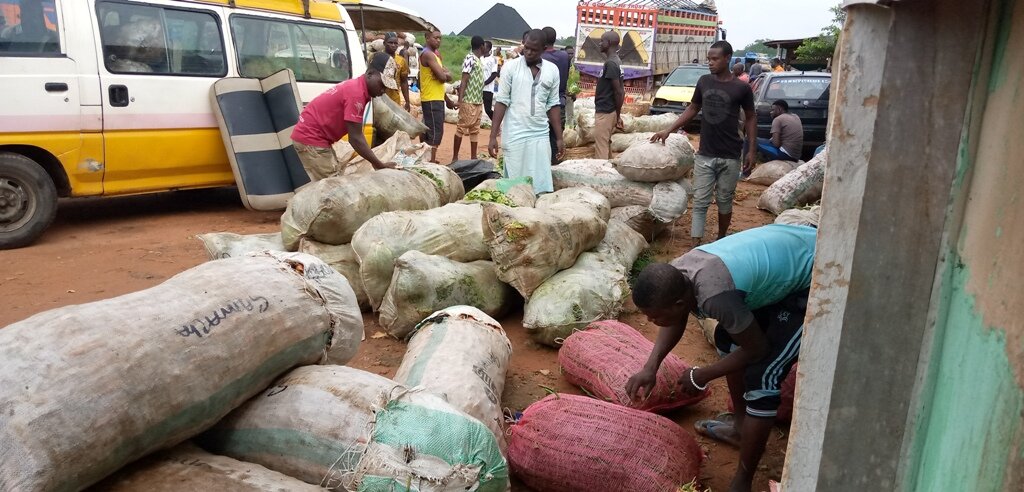
With very few large company players involved in agrifood transportation and storage and with little public funding, GAIN observed that cold chain infrastructure investment has been limited beyond the larger supermarket groups serving wealthier Nigerians.
The report noted that several challenges hold back small and medium-sized aggregators and traders from investing in cold chain solutions. It also observed that they lack access to finance and local banks are unwilling to lend to firms with limited collateral and uncertain prospects.
“The regulatory environment around the cold chain, including food safety standards, is unclear and complex. Many small businesses lack awareness and understanding of the benefits of cold chain, and crucially access to effective, affordable cold chain solutions,” the report showed.
According to GAIN, ag-tech entrepreneurs face difficulties in scaling up their cold chain solutions, as there is a lack of available local technological capability and components, and they also find it difficult to access commercial finance. This, it added, is compounded by a lack of public investment in cold chain infrastructure, which could have a catalysing effect on private investment as entrepreneurs continually struggle to find market opportunities and acquire the necessary technical and management skills.
Data from the Agricultural Fresh Produce Growers and Exporters Association of Nigeria (AFPGEAN) showed that the country loses between 55 per cent and 72 per cent of its cultivated fresh produce (fruits and vegetables) before it can be consumed, much less exported.
According to the African Center for Supply Chain (ACSC),Nigeria loses about 50 per cent of perishable export goods yearly to the absence of cold chain facilities at the airports.
Obiora Madu, the director general of ACSC Council, pointed out that the absence of cold chain facilities at Nigerian airports is one of the biggest challenges facing export trade, adding that perishable export goods are wasted annually due to lack of cold chain.
Madu observed that people who export farm produce run the risk of having food wastages, especially when they miss their flights due to a lack of cold-chain facilities at the airport.
John Onojeharho,former chairman, Governing Council of the Nigerian Institute of Transport Technology (NIIT), also shared a similar sentiment, noting that Nigeria loses at least N3.7 trillion to food wastage and poor cold chain logistics yearly.
Onojeharho lamented that the country performs poorly in cold chain management. According to him, the market is huge, and if properly tapped, Nigeria can save $9 billion yearly, by avoiding food wastage through proper storage.
“If the 15 million metric tonnes of perishable goods currently wasted yearly were well preserved, inflation would drop, with attendant improvement on the economy,” he said.
The transport expert attributed the poor cold chain logistics to lack of good road infrastructure, continuity of the cold supply chain, high capital investment and poor power supply amongst others.
Onojeharho stated that efficient logistics are critical to economic growth,adding that when foods are properly preserved, it would reduce wastage, increase income, create employment and add value to the products.
He, therefore, appealed to stakeholders to invest in the cold chain sector in support of the diversification efforts of the government.
The Organisation for Technology Advancement of Cold Chain in West Africa (OTACCWA), described coldchain as an integral backbone of developed economies and the catalyst that keeps these economies growing. It noted that Nigeria is still in the nascent stages of cold chain development, resulting in a struggle to curb Post Harvest Loss (PHL).
As part of its objectives towards promoting and facilitating the development of the cold Chain system in West Africa, OTACCWA recently organised the fifth annual edition West African Cold Chain Summit and Exhibition (WACCSE 2023), a three day event held between March 28-30, 2023, at the Landmark Centre, Lagos.
The event had in attendance experts and stakeholders in the agriculture sector who led conversations on cold chain technology solutions.
Alexander Isong,the president of OTACCWA, in his presentation, said the cold chain has the characteristics to grow the economy, adding that preservation, transportation, and storage go hand-in-hand with agri-food and packaging, especially in an environment like Nigeria with large post-harvest losses.
According to Isong, for Nigeria to leapfrog to the fourth industrial revolution in agriculture and ensure it feeds its rapidly growing population, there must be a proliferation of new technologies across the value chain to drive production and reduce food loss and waste.
The OTACCWA president said his organisation has been able to make strides in focusing the government and the country on the need to develop the cold chain industry, which would have a domino and multiplier effect on the economy.
Delivering the keynote address at the event, Niyi Adebayo, the minister of industry, trade and investment, said post-harvest losses had been identified as one of the major problems facing the agricultural sector in Nigeria and sub-Saharan Africa.
Adebayo, observed that post harvest loss data in the country is still at a high rate, especially for food and vegetables,resulting in low income for the producers and high price points for the produce.
The minister noted that globally, perishable commodities are made sustainable through efficient management of cold chains, which plays a significant part in modern global perishable industries as it impacts on storage, transportation and distribution, related services and to ensure low cost.
Based on this, he stated that the federal government has been encouraging public-private partnership and investments that would provide lasting solutions to cold chain challenges in Nigeria in order to reduce post-harvest losses of food and vegetables.
He stated that the government was investing heavily to close the energy gap in order to build a sustainable cold chain network in Nigeria and Africa.
“Government will continue to encourage innovative strategies in the main sub-sectors that constitute cold chains, in order to mitigate the several detrimental economic and environmental effects,” he stated.
The minister also encouraged stakeholders to invest in the cold chain sector, which can be highly profitable and reap from the economic benefits which abound.
He expresed optimism that if the public and the private sectors work together to develop the cold chain industries to international standards, it would assist in the diversification of the Nigeria economy, improve job and wealth creation, enhance infrastructural development and technological innovations in the overall interest of the Nigerian and African economy.