
Unlike other automobile dealers and local assemblers, Lanre Shittu Motors (LSM) has, for over 40 years of doing business in the country, been deeply committed to corporate social responsibility and impacting the lives of Nigerians beyond improving its balance sheet, so says TAIWO SHITTU, executive director of Lanre Shittu Motors in this interview with MIKE OCHONMA, Business A.M.’s Motoring Editor
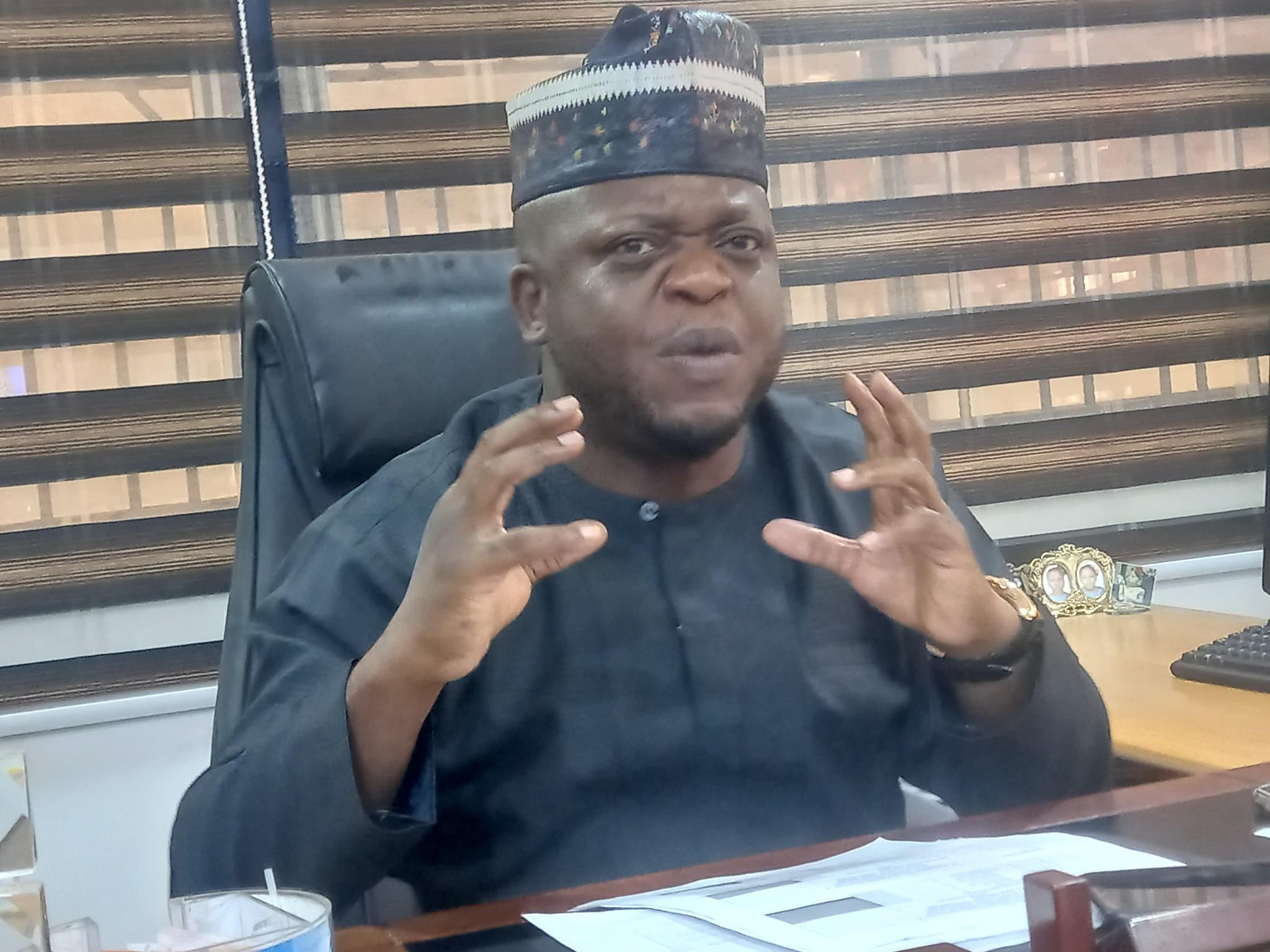
How has it been running an auto assembly plant in Nigeria?
We started our auto assembly plant in October 2018. So far, it has been a good experience for us. It has been smooth all the way running the plant. We have two plants now; one for the truck, the other is the car assembly section.
The truck plant just won the Best Auto Plant of the Year Award in Nigeria at the Nigerian Auto Journalists Awards. I can tell you that it was based on merit. No one in the auto industry can fault it.
We all know who is doing what. Our turnaround in terms of operation is high. The assembly is always busy with activities with a lot of local content. We make sure we patronise the local steel industry.
Most of the hard body is being done here by young Nigerians; you won’t believe the capability of these young Nigerians. They are young Nigerian engineers who have passion for what they do.
The plant is doing well. Right now, we are looking towards its expansion. We just got a grant from the Central Bank of Nigeria at single digit interest rate to expand our plant. That is where we are now.

Yes. They are both at Amuwo, Lagos.
How much local content do you incorporate into assembling vehicles now?
Right now, we source our steel from the local market. For instance, the back body/trailer body, the tipping bucket, the diesel tank are local content; they are mainly fabricated there. We make sure we patronise indigenous companies for these materials.
The same goes for our lubricants, grease and stuff like that. You will be surprised what some of these young Nigerians are capable of doing. Nigerians have the skills. They just need the support of the government; this is what will make the industry develop.
The current generation of leaders must invest and make sacrifices for the development of the next generation just like the Chinese did. In those days, many people looked down on the Chinese and derided them for looking haggard and wretched.
What they did not know was that they were making sacrifices for the current generation. Today, China’s story has changed. Nigeria also needs to do the same.
Why are locally-made/assembled vehicles still expensive and beyond the reach of the majority of Nigerians?
The price is still tied to import in some way. The effect of the COVID has taken the freight rate of imported containers from about $2000 to $16,000 and above. And that has had a significant effect on pricing of products in Nigeria. This is because most of the things we have or use are imported from China.
And that is why I fault the media team of this government. It has failed to enlighten the public on why things are generally expensive in Nigeria.
Freight rate accounts largely for why things are expensive right now. Freight from China has gone up astronomically after COVID; it had never happened before. Our company is about 40 years old; this is the first time the freight rate will cost so much. Bringing in a container of 40 feet from China used to be around $2,000 to $3,000. It is now over $16,000.
This is what the media team of the government needs to let the people know. The current high cost of things is caused by external factors that the government has no control over. The world is facing it. It is not only in Nigeria.
The dollar or exchange rate has its own issue, but it is minimal compared to this external factor of high freight rate.
Is there anything the business community or government can do about it?
It is not a deliberate action. It was precipitated by COVID-19. What happened was that at the peak of the COVID infection, many people were falling sick and some dying; a lot of containers were abandoned midway on the high sea.
Now, many of the containers are not back at their bases, causing them to have a shortage of containers. And when the demand is high, the supply is low, the result is a high price.
The solution is to work on returning the containers to their home countries and ease the shortage.
Are the products being made here of the same value as those produced abroad?
They are of the same value. Everything is regulated by the parent company. But nobody gets to the top overnight.
I will take you back to China; they did not get to where they are now overnight. Nigeria was better than China in the ‘70s. Today, China has become a reference point because their former leaders made sacrifices for the present generation.
Our own leaders too must be ready to make such sacrifices. It will be tough, but the result will be a sweet victory. Industrialisation is the key to economic success of any country.
Are Nigerians not making enough sacrifices already?
This has to be consistent and cut across all strata of the society, both the followers and the leaders. There is so much greed in the system. It’s in Nigeria you see people at a buffet packing food without any thought about those yet to eat, waiting in a queue.
What has been the response of people to the JAC trucks being assembled in your factory? How many have you sold?
The response has been very encouraging. We’ve sold thousands. When we signed the dealership of the truck in 2014, it was rated number 9.
But today, we are the third highest selling heavy trucks in Nigeria. But when it comes to quality, people know it is a JAC truck.
Are you saying Chinese trucks are leading the truck market in Nigeria?
Yes, they have taken over the market; it’s not only in Nigeria; it is everywhere.
Is this not the function of low price?
Not just low pricing but in terms of quality. The truth is that the Chinese brands have come to stay. In the area of trucks, you either align with them or you get out of business.
They are getting better every day and these trucks are working. We have a lot of key players using the trucks. How many of these European trucks can you see on the road?
What is your assessment of the National Automotive Design and Development Council (NADDC) as an agency of government expected to facilitate your business?
I must say the agency has been very amazing, especially under the leadership of Jelani Aliyu as its director general. He is very sound; he has played in the big boys’ league in the US.
I’m not surprised that he is performing well. We are getting a lot of support from him because he believes in this industry. I must say that with someone like him, we’re going to get there.
Government must give more listening ear. We are lucky to have him. He is an asset to Nigeria. He has tried it in America and it worked; it will work in Nigeria too.
What has been the contribution of Lanre Shittu Motors to Nigeria after 40 years of the company’s establishment?
The company has contributed a lot to the Nigerian economy, especially when it comes to manpower, training and empowerment of young Nigerians. We have an empowerment scheme for school leavers, who have passion for automotive development.
They are trained for a period of four years and get paid even while in training. After the training, we send them to our customers across the country to service them. We ask them to get them employed, accommodated and paid well.
In some cases, they are given a car and placed on a good salary that we dictate. We are getting good testimonies from those we sent to Kano, Bauchi, Ondo and Cross River states, among others. These are people that would have been bus conductors, touts or motor boys, now heading a facility of 300 to 500 trucks.
Those who own these trucks know that these guys taking care of the valuable vehicles are as important as their expensive trucks. Lanre Shittu Motors has done miraculously well for young Nigerians in the engineering sector, making them realise their dreams in life.
We have the graduate empowerment scheme too, with a different package. They are also trained for a period before we send them out to people who need their services. We have some people sending interested young graduates and school leavers to us for training.
For instance, Desmond Elliot, a member of the Lagos State House of Assembly, sent 10 people from his Surulere constituency to us for the scheme.
We just got a grant from the government. They have seen that what we are doing is expansive. Government did due diligence before giving out the loans. We are one of the best indigenous companies in the automobile industry.
We believe strongly in this auto policy that will make Nigeria a hub for auto producing vehicles in Africa. Government representatives have visited our factories a number of times and they have seen that we mean business.
The plant is always busy. And in the auto industry, we are the only company that got the loan in the first set they just released.
What is your view about the crash in import duty of used vehicles by the government?
If we believe in Nigeria, we must do away with used vehicles. It’s part of the sacrifice that we need to make. We can start by making it look unattractive to reduce the volume being imported. We have to look for a good finance scheme to support new vehicle purchases.
It is not that Nigerians don’t like new vehicles; it is because finance is not there. And where there is a finance arrangement, the issue is the cost and how to pay back. If I’m buying a car on loan for my comfort, I may be sceptical about how to pay back without a reliable income.
Government should, therefore, focus more on how to finance the commercial segment of the new vehicle purchase. Since the vehicles are going to be used for business, it will be easy to pay back the loans.
This will also generate more employment opportunities for the people. Giving a loan to anyone to buy a vehicle that will be used for business is like an asset that will bring back money. There is no way you will buy a new truck on loan for a business venture and you will not make back the money in one and a half years.
And this is a truck that will still be on the road for 15 years or more. Look at the farmers in the north producing tomatoes and others, most of these perishable food items get destroyed in the farm because they cannot afford the high cost of transporting these goods to the big markets in cities like Lagos and Abuja.
The cost of moving the items from Kano to Lagos can be as high as N1 million. How many of these peasant farmers can afford that? But if the government can have a finance scheme for new commercial vehicles, they would be able to buy the vehicles and promptly move the goods to Lagos, Ibadan, Port Harcourt, Aba, Onitsha, Abuja and those places with high population.
More people would be encouraged to return to the farm and do more.







