Business A.M
No Result
View All Result
Friday, March 13, 2026
  • Login
  • Home
  • Technology
  • Finance
  • Comments
  • Companies
  • Commodities
  • About Us
  • Contact Us
Subscribe
Business A.M
  • Home
  • Technology
  • Finance
  • Comments
  • Companies
  • Commodities
  • About Us
  • Contact Us
No Result
View All Result
Business A.M
No Result
View All Result
Home Comments

Maybe central banks are too independent

by Admin
August 7, 2017
in Comments

Throughout the developed world, central banks enjoy a large measure of independence. This is considered desirable because it guards against elected officials’ preference for overly easy monetary policy, as a means to generating jobs and votes.

But what if the central bank wants easier money than politicians do? This has been the case in the U.S. for much of the past decade, and it raises important questions about how independence should be defined.
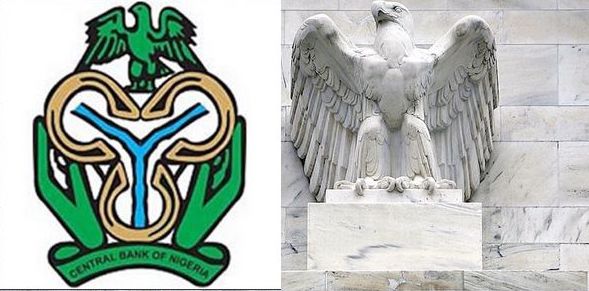
Matched photo of Nigeria Central Bank Logo and A conundrum of governance, Federal Reserve

Consider the situation in late 2010. The Republican party won a huge victory in the midterm congressional elections, at least in part thanks to voters’ unease with the $800 billion fiscal stimulus package that the Obama administration adopted the previous year. The newly elected Republicans largely opposed additional stimulus as a way of addressing the protracted recession.

Yet one day after the election, with unemployment still close to 10 percent and inflation falling toward 1 percent, the Federal Reserve began a new round of bond-buying designed to provide added economic stimulus (a policy that I, as a Fed official at the time, supported). This was no isolated event. Throughout the recovery, the Fed systematically sought to boost growth and inflation even as Congress made choices — such as the budget sequestration of 2013 — that seemed deliberately intended to constrain them.

At first glance, the Fed’s policy choices could be seen as a great example of how an independent central bank works: By design, it acts in isolation of, and possibly in contradiction to, the wishes of the public’s elected representatives. The stimulus was amply justified given the Fed’s mandate to seek maximum employment and price stability. Indeed, I’ve argued that it could and should have done more. It was right about the economy and Congress was wrong.

Still, there’s something wrong with this picture. It has to do with the governance of central bank policy. Congress has given the Fed — a group of unelected technocrats — the power to pursue a more pro-inflation and pro-growth policy than the public’s elected representatives desire. What is the justification for this delegation?

As far as I know, the vast theoretical and empirical academic literature addresses central bank independence only as a way to counter the short-term pro-inflation biases of elected officials. It doesn’t explain why central banks should be allowed to do the opposite.

One argument, I suppose, could be expertise: The unelected technocrats just know a lot more about monetary policy than Congress does. But, as someone who’s been one of those technocrats, I’m leery of this argument. The aura of expertise can end up being a way to hide political biases — biases that should really be up to the electorate to adjudicate.

To arrive at a more defensible approach, Congress might have to rethink central bank independence as it is enshrined in the Federal Reserve Act. It could, for example, periodically establish a lower bound for the level of interest rates and an upper bound for asset holdings, leaving the Fed free to choose a higher interest rate and a smaller balance sheet. This would give the central bank ample power to keep inflation in check but would prevent monetary policy from being too much easier than what Congress and the voters desire.

To be sure, this could on occasion prevent the Fed from doing the right thing when Congress is wrong — as it did in 2010. But over the longer term, it would preserve the most important part of the central bank’s independence, shielding it from accusations that it has become too unaccountable to the people.


Article by Narayana Kocherlakota, courtesy Bloomberg

Admin
Admin
Previous Post

Nigerian equities no longer under siege as outlook strong on improved performance

Next Post

Nigeria equities opens week still upswing with 0.27% rise in benchmark index

Next Post

Nigeria equities opens week still upswing with 0.27% rise in benchmark index

  • Trending
  • Comments
  • Latest
Igbobi alumni raise over N1bn in one week as private capital fills education gap

Igbobi alumni raise over N1bn in one week as private capital fills education gap

February 11, 2026

CBN to issue N1.5bn loan for youth led agric expansion in Plateau

July 29, 2025

How UNESCO got it wrong in Africa

May 30, 2017

Glo, Dangote, Airtel, 7 others prequalified to bid for 9Mobile acquisition

November 20, 2017

6 MLB teams that could use upgrades at the trade deadline

Top NFL Draft picks react to their Madden NFL 16 ratings

Paul Pierce said there was ‘no way’ he could play for Lakers

Arian Foster agrees to buy books for a fan after he asked on Twitter

Nigerian Breweries, Indorama launch rPET project to boost circular packaging economy

Nigerian Breweries, Indorama launch rPET project to boost circular packaging economy

March 13, 2026
Nigeria gains investor favour as oil windfall supports Naira

Nigeria gains investor favour as oil windfall supports Naira

March 13, 2026
Compliance is the new currency of Nigerian banking

Compliance is the new currency of Nigerian banking

March 13, 2026
Oil steadies as US stockpile decline offsets trade tension worries

Oil climbs above  $100 as Iran warns Strait of Hormuz will remain shut

March 12, 2026

Popular News

  • Igbobi alumni raise over N1bn in one week as private capital fills education gap

    Igbobi alumni raise over N1bn in one week as private capital fills education gap

    0 shares
    Share 0 Tweet 0
  • CBN to issue N1.5bn loan for youth led agric expansion in Plateau

    0 shares
    Share 0 Tweet 0
  • How UNESCO got it wrong in Africa

    0 shares
    Share 0 Tweet 0
  • Glo, Dangote, Airtel, 7 others prequalified to bid for 9Mobile acquisition

    0 shares
    Share 0 Tweet 0
  • Oyo targets 500 MW energy generation by 2027

    0 shares
    Share 0 Tweet 0
Currently Playing

CNN on Nigeria Aviation

CNN on Nigeria Aviation

Business AM TV

Edeme Kelikume Interview With Business AM TV

Business AM TV

Business A M 2021 Mutual Funds Outlook And Award Promo Video

Business AM TV

Recent News

Nigerian Breweries, Indorama launch rPET project to boost circular packaging economy

Nigerian Breweries, Indorama launch rPET project to boost circular packaging economy

March 13, 2026
Nigeria gains investor favour as oil windfall supports Naira

Nigeria gains investor favour as oil windfall supports Naira

March 13, 2026

Categories

  • Frontpage
  • Analyst Insight
  • Business AM TV
  • Comments
  • Commodities
  • Finance
  • Markets
  • Technology
  • The Business Traveller & Hospitality
  • World Business & Economy

Site Navigation

  • Home
  • About Us
  • Contact Us
  • Privacy & Policy
Business A.M

BusinessAMLive (businessamlive.com) is a leading online business news and information platform focused on providing timely, insightful and comprehensive coverage of economic, financial, and business developments in Nigeria, Africa and around the world.

© 2026 Business A.M

Welcome Back!

Login to your account below

Forgotten Password?

Retrieve your password

Please enter your username or email address to reset your password.

Log In
No Result
View All Result
  • Home
  • Technology
  • Finance
  • Comments
  • Companies
  • Commodities
  • About Us
  • Contact Us

© 2026 Business A.M