By Henrik Bresman
How sensemaking can help you cope with unplanned, constant changes in your team.
“I have always found that plans are useless, but planning is indispensable.” – Dwight D. Eisenhower
Right now it seems far away, but a post-Covid world is coming. Is it closer to us than the start of the pandemic? We can’t say with any certainty, but we must think about how we will work in the future. The sudden changes of early 2020 showed us how we are capable of extraordinary transformations.
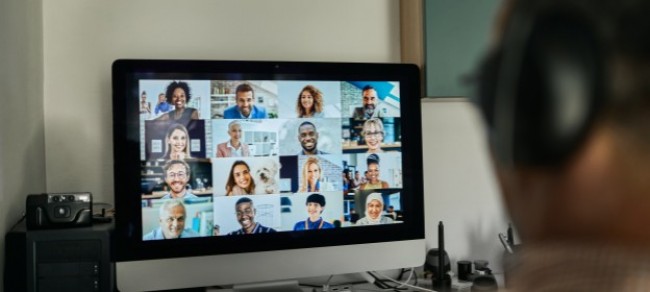
Teams had to adapt immediately. Previously one or two colleagues might have been “remote” –different from the rest of the group – but within days everyone was untethered from the physical office. Team members found new ways to connect, adding an extra layer of work in the midst of a global pandemic, itself a time of incredible stress.
Evolutionary v. revolutionary
In our paper, “Shifting Team Research after COVID-19: Evolutionary and Revolutionary Change”, co-written with Deborah Ancona of MIT Sloan, we consider the kinds of questions we need to pose for teams post-Covid. We discuss evolutionary and revolutionary changes and how what had begun to shift before the pandemic took on very different dimensions once it was here.
A number of evolutionary changes were already on the way, but the uptake exponentially accelerated. These include dynamic team (and multiple-team) membership over static, the move from clearly delineated to fuzzy boundaries, and increased machine-human interaction.
The need to dynamically shift team memberships, for example, was present before the pandemic. Previously static teams with everyone in the same place, performing the same tasks, were becoming less viable in terms of permanent career options. Other team members had begun to parachute in with job-specific expertise, for example, moving along quickly and impacting team boundaries. Since March 2020, teams need to experiment within this new virtual environment to find what works best.
Established virtual teams may benefit more while working from home because it’s no longer a question of changing the people in a meeting room or workspace, when everyone is WFH each team member has a similar experience. Of course there are some obvious difficulties; people still depend on meeting each other in three dimensions. Teams that meet in person can build trust in a more fluid way, using nonverbal cues and immediate positive or negative feedback.
Since 2020, teams also need to consider the external environment, as what could be expected in “normal” times is no longer true for all team members at the same time. One country could be in lockdown and another in relative openness, for instance. Teams’ connection to the outside world changes their internal politics.
One of the revolutionary changes to teams that we discuss in the paper is hybridity. This shift, which has some workers in one office and others in many locations, raises the question of how do we structure and manage our teams in a way that drives integration, collaboration and identification across various team members in and out of the office and those on synchronous or asynchronous schedules. We need to consider how to design tasks to best take advantage of hybridity and its inherent dynamism whilst remaining equitable and fair to those with different access to resources.
Sensemaking and purpose
Yet since we are in the eye of the storm right now, working out the difference between evolutionary and revolutionary changes is nigh on impossible. It will be clear only in hindsight. In the meantime, we recommend focusing on sensemaking so you can constantly update your own understanding of where you and your team are, and where you are going. Sensemaking is a kind of amplified sense of seeing the big picture, understanding that new information or better working methodology won’t come from a single source and creating a cohesive framework that is easily communicated to others.
Our personal map of the world, at work and at home, needs to be examined and redrawn very often in this crisis. Remembering who on our team is grieving, who needs better access to certain resources, and so on is not a task we have figured out in a day and stick with. It’s exhausting to do our jobs and keep our team maps in mind. Unfortunately, some teams operate based on outdated maps due to pure exhaustion from that constant updating, which leads to poor decision making.
Sensemaking is vital to adapt to evolutionary or revolutionary shifts. It’s one of the most important capabilities a team and its manager can have. When they are up to date with where the world is and how it effects their team, it clarifies how that which is evolutionary today may be revolutionary tomorrow.
Timely example
The current crisis has increased the need for organisations to look outside of the team or firm for better information. Teams working on vaccines, for example, are learning from each other. On one hand, Moderna and Pfizer are in direct competition. On the other hand, they learn from each other as they apply new techniques to develop a Covid-19 vaccine. The pharmaceutical industry is particularly interesting because firms are competing and collaborating simultaneously in different areas. Getting the vaccines distributed to as many people as possible is a priority for everyone. Some of the technologies used by different firms are published and are therefore public, but other parts are patented and jealously guarded.
The end of the pandemic will not mean the end of change. There will continue to be external shocks. With technology, AI, more people working from home and a booming gig economy, revolutionary changes won’t disappear. Sensemaking will continue to be crucial. And those of us who ask questions about teams will continue to adapt as well. Like managers, we don’t want to end up in a situation where we have the right answer to the wrong question.
Henrik Bresman is an Associate Professor of Organisational Behaviour at INSEAD. He is a programme director of INSEAD’s Management Acceleration Programme.
Mark Mortensen is an Associate Professor of Organisational Behaviour at INSEAD. He is the director of Designing and Leading Collaboration in a New World Order, an INSEAD Go-Live programme, and the co-director of Developing Emerging Leaders, an online INSEAD Executive Education programme.