
By V. “Paddy” Padmanabhan
INSEAD experts and industry executives drill down to the basic human needs driving changes in retail.
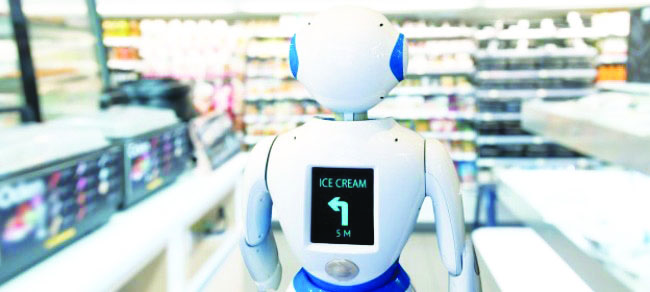
To the untrained eye or casual observer, the retail sector in recent years can seem like a blur of dizzying change. From experiential stores, virtual reality dressing rooms, voice commerce, anonymous shopping, to “online-native” brands opening brick and mortar shops, even pundits are finding it hard to keep up with innovations in the sector.
But whatever guise it assumes, successful innovation is based on real needs or deep insight into human psychology – think smartphones, ride-hailing apps and social media. The companies that can harness those desires while staying on top of operational exigencies including costs, even if that means disrupting themselves in the process, are the ones that will be able to prevail over the sea change churned by digitalisation.
That was the main takeaway from the 4th Annual Emerging Markets Conference held at INSEAD’s Asia campus in June. Industry executives from Deliveroo, Dole Packaged Foods, Electrolux, Johnson & Johnson, and INSEAD Associate Professor of Technology and Operations Management Sameer Hasija highlighted the latest innovations and disruptions in retail. They agreed that trust, personalisation and customer experience are the cornerstones of the industry in the digital age. Trust, in particular, is the linchpin for the growth of retailers, from mom-and-pop stalls to Alibaba.
“The big movement in retail is to capitalise not so much on technology as trust,” said Hasija. “What I see in emerging markets as an innovation is that companies are creating scale, they are creating networks, they are creating trust. Then they move into other verticals to try and monetise that trust.”
Trust deficit
E-commerce giant Alibaba, for example, launched a health mutual insurance plan in China’s competitive insurance landscape under its Ant Financial Services Group in October 2018. Fifty million people enrolled in the plan in the span of just six months. Demand was so hot that Ant announced last April that it hoped to sign up 300 million customers – or a fifth of China’s population – in two years. All this would not have been possible had Alibaba not established an authentication system for its e-commerce platform merchants early on, thus establishing trust in its products. In other words, said Hasija, Alibaba’s latest vertical is built on trust and network size. “Combine both of them and you create a very winning position,” he said.
The sharing economy is another flourishing example of the potential of trust, or what Hasija termed return on trust capital. Worth more than US$400 billion in China alone, the sharing economy is picking up fast in emerging markets, whether it’s in food delivery, home-sharing, luxury goods and apparel, beauty and grooming products, childcare products or even pets. Affordability aside, said Hasija, trust in the system is key to growth. In the second-hand goods market, for example, companies like LuxTag offer blockchain-based systems that enable consumers to ascertain a branded handbag’s provenance, say, or ensure that that expensive watch is not a fake. The resale clothes market in the United States alone has grown 21 times faster than retail sales of new clothing in the past three years, to about US$24 billion. About one in four consumers who buy luxury clothes brand new also purchase cast-offs.
In the fast-moving consumer goods (FMCG) sector, a “trust deficit” is also roiling the market and forcing established players to change, said Ashvin Subramanyam, Vice-President of Marketing and Innovation at Dole Packaged Foods Asia and one of the panellists at the INSEAD conference.
The trust deficit in FMCG “is touching everything,” Subramanyam said. “It’s touching traceability…The way we’re trying to address it is formulation, authenticity on blockchain so that consumers can track (our products).”
At Johnson & Johnson, trust is embedded in a rainbow-coloured code, said Jyoti Jain, the company’s Director of Advanced Analytics, Asia-Pacific. “Typically you have those barcodes on products, now that is going to be a rainbow-coloured code, which to a consumer would mean that it’s authentic product, and we won an industry award on that,” said Jain. “That’s how we are actually changing our product and that is a response to a deep human insight on trust.”
Customise, or die
Trust aside, retailers in the digital age ignore personalisation and the customer experience to their own detriment, as brand loyalty gives way to convenience and novelty.
Take Britain’s Marks & Spencer. In May, the 135-year-old multinational retailer of apparel and food products announced it had invested in Russian start-up Texel, whose technology scans and measures people in 3D, creating a digital avatar of the user, before recommending clothes that will best fit the user’s shape and size. The technology will help M&S boost sales and reduce returns, and exemplifies the retailer’s ongoing digital-first, customer-centric transformation programme.
Said Hasija: “This is one way that even the Western giants are trying to become relevant.”
They may have some way to go before catching up with much younger and agile competition. Deliveroo, the London-based food delivery company founded in 2013, uses data science to identify and plug gaps in the food offerings in a specific area. Said Yolanda Lee, the company’s Head of Consumer Partnerships for Asia-Pacific and the Middle East: “If we’re missing a mid-range, say Italian restaurant, in that area, we’ll go in and approach a top mid-range Italian restaurant and ask them to open up in this area.”
She added: “Restaurants really love it because expansion demands a high degree of capital expenditure and they don’t necessarily know if a concept will work in that space. We give them that flexibility and we can improve the experience both for our restaurants, our riders and our consumers.”
From Big Box to BingoBox
The very space where retailers traditionally peddled their products is evolving. So-called big boxes of sprawling space run by Tesco and Carrefour have been popular with shoppers in Asia’s emerging markets for offering convenience at low prices, noted Dominique Lecossois, a Distinguished Executive Fellow at INSEAD’s Emerging Markets Institute who has worked with the two big-name supermarket operators. But that is likely to change in the face of newcomers like China’s BingoBox, which has opened more than 500 unmanned stores, typically only 160 sq ft in size, in China, Taiwan, South Korea and Malaysia. Customers enter the store by scanning a QR code on their phone, run their items through a scanner and pay via WeChat or a local alternative.
Calling this the “convenience format”, Lecossois predicted that small spaces will be the retail size of the future. “It addresses the convenience preoccupation of the customer, who wants to shop fast, who wants a very clear value proposition.”
Vinay Dixit, Vice-President at Electrolux Asia Pacific, Middle East and Africa, and Head of Electrolux India, agreed. “That point about convenience and assortment being paramount in retail, nowhere do you see it more than in (consumer) durables space because the cost of inventory is very high. The companies who are doing well are the companies which are marrying the two factors.”
He cited as example Reliance Digital, India’s largest retailer of home appliance and consumer electronics with more than 400 big boxes. The company has now opened 1,500 small format stores with minimal inventory. Customer browse, pick, and pay for products on digital screens in store. Within hours, the goods will have been delivered to their doorstep.
Taken together, the disruptions and evolutions in the retail sector compose a landscape of new opportunities. Even McKinsey is joining the fray. The consultancy opened a retail store at the Mall of America in September to test the effectiveness of technologies, like smart mirrors, and glean insights that it hopes would help its retail clients stay abreast of the game.
Companies need to think very differently to be capable of doing things in a way different from what has worked for a long time. If they do it right, they will have succeeded in creating value rather than crumbling in obsolescence.
V. “Paddy” Padmanabhan is a Professor of Marketing and the Unilever Chaired Professor of Marketing at INSEAD. He is the Academic Director of the INSEAD Emerging Markets Institute.







