
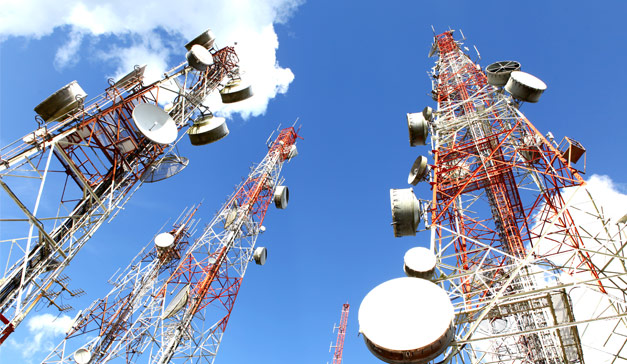
Nigeria’s telecommunications industry has entered 2026 facing renewed infrastructure vulnerability, as fibre optic cable damage grew substantially within the first seven weeks of the year, raising fresh concerns about the effectiveness of government protections meant to safeguard the country’s digital backbone.
Incident data released by the Nigerian Communications Commission (NCC) shows an alarming escalation in fibre cuts in January 2026, indicating what industry analysts describe as one of the most rapid short-term increases in network disruptions in recent years.
Analysis of the regulator’s incident reports reveals that fibre optic cable damage jumped from just four recorded cases in December 2025 to 41 incidents in January 2026 alone. The rise represents a significant month-on-month increase and comes barely months after telecommunications infrastructure was formally classified as Critical National Information Infrastructure (CNII), a designation intended to deter vandalism and accidental destruction.
Rather than slowing, the disruptions have continued into the new year. Between February 4 and February 17, an additional 27 fibre cuts were recorded, bringing the total number of reported disruptions to 68 incidents within the first seven weeks of 2026.
Abuja emerges as disruption hotspot
Geographical analysis of the incident data reveals a pronounced concentration pattern. Nearly 90 percent of reported fibre damage occurred in Abuja, pointing to persistent coordination challenges between telecom operators and construction activities within the Federal Capital Territory.
Smaller clusters of incidents were also recorded across Lagos, Enugu, Kano, Benue, Anambra, and Abia states, underscoring the nationwide nature of the problem even though the capital remains the epicenter.
Operators affected by the disruptions include Backbone Connectivity Network (BCN), T2 (formerly 9mobile), Airtel Nigeria, MTN Nigeria, IPNX, and Layer3, highlighting the systemic impact across both mobile network operators and wholesale infrastructure providers.
Each fibre cut typically results in degraded data services, dropped calls, and prolonged outages, affecting businesses, financial transactions, and public services increasingly dependent on stable digital connectivity.
Policy protection meets operational reality
The increase in incidents comes despite the Federal Government’s 2024 CNII designation, signed by President Bola Tinubu, which criminalised deliberate damage to telecom assets including fibre optic cables, base stations, data centres, and transmission equipment.
The policy was introduced as part of broader efforts to strengthen Nigeria’s digital economy and improve service reliability by protecting telecommunications infrastructure from vandalism and negligence.
However, recent data shows that regulatory recognition alone may not be sufficient without consistent enforcement.
Alarmed by the January spike, the NCC and the Nigeria Security and Civil Defence Corps (NSCDC) issued a joint warning earlier this month, threatening prosecution of contractors, construction companies, and individuals responsible for damaging fibre infrastructure during civil works.
The agencies stressed that avoidable damage caused by poor coordination, negligence, or unauthorised excavation now constitutes a criminal offence under existing laws.
According to the joint statement, any excavation or construction activity carried out without proper engagement with telecom operators violates provisions of the Designation and Protection of Critical National Information Infrastructure Order 2024 and could attract sanctions under the Cybercrimes Act.
Authorities warned that destruction of telecom infrastructure poses risks extending beyond service outages, describing it as a threat to national security, economic stability, and public safety in an increasingly digital economy.
Enforcement remains the missing link
Despite the warnings, industry stakeholders argue that the core problem lies not in policy absence but in weak prosecution.
Gbenga Adebayo, chairman of the Association of Licensed Telecommunications Operators of Nigeria (ALTON), said the lack of visible penalties has fostered a culture of impunity among contractors and individuals responsible for infrastructure damage.
Drawing international comparisons, Adebayo noted that in countries such as England, responsibility for damaging public telecom infrastructure is treated as a serious legal offence pursued by the state rather than left to operators to resolve.
“In England, if a driver crashes into a telecommunications pole, the government prosecutes the offender, not the telecom provider,” he explained, arguing that Nigeria must adopt a similar enforcement model to protect critical infrastructure.
According to him, consistent prosecution would not only deter reckless excavation practices but also guarantee uninterrupted communication services essential to citizens and businesses.
A recurring crisis, not a new one
The current increase adds to a long-standing infrastructure protection challenge confronting Nigeria’s telecom industry.
At an industry event in 2025, Aminu Maida,the executive vice chairman of the NCC, disclosed that more than 35,000 fibre cuts and 3,168 theft-related incidents were recorded between January and July 2025 alone.
The regulator estimated that Nigeria experiences an average of 1,100 fibre cuts weekly, alongside approximately 545 cases of site access denial and 99 theft incidents each week, figures that highlight the scale of operational disruption faced by operators.
Telecommunications companies have repeatedly warned that infrastructure damage significantly increases operating costs and undermines service quality.
MTN Nigeria recently reported 9,218 fibre cuts by the end of 2025, alongside over 200 theft and vandalism incidents affecting critical sites. Airtel Nigeria has similarly disclosed experiencing an average of 43 fibre cuts daily on parts of its network, translating to more than 300 incidents weekly.
Digital economy ambitions at risk
The persistence of fibre damage raises broader questions about Nigeria’s readiness to sustain a digital-first economy.
Bosun Tijani, the minister of communications, innovation and digital economy previously described the CNII gazette as a “robust measure” designed to strengthen telecom resilience and improve service quality nationwide.
The designation, he noted, makes it a criminal offence to wilfully damage telecom towers, fibre cables, switch stations, satellite infrastructure, and digital platforms supporting government services.
However, the continued rise in incidents suggests that policy intent has yet to translate into measurable deterrence on the ground.
Industry analysts warn that without stronger coordination between urban planners, construction firms, and network operators, infrastructure damage could continue to undermine broadband expansion targets and investor confidence in Nigeria’s telecom sector.
A test of regulatory credibility
With disruption figures already climbing early in the year, 2026 may become a critical test of whether Nigeria can effectively protect the infrastructure underpinning its digital transformation agenda.
The CNII designation marked a significant policy milestone, but stakeholders argue that enforcement consistency, inter-agency coordination, and accountability mechanisms will ultimately determine whether the law changes behaviour.
For now, the rising number of fibre cuts suggests that while telecom infrastructure may be legally protected, it remains operationally exposed.








