Onome Amuge
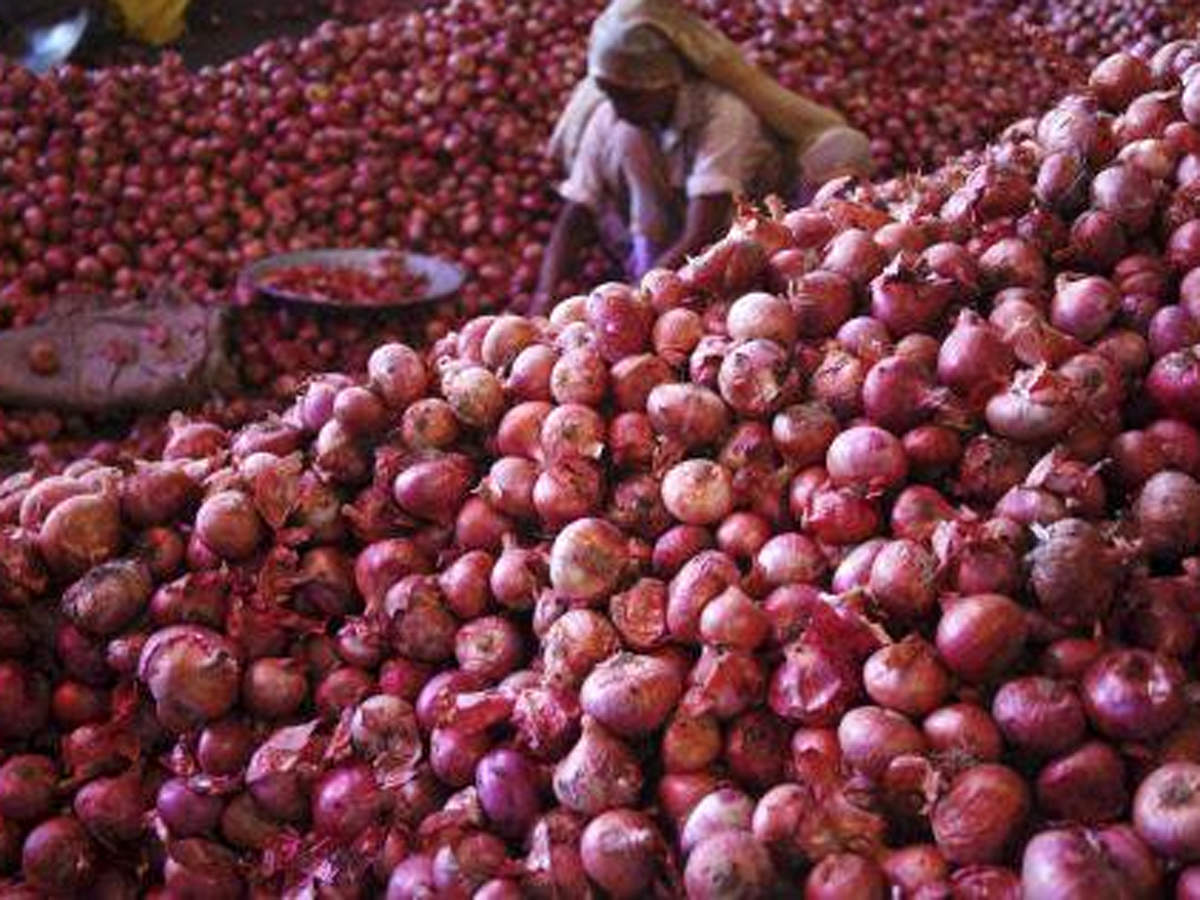
The Nigerian onion industry finds itself in a critical state, buckling under the strain of post-harvest losses, inflationary forces, volatile weather conditions, and economic hardships.
In light of this, onion producers have declared a state of emergency for the sector, imploring the government to take swift and decisive action to safeguard both the domestic and global position of one of the world’s most consumed vegetables.
Onion farmers across the nation are struggling to keep pace with the combined challenges of production costs that climb higher than their crops, post-harvest losses that eat away at profits, inflation that squeezes the very naira from their pockets, and climate change that adds an unpredictable element to an already challenging endeavour. The result is a restrained harvest, a shadow of what the nation’s onion fields could once produce.
While Nigeria is considered the 7th largest onion producer globally and the 2nd largest in Africa, with an annual output of two million metric tonnes, the country’s onion industry remains plagued by significant losses, stemming from inadequate postharvest practices, particularly during transit, as well as knowledge gaps among farmers and other stakeholders on proper bulb grading for marketing and storage management techniques.
These challenges have led to a substantial reduction in revenue potential for the Nigerian local and export markets, even though the onion industry has the capacity to be a major economic force in the country.
The National Onion Producers, Processors, and Marketers Association of Nigeria (NOPPMAN) recently discussed the ailing state of the onion industry, revealing that its members are bearing the brunt of losses exceeding 50 per cent across the entire value chain of this essential crop.
Aliyu Maitasamu, the president of both the Regional Observatory of Onion Sector in West and Central Africa (ROO/WCA) and NOPPMAN, shared the harrowing experiences of the onion farmers in a press conference held in Sokoto, the country’s largest onion-producing state.
“Over recent months, the cost of onion seedlings has surged to unprecedented levels, drastically impacting our production capacity.
“If farmers cannot afford to cultivate, our output will decline, prices will rise, and ultimately, food security across the nation will be at risk,” he pointed out.
Maitasamu, while confirming that post-harvest losses within the onion value chain currently exceed 50 per cent, noted that in practical terms, this means that more than half of the produce that onion farmers laboriously cultivate is discarded after harvest, crumbling under the combined weight of inadequate storage, insufficient preservation technology, and an unreliable transportation system.
The consequences of this loss, according to Maitasamu, are far-reaching, not only devastating the livelihoods of onion farmers but also inflicting a heavy blow on the economic health of the country as a whole.
As inflation continues to wreak havoc on the Nigerian economy, Maitasamu brought attention to the stinging effect of soaring prices for essential farm inputs such as fertilisers, pesticides, fuel, and labour.
For many onion farmers, this inflationary scourge has become a merciless foe, leaving them with little option but to contend with shrinking margins, diminished profits, and, for some, even the very real prospect of operating at a loss.
“This financial strain hampers farmers’ ability to maintain operations and discourages investments in new technologies or expansion,” the NOPPMAN president noted.
Maitasamu also spoke on the impact of climate change on Nigerian onion farmers, noting that erratic weather patterns, prolonged rainfall, and other abnormal conditions are disrupting the traditional onion-growing cycles.
According to him, excessive rainfall, in particular, has led to an increase in crop diseases, waterlogging, and reduced harvests, making it difficult for farmers to effectively plan their production and harvest schedules. These factors, he added, are posing a major challenge for farmers, as they struggle to adapt and cope with the changing climate.
Onion farmers in Sokoto, like Yakubu Usman, have attested to a lack of preservation facilities, which they claim is one of the primary hurdles facing farmers in the state.
Usman shared his personal experiences in a chat with Business a.m., noting that the inadequate infrastructure and storage facilities have made it difficult for farmers and traders to sell off their onion stock on time.
He urged the government, development partners, financial institutions, and the private sector to support the onion industry and help it overcome these challenges.
Habibu Abdulrahman, an onion trader from Mararaba, Nasarawa State, has confirmed that onion trading can be a lucrative venture but is marred by the significant issue of wastage, largely due to the highly perishable nature of the commodity. Despite the profit potential, Abdulrahman shared that the rapid deterioration of onions poses a major challenge for traders, often resulting in significant losses as they race against time to sell their stock before it spoils.
Abdulrahman revealed that his primary method for preserving onions is to simply dry them in the open air, a rudimentary practice that is, unfortunately, the only feasible option for many onion dealers in Nigeria.
“When the bags of onions are delivered, I have to sort them to remove the spoiled ones and sell the good ones. If they stay a few days longer in the bags and we haven’t sold them, they continue to spoil quickly,” he said.
While acknowledging the potential of the onion industry beyond its status as a common food ingredient, Abdulrahman highlighted the possibilities for onion-derived products such as onion paste, dehydrated onion flakes, onion powder, onion oil, onion vinegar, onion sauce, pickled onion, onion wine, beverages, and various ready-to-use applications.
Abdulrahman emphasised the urgent need to establish and adopt advanced onion processing facilities in Nigeria to mitigate the rampant waste experienced by onion farmers and traders in the country.
He stressed that this move would significantly bolster Nigeria’s position in the global onion market, especially considering the high value and global demand for onion powder, a product that can be produced from excess onions that might otherwise go to waste.
During a stakeholder interactive session held in May 2024, Umar Akoyi, the Sokoto State Coordinator of the Nigerian Export Promotion Council (NEPC), drew attention to the fact that onion, although a vital crop, was not initially recognized as an exportable product by the Nigerian government.
Akoyi posited that this oversight contributed to the lack of support and development for the Nigerian onion sector, ultimately hampering its growth and potential for global exports.
In light of the multitude of challenges besetting the onion production sector, the National Onion Producers, Processors, and Marketers Association of Nigeria maintains that the declaration of a state of emergency in the onion industry is a crucial step in initiating a concerted effort to fortify the sector, protect the livelihoods of its farmers, and ensure that Nigeria holds a prominent position in both the domestic and international markets.