Joy Agwunobi & Onome Amuge
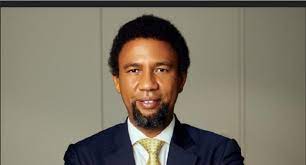
Karl Toriola, CEO of MTN Nigeria
Starting 2025 in high gear, the Nigerian telecommunication industry has embarked on a lobbying campaign to secure permission from the Nigerian Communications Commission (NCC) to implement a 100 per cent tariff hike.
The proposal is deemed necessary by the industry players to combat the effects of high inflation rates and harsh economic conditions, which have been at a near-three-decade peak, threatening to derail the stability of the telecom sector.
The telecom companies including, MTN, Airtel, amongst others, justify their case by arguing that telecommunications is a fundamental human right and a key component for economic growth, but without a sustainable industry, both the well-being of Nigerians and the economy will be jeopardised.
In light of this reality, the telecommunications industry is urgently requesting a tariff adjustment, proposing a 100 per cent increase to counter the mounting financial pressures affecting the industry’s sustainability.
Confronted with increasing operational costs driven by Naira devaluation, soaring inflation, and unprecedented energy price hikes, telecom operators insist that this measure is essential to guarantee the sector’s survival and its vital role in strengthening economic growth and digital inclusion in the country.
Karl Toriola, CEO of MTN Nigeria, underscored these challenges during a recent television interview, emphasising that the industry is struggling not just with profitability concerns but with fundamental sustainability.
Toriola explained that the current discussion was not about profitability but about fundamental sustainability in the industry, stating that profitability would come in the long term but that sustainability was paramount at this point.
Toriola also noted that with official currency rates devaluing from N450 per dollar to 1,550 recently, the cost structures of telecom companies like MTN have skyrocketed. He also pointed to the fact that the cost of purchasing diesel and petrol, procuring raw materials, and maintaining networks, including the licensing fees associated with them, have all seen astronomical increases, reflecting the current reality of the telecom industry in Nigeria.
“The costs that we’re spending are exceeding our revenue. Even though we are seeing revenue growth, there’s no way that the industry can continue to sustain itself and provide the required quality of service under this structure.
“Now, we’ve put forward requests of approximately 100% tariff increases to the regulators. I doubt they’re going to approve that quantum of increases because they’re very sensitive to the current economic situation in the country, but we’re hopeful that the realities are starring us in the face and the right decisions will be taken for the sustainability of the industry,” he noted.
Toriola further discussed the impact of FX devaluation on business operations, elaborating on the challenges faced by the telecom industry.
Toriola described the dual impact of FX devaluation on MTN’s operations as follows:
Firstly, on the balance sheet level, MTN’s foreign exchange liabilities, such as loans or lease obligations, are negatively affected by currency devaluation. This leads to FX losses, which must be accounted for in the company’s financial statements.
Secondly, from an operational standpoint, MTN experiences increased costs associated with doing business in a devalued currency. This affects the company’s bottom line and overall profitability.
“For example, if we acquired a base station two years ago for $100,000, it would have cost us about N40 million then. Today, the same base station would cost around N160 million due to the depreciation of the Naira. While we outsource our tower operations, we still effectively bear the cost of procuring diesel.
Two years ago, diesel was ₦300 per litre. Today, it ranges between ₦900 and N1,100 per litre. Despite developments such as the Dangote Refinery, these rising costs are exerting tremendous pressure on our operations,” he explained.
Toriola highlighted the implications of these cost pressures, stressing that they extend beyond mere profitability concerns. He pointed out that not only MTN and Airtel, but the entire telecom industry in Nigeria is facing an existential threat.
“Every part of the telecom ecosystem is impacted. Suppliers, contractors, and smaller operators are all experiencing rising costs and shrinking, or even negative, profit margins,” he added.
Toriola further emphasised the ripple effect that these cost pressures would have on the wider economy. He stated that the FX losses, from both a balance sheet and operational cost perspective, have shrunk margins across the board, and this has affected telecom companies’ ability to pay bills, maintain profitability, and, most importantly, sustain job creation – both direct and indirect.
Toriola warned that MTN alone is accountable for over two million jobs in the Nigerian economy, and any constriction of the telecom industry would directly translate into job losses.
As highlighted by the MTN CEO and other stakeholders in the telecom industry, the industry was beset by numerous operational challenges in 2024, which threatened to undermine its two decades of progress. This is as the weakening Naira, scarcity of foreign exchange, escalating operating costs, inflationary pressures, and dwindling investment combined to negatively impact the profitability of telecom operators.
,,,,,,,,,,,,,,,,,,,,,,,,,,,,,,,,,,,,,,,,,,,,,,,,,,,,,,
Responding to the issue earlier, The Nigerian Communications Commission (NCC) on July 29, 2024, issued a directive to telecommunications operators to simplify their tariff plans, bundles, and promotional activities.
The telecom industry regulator explained that the move aims to provide clear, easy-to-understand, and accurate information about the cost of voice, short messaging service (SMS) and data services to subscribers.
The directive, titled “Guidance on the Simplification of Tariffs in the Nigerian Communications Sector,” mandates Mobile Network Operators (MNOs) to publish a comprehensive table showing the features of their tariff plans and bundle offers.
The NCC noted that the guideline was the outcome of consultations with industry stakeholders, including MNOs and Consumer Focus Groups, and extensive data analysis on consumer preferences and expectations.
“The objectives of the simplification guidelines are to reduce the complexity of tariff plans and bundles, ensure transparency and fairness of promotional elements of tariff plans, protect consumers’ interests by providing clear and understandable tariff information so that they make informed decisions, and promote fair competition among licensees by standardising tariff structures.
“Service providers are also required to display all relevant information about their tariffs, such as the name of the plan, price, validity period, price-per-second for on or off-network and international calls, expected data speeds, and fair usage policies.
“Operators can maintain existing bonus-led tariff plans till 31st December 2024, within which period operators are expected to educate and migrate all subscribers to the simplified tariff plans,” the directive stated.
The guidelines further mandate that MNOs must communicate tariffs to subscribers in “clear language and a user-friendly format,” with full disclosure of a subscriber’s tariff plan via Unstructured Supplementary Service Data (USSD).
Additionally, “operators must offer stand-alone data bundles at fair prices to avoid tying consumers with products they do not need; bonuses on promotions must be stated in actual value; access fees and asymmetric fee structures must be eliminated,” among other conditions.
The NCC emphasised that while complying with these guidelines, operators must also meet the Key Performance Indicators (KPIs) standards set out in the Quality of Service (QoS) Regulations.
Meanwhile, the Nigerian telecom sector faced numerous challenges in attracting foreign investment in 2024, with data from the National Bureau of Statistics (NBS) showing a decline in capital inflow.
The foreign investment figures for Q3 2024 show a 76.99 per cent Year-on-Year (Y-o-Y) decline from the $64.05 million recorded in Q3 2023, with an 87 per cent decline quarter-on-quarter (Q-o-Q) from $113.42 million in Q2 2024.
The NBS data also revealed a 76.99 per cent Year-on-Year decline in capital inflow from $64.05 million recorded in Q3 2023 to $14.4 million in Q3 2024. Foreign capital inflow was also down 87 per cent from $113.42 million in Q2 2024 to $14.4 million in Q3 2024.
Bismark Rewane, CEO of Financial Derivatives Company (FDC), also dwelled on the dire state of the Nigerian telecom sector, pointing out that the industry’s revenues have dropped by more than 60 per cent in just four years.
Specifically, Rewane noted that annual revenues in 2020 stood at $8 billion, but had dwindled to $3 billion in 2024. This drastic decline, he argued, is indicative of a “bleeding” telecom sector.
“The revenues have reduced while costs have increased, and as was clearly stated, the telcos are in intensive care unit mode and dire need of new investments. These new investments will not come until the pricing formula has changed,” he asserted.
Bolaji Balogun, CEO of Chapel Hill Denham, stressed the importance of domesticating the Nigerian telecom industry to ensure its long-term sustainability.
Balogun identified the dollarisation of the industry as a significant hurdle for its growth and success, noting that localising operations would help mitigate the impact of currency fluctuations and promote local investment.
He also emphasised the need for the industry to become more self-sufficient and less reliant on foreign capital, thereby strengthening its ability to withstand economic shocks and sustain its growth in the future.
The investment banker urged the federal government to implement several measures to support the domestic telecom industry, including enabling tariffs, an equity model for co-investments in import substitution startups, mandating financial transparency, providing incentives for listed telecom companies, and requiring concession-based companies to be listed on the Nigerian Exchange (NGX).
“The ecosystem needs to increase localisation, minimise exposure to foreign exchange financing, utilise the capital markets, and develop a plan for talent development,” Balogun added.
According to Balogun, the telecom sector has attracted over $70 billion worth of investments in the last 24 years, but more investments are required to address several issues, including service quality, smartphone penetration, broadband quality and penetration, carbon footprint reduction, and talent pool development.
Despite the challenges highlighted in the sector, experts remain optimistic about its long-term outlook, citing factors such as the growing adoption of advanced technologies, a largely untapped internet market, underserved rural populations, and favourable demographics, which offer immense potential for further growth and development.
Nigeria’s telecom industry, being Africa’s largest mobile market, with an estimated 82 per cent of the continent’s telecom subscribers and 29 per cent of internet usage presents investors with attractive growth opportunities, cementing its status as a leading investment destination, according to industry experts.
This claim is based on the belief that Nigeria’s telecom sector has considerable potential for expansion, supported by factors such as its sizable population, growing adoption of advanced technologies, and largely untapped internet market, hence the need for significant government intervention.