Onome Amuge
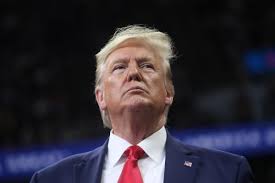
Donald Trump’s second term as US President brings with it a sustained “America First” agenda centred on trade protectionism, domestic energy production, and foreign policy with a transactional lens.
Analysts caution that for Nigeria, Africa’s largest economy and most populous country, the implications of these policies could mean a mixed bag of opportunities and challenges, across various domains including trade, energy, and diplomacy, amongst other international relations.
Historically, the trade relationship between Nigeria and the U.S. has been strongly shaped by Nigeria’s oil exports to the U.S. market, with the latter serving as a leading buyer of Nigerian crude oil in 2024.
With Nigeria’s economy being largely dependent on crude oil exports, Trump’s National Energy Emergency could have substantial implications for the country. This is as concerns mount that reduced imports of fossil fuels from Nigeria by the U.S. could lead to a decrease in crude oil revenues, while increased U.S. exports could create additional competition for Nigeria in global export markets, potentially undermining its competitive advantage.
In the wake of looming global economic instability, underpinned by protectionist policies and potential fragmentation of international trade, analysts have voiced their concerns regarding the impact of such shifts on Nigeria’s economic growth prospects. As the most populous nation in Africa, with its economy heavily dependent on crude oil exports, there are concerns that Nigeria faces significant risks in addressing the uncertain economic situation, which could potentially worsen the country’s already fragile economic conditions if proactive policies and measures are not implemented.
Speaking on the potential impact of President Trump’s energy policy on Nigeria’s oil production and trade, renowned economist and business strategist, Marcel Okeke, opined that should the U.S. indeed increase its domestic fossil fuel production to the extent of ceasing crude oil imports altogether, Nigeria would inevitably suffer a reduction in its share of the global market for oil exports, as a key U.S. customer.
“If we follow the scenario of the US producing more, certainly the price (oil) will come down and the price coming down has a lot of implications. We may not begin to panic, because it might not go down below $75 which is our assumption in our budget. But if it goes down below that, we already have a challenge of borrowing and the borrowing spree will go on,” Okeke warned.
Ade Atobatele, founder of Remarkable Ideas Ltd., also shared his sentiments regarding the challenges for Nigeria stemming from President Trump’s trade policies, notably the decline in oil demand due to the U.S. aggressive pursuit of energy independence, coupled with rising domestic shale oil production. This strategy, he observed, has already resulted in diminished imports of Nigerian crude oil by the U.S.
Atobatele further noted that Nigeria’s non-oil exports are also at risk, noting that Nigerian products may face challenges in meeting stringent U.S. import standards, making diversification efforts more difficult.
The information technology expert also identified the disruption of the African Growth and Opportunity Act (AGOA) as another potential issue for Nigeria caused by Trump’s action. As a member of AGOA, Nigeria currently enjoys duty-free access for its exports to the U.S. market, but Trump’s scepticism toward preferential trade agreements could result in renegotiations or reduced benefits under AGOA, he stated.
On the flip side, Atobatele noted that Trump’s policies offer some opportunities for the Nigerian economy, one being in terms of agricultural exports as Nigeria can increase its agricultural exports, such as processed cocoa, sesame seeds, and cashew nuts, by aligning with U.S. regulatory requirements.
Atobatele also noted that Trump’s policy can offer Nigeria partnerships in manufacturing as it can enable Nigeria to attract U.S. businesses seeking cost-effective manufacturing hubs, leveraging its access to regional markets through the African Continental Free Trade Area (AfCFTA).
To mitigate risks and maximise trade opportunities, Atobatele suggested that Nigeria should strengthen local production by investing in processing industries to add value to raw exports and appeal to U.S. buyers.
Furthermore, he recommended that Nigeria pursue regional integration by fully leveraging the AfCFTA to reduce dependence on U.S. markets. According to him, by maximising the benefits of the AfCFTA, Nigeria can not only diversify its export destinations beyond the U.S. market but also build stronger economic links with other African nations.
Atobatele called for the expansion of Nigeria’s gas export infrastructure by investing in liquid natural gas (LNG) facilities to tap into growing demand, particularly in Asia and Europe. He also recommended exploring renewable energy collaborations with European and Asian nations to balance U.S. fossil fuel preferences.
US President Donald Trump reiterates BRICS nations would face 100 per cent tariffs on trade with the US if they continue their de-dollarization efforts. Johnson Chukwu, CEO of Cowry Asset Management and Adedapo Adelegan, 14th President of the Nigeria British Chamber of Commerce and CEO of PRAfrica International join CNBC Africa to unpack Trump’s inauguration day speech and likely impact of policy direction as well as the future of Nigeria joining BRICS as a partner country.
In his assessment, Johnson Chukwu, the CEO of Cowry Asset Management, observed that Trump’s policies on fossil fuel production were largely anticipated.
According to Chukwu, Trump’s stated views on clean energy and fossil fuels were already widely known, and the market had started adjusting to the prospect of increased oil exploration and production in the U.S., as Trump’s views were at odds with the global focus on transitioning away from fossil fuels to mitigate environmental damage.
“Today, America is already the highest producer of crude. We know that Trump will support investment that will improve hydraulic manufacturing which will see the US produce a lot more crude and gas,” he noted.
Chukwu further elaborated on Trump’s stance on international trade and the U.S. dollar. In his recent comments, President Trump asserted that he would impose 100 percent tariffs on BRIC countries of which Nigeria is a member, if they attempted to develop a counter currency or challenge the dollar’s global dominance.
The Cowry Asset CEO also pointed out that Trump’s threats toward BRIC countries may not be as effective as he (Trump) hopes, as their determination to pursue alternative currency arrangements is unwavering.
He added the U.S. disengagement from international cooperation and its refusal to follow the path taken by Western and European nations is noteworthy. Chukwu observed that the U.S. withdrawal from the World Health Organization (WHO) and its general reluctance to align with international standards is reflective of a broader shift in the nation’s approach to global relations and trade.
Chukwu emphasised that the potential tariffs on BRIC countries may not directly affect Nigeria’s economy, as the country’s imports from the U.S. account for only seven per cent of its total imports. He noted that the small size of U.S. imports from Nigeria further diminishes the impact of these tariffs on the Nigerian economy.
According to him, Nigeria’s status as a BRICS partner nation could potentially provide avenues for alternative trade relationships and foreign investment, which might serve to mitigate the risks associated with the U.S.’s protectionist policies.
Chukwu identified China and India, the U.S.’s major trading partners, as potential casualties of Trump’s tariff threats, compared to Nigeria.
Chukwu stressed that the imposition of tariffs by the U.S. on major trading partners such as China, Canada, and Mexico could result in retaliation in the form of reciprocal tariffs, which in turn could disrupt the established global trade system and slow down international trade.
This, he warned, would lead to a reduction in global production and trade activity. He added that this scenario would likely have ramifications for developing economies, including Nigeria.
“We are going to witness a new world order that the U.S. president is going to create by disrupting trade, discouraging global trade, as well as imposing sanctions and picking up models which are not necessary,” he stated.
Chukwu welcomed Nigeria’s BRICS partnership as a positive development for the country’s economy. He noted that the economic growth trajectories of fellow BRICS nations, particularly Brazil, India, and China, reflect a concerted effort to establish a counter-balance to the global power structure of the G-7 nations.
In his view, Nigeria’s membership in BRICS presents an opportunity for the country to leverage its economic potential and form mutually beneficial trade and economic partnerships with other fast-growing economies.
Going forward, he advocated for Nigeria to take decisive steps to improve its business environment and attract both domestic and foreign investments.
He identified the need for the country to create a productive economy with a competitive cost of doing business. He also underscored the importance of tackling corruption, which remains a persistent obstacle to attracting capital and creating a sustainable business ecosystem in Nigeria.
According to Chukwu, effective policies, rather than merely belonging to international groups, are the true catalysts for economic growth and global influence. Drawing on the example of the United Arab Emirates, which has transformed into an international economic powerhouse by creating a conducive business environment, he implored Nigeria to replicate this strategy and construct a productive economy that would attract investments and opportunities.