
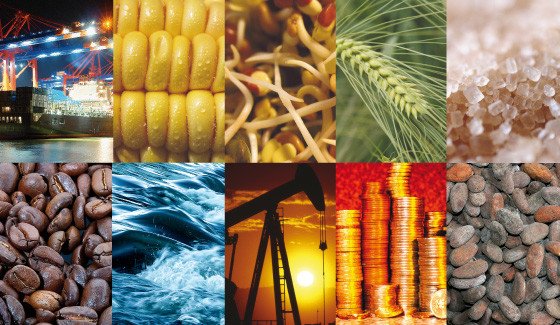
Nigeria is a nation richly endowed with an abundance of agricultural produce and solid minerals.Unfortunately, the country has consistently struggled to convert these assets into a thriving manufacturing base to enhance economic growth. The paradox, according to analysts, lies in its export strategy, being a persistent reliance on raw material shipments that, far from enabling industrial development, actively undermines it.
For decades, the narrative of Nigeria’s export economy has been dominated by crude oil. However, even efforts to diversify non-oil exports have sadly reinforced the raw material trap. The Export Expansion Grant (EEG), introduced in 2002, was envisioned as a tool to incentivise broader economic activity. By 2015, the EEG had supported about $3.5 billion in exports across sectors like agriculture, solid minerals, and manufactured goods. Between 2010 and 2020, Nigeria’s non-oil exports did indeed witness a significant expansion, growing from $1.5 billion to over $10 billion.
However, beneath these headline figures lies a fundamental flaw. A 2018 World Bank report delivered a scathing indictment, revealing that between 2010 and 2018, over 70 per cent of EEG benefits were funnelled into raw material and minimally processed commodity exports. This directly contradicted the programme’s original industrialisation objectives. Reports showed that firms exporting agricultural products and solid minerals in their natural, unprocessed forms frequently received substantial grants without any corresponding investment in local processing capabilities. As a consequence, between 2010 and 2020, Nigeria exported about $400 billion of raw materials, while manufactured goods languished at less than five per cent of total exports.
According to market data, in 2023 alone, 97.6 per cent of Nigeria’s agricultural exports were raw, despite estimates projecting local processing could multiply revenues tenfold.
As it stands, the heart of Nigeria’s agricultural export challenge is its continued reliance on raw commodity exports. This model systematically strips the country of potential revenue and job creation opportunities. A huge portion of Nigeria’s agricultural products, such as cocoa and cashew, are shipped out without any value addition, leaving the nation stuck at the lower end of the global market where profits are minimal and volatile. In contrast, countries that process these raw materials into finished goods like chocolate, cashew butter, or sesame oil earn more.
In 2023, Nigeria earned approximately $708 million from cocoa exports. Experts, however, estimate the country could have made more had a larger share been processed locally. The disparity is even more pronounced with cashew. In 2022, Nigeria exported raw cashew worth $252 million. Meanwhile, Vietnam, which processes the bulk of Nigeria’s raw cashew, generated over $4.3 billion from selling processed cashew products in 2024.
Beyond the immediate financial loss, the cost of this unprocessed export model is socio-economic. Local processing, according to market experts, creates an effect of jobs across multiple sectors including packaging and logistics to storage, equipment maintenance, and marketing.
The recognition of this systemic flaw has spurred legislative action. This has led into a push for a 30 per cent value addition requirement on raw materials before export, a move aimed at diversifying the economy and enhancing industrialisation and job creation. This approach is well-precedented over time. Even within West Africa, Ghana has built a strong domestic cocoa processing industry, and Côte d’Ivoire now processes over 40 per cent of its cocoa domestically, while Senegal has successfully invested in agro-processing clusters for peanuts and fish.
However, the path to implementing such a policy in Nigeria is fraught with challenges. The Federation of Agricultural Commodity Associations of Nigeria (FACAN), while acknowledging the potential benefits, has cautioned the National Assembly against rushing the proposed 30 per cent value addition mandate. Their concerns are rooted in practical realities for smallholder farmers and exporters.
The federation argues that such a measure, while seemingly aimed at boosting industrialisation, could inflict more pain on farmers and exporters if implemented without careful consideration of the prevailing realities on the ground.
In a submission paper , FACAN, through Peter Bakare, its executive secretary, called on the upper legislative chamber to explore all necessary information before approving the passage of the proposed amendment to the Raw Materials Research and Development Council (RMRDC) Act, which seeks to grant RMRDC such power over raw agricultural produce.
FACAN acknowledged the positive potential of enforcing a 30 per cent processing requirement for raw materials, recognising its capacity to generate economic benefits and enhance competitiveness within the sector. However, the federation outlined a series of critical challenges that must be thoroughly addressed, particularly concerning smallholder farmers who form the bedrock of Nigeria’s agricultural landscape.
Experts concur that Nigeria’s export strategy is directly impeding its industrialisation. Data from the Raw Materials Research and Development Council (RMRDC) showed that Nigeria’s raw material value addition improved only from 15.6 per cent in 2013 to 25.2 per cent in 2023. This is paltry when compared to South Africa’s growth from 63.2 per cent to 75.6 per cent, Egypt’s from 51.1 per cent to 64.8 per cent, and Brazil’s from 83.4 per cent to 97.6 per cent over the same period. This low level of value addition means Nigeria re-imports finished products at higher prices, perpetuating its economic challenges. Furthermore, manufactured goods dominated Nigeria’s total imports between April 2023 and June 2024, at N27.3 trillion, dwarfing raw material imports. Nigeria’s poor secondary raw material utilisation (recycling and reuse) at 4.8 per cent in 2023 also indicates a missed opportunity for industrial development and environmental sustainability, trailing far behind South Africa (26.2%), Egypt (21%), and Brazil (47.6%).
Madu Obiora, director-general of the African Centre for Supply Chain,identified a lack of competitiveness. “The problem is the country itself, which trickles into every sector. Manufacturers cannot get light to produce. This is why Michelin, P & G, Sanofi, GSK and others left the country,” he lamented. Obiora contended that as long as critical infrastructure, particularly electricity and logistics, remains decayed, local manufacturing will continue to struggle. He therefore advocated for a strategic diversification towards services export rather than solely commodity export. He lamented the lack of data capture for services exports, which globally is a faster-growing sector than commodities.
Vincent Nwani, a macroeconomist and policy analyst, also noted that exporting raw products yields a maximum of only about five per cent of their total value. “All the things we export…we are getting just about five per cent of their value,” he stated, observing that even the few top non-oil exporters in Nigeria are often foreign-owned, such as Olam.
Nwani noted that the government is aware of the problems but has not been serious about removing the obstacles to value addition.
He pointed to youths gravitating towards online content creation because it offers clearer profit pathways, demonstrating that where there is money and investment safety, people will naturally go. He expressed regret that Nigeria cannot add value to the few goods being exported due to the challenges suffocating the sector, citing worsening insecurity, macroeconomic challenges, exchange rate volatility, and power deficits.
“These unending problems kill the desire to add value to produce or manufacture goods for sale. Everyone prefers to import and sell now because it has less stress. We cannot build an economy on imports because there would be no jobs for people to do while crime and insecurity will worsen…It is a vicious cycle of poverty at the end of the day,” he stated.
According to market stakeholders, Nigeria’s transition from a raw commodity exporter to a value-added agro-industrial hub hinges on a multi-pronged approach that moves beyond ad-hoc incentives to fundamental structural reforms.
FACAN’s recommendations provide a roadmap that includes suspending the proposed 30 per cent value addition bill for comprehensive stakeholder consultations, including farmer groups, processors, exporters, and industry experts.
The association also called for a clarification of key provisions of any new legislation. This includes how the 30 per cent value addition would be calculated for diverse commodities, Which agency will determine compliance, and what benchmarks and standards will apply.
FACAN further called on the government to develop an implementation roadmap that includes targeted training and capacity-building for farmers and processors to equip them with the necessary skills and technical know-how.
Dwelling further on recommendations, FACAN called for significant investment in rural infrastructure, particularly reliable power, improved road networks, and adequate cold storage and processing facilities. It noted that initiatives like Special Agro-Industrial Processing Zones (SAPZs) show promise, but need to be scaled up and effectively managed.
FACAN also called for enhanced access to finance and modern technology for processors, harmonisation and simplification of certifications to avoid multiple charges and reduce bureaucratic burdens, and consideration on pilot programmes or phased implementation for value addition, focusing on select commodities or regions with existing capabilities.
Analysts believe Nigeria’s economic future depends on its ability to shift from merely extracting and exporting raw materials to becoming a sophisticated producer of refined, value-added goods. This is considered not solely an agricultural concern, but a national economic imperative that will stimulate industrial growth, create widespread employment, and fundamentally strengthen Nigeria’s position in global trade.








This government must not raid investors’ money