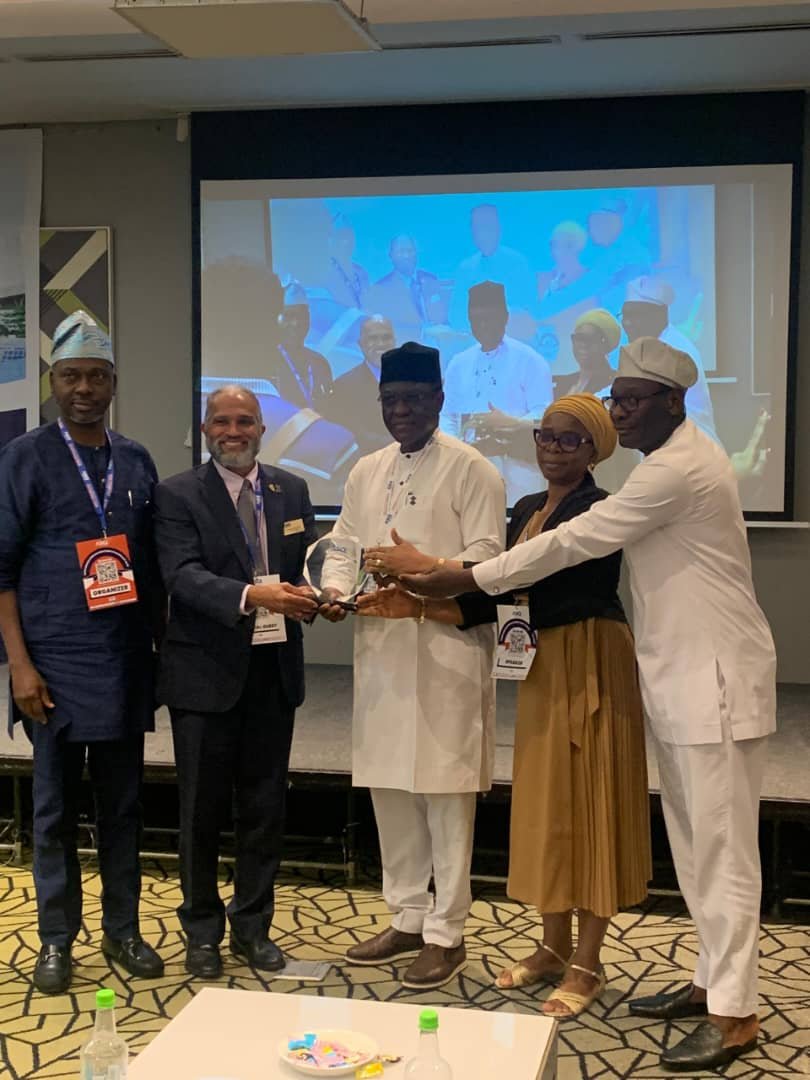
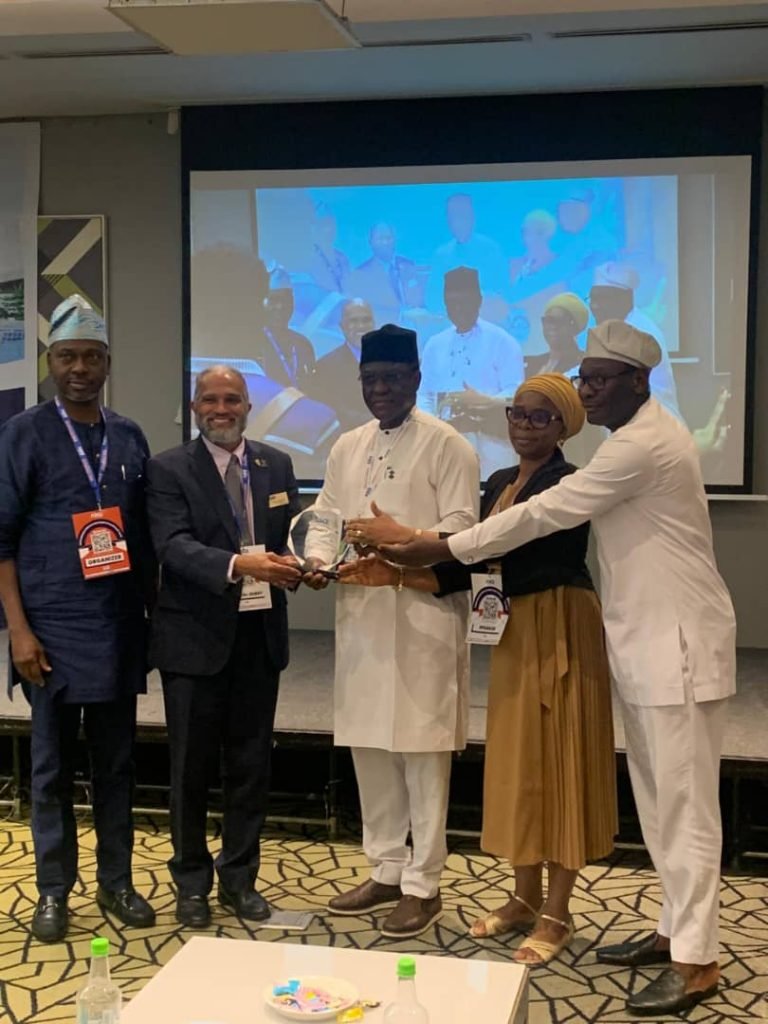
Julius Berger Nigeria PLC, the country’s leading engineering construction firm, has been recognised with the inaugural Award for Leadership in Sustainable Construction by the American Society of Civil Engineers (ASCE). The accolade was presented at the recently concluded 2025 Sustainable Infrastructure Conference held in Lagos, through ASCE’s Sustainable Infrastructure Recognition Awards (SIRA) platform.
ASCE established SIRA as Nigeria’s premier platform to celebrate excellence in the delivery of sustainable, climate-resilient, and impactful infrastructure. The award honours individuals, organisations, and projects that demonstrate innovation, resilience, and bold leadership in transforming the built environment.
According to ASCE, Julius Berger was deemed eminently qualified for the Leadership in Sustainable Construction Award, citing its groundbreaking achievements across sustainable construction and engineering practices, green energy infrastructure, indigenous construction leadership, and climate-aligned design.”
A key highlight of Julius Berger’s winning submission was its pioneering application of Bitumen Stabilised Materials (BSM) in construction works, notably on the Abuja-Kaduna-Zaria-Kano road project. During a presentation, ASCE underscored the significance of the technology, stating, “We are celebrating those who are not just building but building better for our future; this is the moment to move from policy to performance, from ideas to impact and from construction to conscience.”
Austin Odibi, president of ASCE’s Nigeria Section, lauded Julius Berger’s initiative, describing the BSM technology as a compelling novelty. His sentiments were echoed by Tom Smith, ASCE executive director, who praised its application and recommended its global adoption. “I commend Julius Berger for the BSM technology. That it is being awarded the Leadership in Sustainable Construction today underscores this fact. Kudos to the company. We recommend BSM technology for general construction applications globally, even in the United States,” Smith stated.
Further validation came from Abdulmuminu Ahmed Shauibu of Ahmadu Bello University, Zaria. In his presentation titled “Statistical Evaluation of Indirect Tensile Strength and Unconfined Compressive Strength in Bitumen Stabilized Materials: Case Study of the Abuja-Kaduna-Kano Highway as constructed by Julius Berger,” he concluded that the innovation is a welcome development in the construction sector which must be encouraged.
Shauibu elaborated that Julius Berger’s use of cold recycling technology with bitumen-stabilised material represented an attempt to develop cost-effective, environmental-friendly, as well as sustainable infrastructure. He noted its acceptance by the federal government due to its numerous potentials to address sustainability problems,”such as mitigating the need to explore virgin materials that could affect ecosystems and wetlands. The technology’s reliance on milled material from distressed asphalt pavement further enhances its effectiveness and sustainability.
Accepting the award, Abdulaziz Kaita, director of administration at Julius Berger, expressed gratitude for the recognition. He highlighted the company’s commitment to uplifting the Nigerian construction industry through pioneering innovations like BSM technology, adding that Julius Berger’s contributions to the built sector extend beyond the BSM technology.
Kaita stated that the BSM technology contributes to Sustainable Development Goals 9 (Industry, Innovation, and Infrastructure) and 13 (Climate Action), noting its very low energy consumption and release. He also underscored Julius Berger’s ongoing collaboration with the Department of Civil Engineering at Ahmadu Bello University on the BSM technology, affirming the strong and nourished partnership.
Among the representatives from Julius Berger at the event was Fatima Kosemani, a project coordinator in Region West.