

Onome Amuge
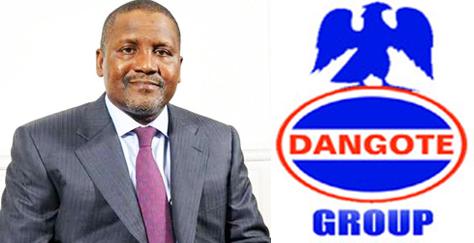
Africa’s richest man, Aliko Dangote, has signed a $2.5 billion agreement with the Ethiopian government to build one of the world’s largest single-site fertiliser plants, in a move officials say will transform the country’s agriculture and reduce reliance on imports.
The deal, finalised on Thursday between Dangote Group and Ethiopian Investment Holdings (EIH), the state’s strategic investment arm, will see Dangote Group take a 60 per cent equity stake, with EIH retaining the remaining 40 per cent.
When completed, the Gode-based facility in Ethiopia’s Somali Regional State will rank among the five largest urea production complexes globally, with an annual capacity of up to three million metric tonnes, according to EIH. Construction is expected to take 40 months.
The project will include a pipeline to transport natural gas from Ethiopia’s Calub and Hilala fields, with room for expansion into ammonia-based fertilisers. Ethiopian officials said the development was not just an industrial investment but a strategic step toward securing food supplies and achieving agricultural transformation.
“This landmark agreement with Dangote Group marks a significant milestone in Ethiopia’s journey toward industrial self-sufficiency and agricultural modernization. The project will ensure energy security, boost productivity, and deliver tremendous value to Ethiopian farmers,” said Brook Taye, chief executive of EIH.
Prime minister Abiy Ahmed hailed the agreement as a decisive step toward food sovereignty, adding in a social media post that the complex would create thousands of jobs, ensure a reliable supply of fertiliser for farmers, and position Ethiopia as one of the world’s top producers.
Dangote, who has built Africa’s largest cement empire and recently commissioned the continent’s biggest oil refinery in Lagos, described the Ethiopian venture as part of his long-held ambition to industrialise Africa. “We are committed to bringing our decades of experience in large-scale industrial projects to ensure this venture becomes a cornerstone of Ethiopia’s industrial transformation and a catalyst for agricultural productivity throughout the region,” he said.
The billionaire’s fertiliser push underscores Africa’s growing demand for inputs critical to agriculture, a sector that employs the majority of the continent’s workforce but often struggles with low productivity. Ethiopia, Africa’s second most populous country, has for years battled fertiliser shortages and volatile prices, with imports straining foreign reserves.
By partnering with Dangote, Addis Ababa hopes to cut import bills, stabilise supplies, and potentially develop an export hub for East Africa. For Dangote, the project represents another expansion of his industrial footprint outside Nigeria, where his Lagos-based fertiliser plant, which was inaugurated in 2022, already produces three million tonnes of urea annually and has turned Nigeria into a net exporter.
Analysts say the structure of the deal, which gives the Ethiopian state a 40 per cent stake, reflects a new model of African industrial partnerships aimed at balancing foreign expertise with domestic control. The plant is expected to be financed through a mix of equity and debt, though details of lenders have not yet been disclosed.
If delivered on schedule, the Gode complex could position Ethiopia alongside Nigeria, Egypt and Morocco as one of the continent’s fertiliser powerhouses. It comes as governments across Africa seek to boost food security in the face of climate shocks, foreign exchange constraints and supply disruptions triggered by Russia’s invasion of Ukraine, which sent global fertiliser prices soaring.
For Dangote, whose industrial ventures now span cement, fertilisers, petrochemicals and refining, the Ethiopian project is another step in his attempt to reduce Africa’s dependence on imports of essential goods.






This government must not raid investors’ money