
Onome Amuge
Access Holdings has underscored its commitment to sustainability and youth innovation by supporting a student-led initiative that transforms discarded plastic waste into art, in a bid to spark conversations around environmental responsibility.
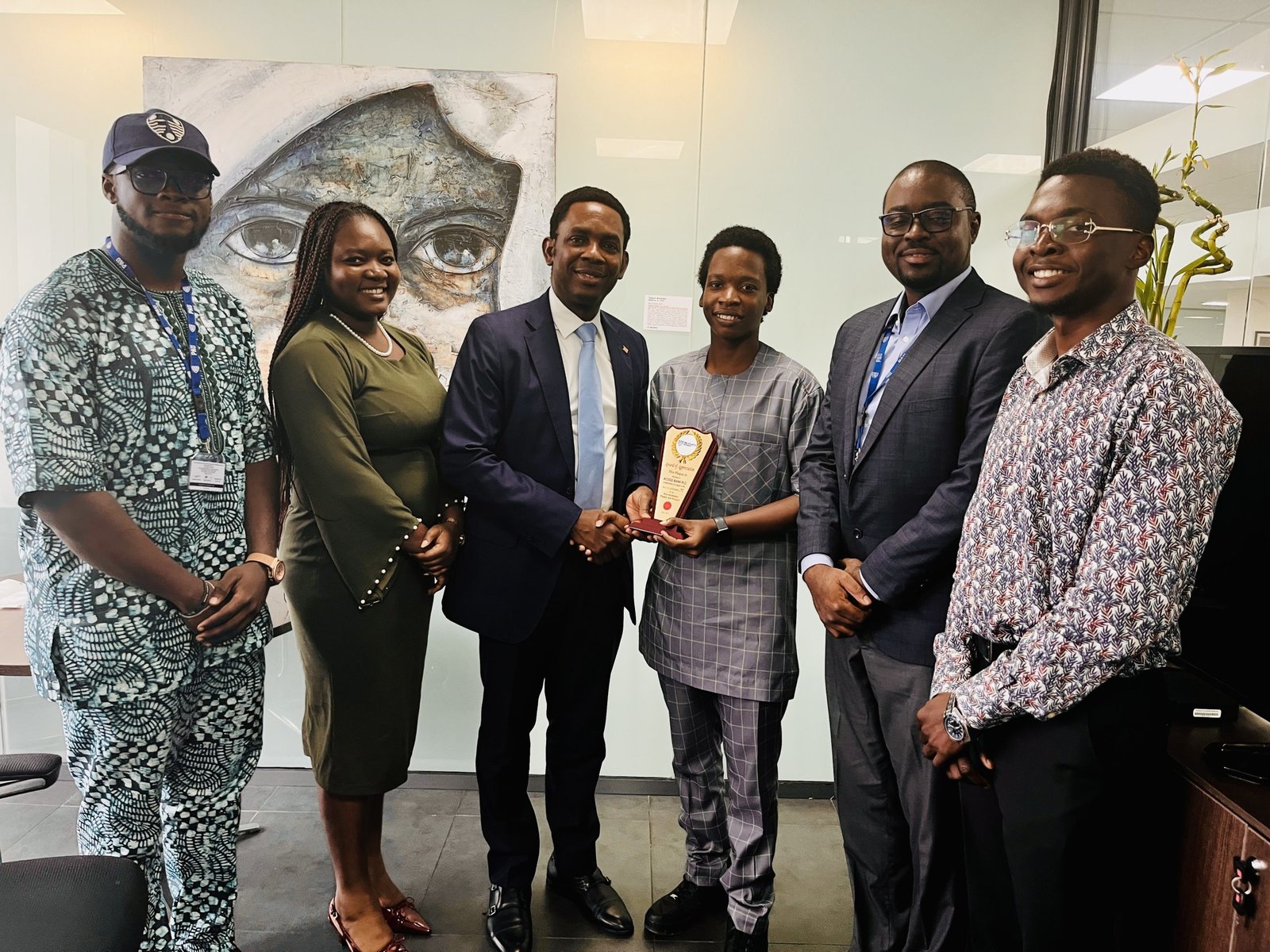
Students from Lagos-based Pan-Atlantic University visited the financial group’s headquarters this week to thank the firm for sponsoring the EcoMalchemy Plastic-to-Art Project, which turned single-use plastics into installations now displayed in a museum. The group presented Access Holdings with a special award of appreciation during the visit.
The project, which blends creativity with environmental awareness, sought to highlight the mounting challenge of plastic pollution in Nigeria, where waste management infrastructure has struggled to keep pace with rapid urbanisation. Students said the experience broadened their understanding of how art can serve as a tool for sustainability advocacy while encouraging communities to rethink consumption habits.
Victor Willie, head of stakeholder management at Access Holdings, received the delegation alongside the group’s sustainability team. He praised the students’ creativity and stressed that collaboration with young innovators was central to the company’s sustainability strategy.
“Supporting youth-led projects allows us to not only address urgent environmental challenges but also to inspire the next generation of leaders to think differently about impact,” Willie said.
The EcoMalchemy project adds to a series of environmental initiatives sponsored by Access Holdings in recent years, from community recycling schemes to awareness campaigns aimed at reducing carbon footprints. The bank has increasingly tied its corporate responsibility agenda to the United Nations Sustainable Development Goals, with a particular focus on climate action and responsible consumption.
Nigeria, Africa’s most populous country, generates an estimated 2.5 million tonnes of plastic waste annually, according to UN data, with much of it ending up in waterways and informal dumpsites. Environmental campaigners have long warned that without intervention, the problem will continue to fuel flooding, pollution and health hazards in urban areas.
For Pan-Atlantic University students, the project was an opportunity to demonstrate how creativity can shift perspectives on waste. Access Holdings, parent of Access Bank, said it would continue to champion projects that combine innovation with long-term environmental and social impact.








This government must not raid investors’ money