Onome Amuge
Nigeria could face fresh fuel shortages from next week as petroleum tanker drivers threaten to halt loading operations in a dispute with the management of Dangote Petroleum Refinery, raising concerns about supply disruptions in Africa’s largest oil producer.
The Nigeria Union of Petroleum and Natural Gas Workers (NUPENG), which represents thousands of tanker drivers, said on Friday it would withdraw its members from fuel loading depots starting September 8 unless the refinery reverses its plan to bypass unionised drivers.
The confrontation stems from Dangote’s plan to import 4,000 compressed natural gas-powered trucks for direct fuel distribution to retailers, a move intended to cut costs and improve efficiency. The scheme, originally scheduled to begin on August 15 but delayed by logistics issues in China, is expected to commence once sufficient trucks arrive.
NUPENG has accused the refinery’s management of pursuing anti-labour practices inimical to the survival and means of livelihoods of its members. In a statement signed by Williams Akporeha , the union president and Afolabi Olawale, its general secretary, NUPENG alleged that drivers recruited to operate the new fleet were being compelled to sign agreements barring them from joining any trade union.
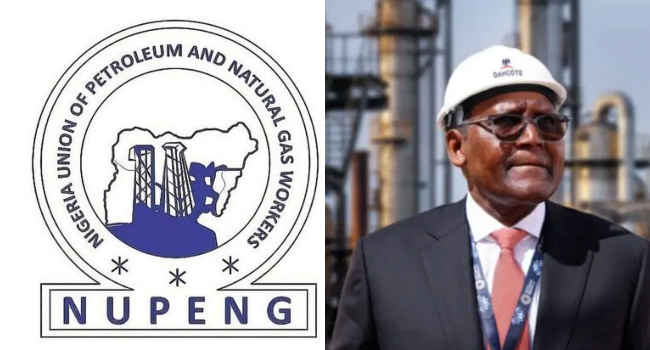
“This position is an affront to the right of association guaranteed under the constitution and a breach of international labour conventions,” the union said, adding that repeated appeals to refinery founder Aliko Dangote and his cousin Sayyu Dantata, chair of oil company MRS, had been ignored.
The union warned that replacing tanker drivers with non-unionised recruits would amount to destroying the livelihoods of thousands of workers and accused the refinery of attempting to “monopolise distribution, crush competition, and raise prices.”
The refinery has not publicly responded to the union’s accusations, but officials have previously said the truck importation plan was designed to improve product delivery nationwide.
The threat of industrial action comes as Nigeria’s downstream oil sector faces transition pressures following the commissioning of the $20bn Dangote refinery in May 2023. With a capacity of 650,000 barrels per day, the Lagos-based facility was billed as a game changer for the country’s energy security, but its distribution model has triggered resistance from existing players.
Labour unrest could deepen volatility in a sector already prone to disruptions, raising the prospect of queues at petrol stations and further economic strain. The Nigerian Midstream and Downstream Petroleum Authority has been urged by NUPENG to intervene, using its powers under the Petroleum Industry Act to prevent anti-competitive practices and enforce labour rights.
The union also called on the Nigerian Labour Congress (NLC), Trade Union Congress (TUC) and international union bodies to prepare for solidarity action if necessary. “We plead with the general public to bear any inconveniences our struggle may cause. It is a struggle that must be waged,” NUPENG said.