Onome Amuge
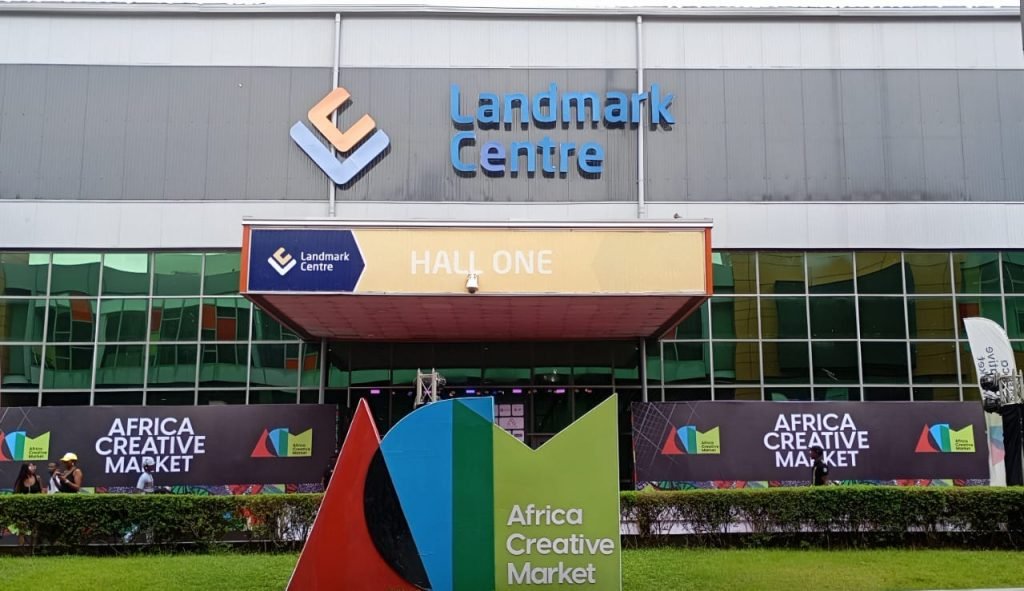
The just concluded African Creative Market (ACM) 2025 in Lagos turned the city into a hub of ideas, investment and cultural expression, drawing global and continental stakeholders in the creative industries. The four-day event, held from September 16 to 19, was designed to accelerate the growth of Africa’s creative economy by strengthening the business side of the sector.
The event was a hive of collaboration, exhibitions and lively discussions ranging from music to film, tech to design, amongst other exciting moments.
One of the highlights of the event was a panel discussion on the future of fashion education, a sector that employs millions across Africa and is now at the intersection of heritage, technology and entrepreneurship.
Titled “The Future of Fashion Education in Africa”, the session was moderated by media professional Adaeze Aduaka and featured four fashion experts including: Sola Babatunde, founder and managing director of OSC Group; Blessing Azubike, acting head of programmes at CcHub; Achu Blessing Ebere, founder and CEO of 360 Hub; and Emmy Collins, creative director of Emmy Collins London.
The panellists noted that Africa’s fashion schools must evolve quickly or risk leaving a generation of creatives unprepared for a globalised and tech-driven market.
During the discussion, Sola Babatunde noted that the OSC College of Fashion, an initiative of the OSC Group, has about 300 fully funded training slots for unemployed youths in Lagos, Ibadan and Abuja. Delivered through partnerships with NGOs and foundations, the six-month programme covers industrial sewing, advanced pattern-making, digital design and laser cutting.
“Too often, we think fashion is just fabric and thread. But there are specialised machines for every stage of production, costing structures to understand, and business models to design. We are training fashion entrepreneurs, not just tailors,” she stated.
According to her, students undergo interviews, complete hands-on training and are placed in jobs (sometimes with stipends) “For the best students, placement is guaranteed.It’s a win-win for everyone,”she added.
London-based designer Emmy Collins urged young designers to stay rooted in cultural inspiration,while cautioning against limiting African fashion to predictable categories.
“Yes, draw from your museums, your music, your environment. But don’t assume that inspiration must lead to ankara gowns or agbada. The result could be a suit that competes in Milan or Paris, but one that carries your cultural DNA in subtle ways,” he said.
Collins, who has spent decades making waves in international markets, emphasised that quality is non-negotiable. “If you get quality wrong, everything collapses from there. The world doesn’t buy excuses,” he warned.
Achu Blessing Ebere asserted that heritage is not just inspiration but survival. She noted that at 360 Hub, she has worked with women weavers in eastern Nigeria to preserve and monetise traditional skills.
“In some communities, weaving knowledge risked dying out because young people were no longer interested. So we documented the processes, structured the training, and showed women that this craft could be a source of income, not just culture,” she said.
Ebere explained that the documentation is stored within community archives rather than online, safeguarding intellectual property while enabling artisans to control how designs are shared. Today, some of those designs are digitised and marketed globally, proving that preservation and commerce can go hand in hand.
On her part, CcHub’s Blessing Azubike argued that while heritage anchors the industry, technology is propelling it forward.
“Technology is no longer the future;it is the present. It makes fashion education more affordable, more accessible, and more collaborative across borders,” she said.
Azubike highlighted Fashionomics, a pan-African accelerator supported by the African Development Bank, which strengthens collaborations between designers and technologists across the continent. “We’ve had Nigerian designers work with Ugandan tech providers to build solutions. That simply would not happen without digital platforms,” she said.
Azubike also identified Artificial Intelligence (AI) as the next frontier. “With 3D design tools, you can now prototype a collection from simple text prompts, cutting costs and timelines dramatically,” she said.
The challenge, she argued, is no longer access but adoption. “We cannot keep producing graduates who only know how to sew. They need digital fluency, sustainability practices and business literacy,” she added.
The panelists advocated the urgent need for fashion schools to embed entrepreneurship and financial management into curricula.
“Funding is flowing into the creative industries, but many designers can’t access itThey don’t have registered businesses, they don’t keep books, and investors won’t back what looks like a hobby,”Azubike observed.
Babatunde agreed, noting that OSC’s curriculum now includes modules in costing, accounting, intellectual property and supply chain management. “You don’t have to own a machine to succeed. You can be a fashion accountant, a production manager, or a PR strategist. The value chain is vast,” she said.
Ebere, however, cautioned that while creatives must understand the basics, they should also build teams. “When I trained in Spain, I saw teams pitching: the designer explained the vision, the business manager presented the numbers. That’s how confidence is built. Creatives should not carry every burden alone,” she said.
“In the beginning, you are everything—your own PR agent, your own accountant, your own photographer. Until you have resources, you must learn these skills. That’s why education must expose students to them early,” Collins stated.
The ACM 2025 panel underscored that business leaders, investors and policymakers are beginning to recognise that Africa’s fashion industry is more than cultural expression, a serious economic opportunity.
The panelists at the ACM event noted that with the right education reforms, digital adoption and funding structures, the sector could create jobs, attract global investment and project African creativity on the world stage.
They also highlighted that if Africa’s fashion education system can marry heritage with technology and entrepreneurship, the continent will not only keep its traditions alive but also secure a competitive edge in the $1.7 trillion global fashion industry.