Onome Amuge
Valued at more than N1.6 trillion ($1.1bn), the non-interest capital market is emerging as a powerful engine for financial inclusion and ethical infrastructure financing, the Securities and Exchange Commission (SEC) has said.
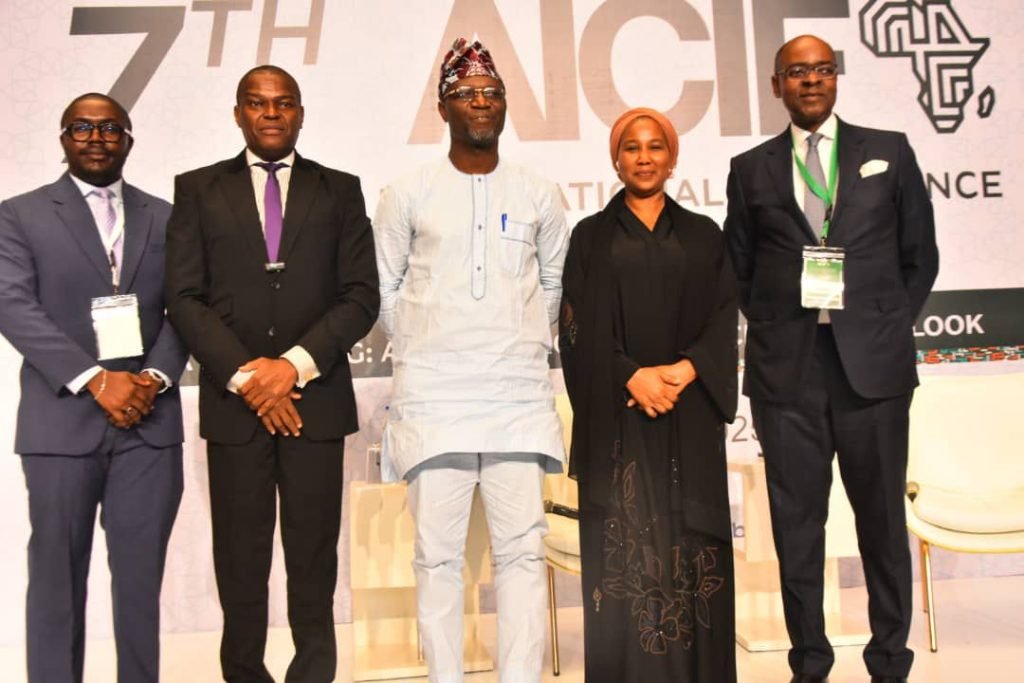
Speaking at the 7th African International Conference on Islamic Finance (AICIF) 2025, held in Lagos, Emomotimi Agama, director-general of the Securities and Exchange Commission (SEC), said the expansion reflects rising investor confidence and the impact of recent regulatory reforms under the Investments and Securities Act (ISA) 2025.
“The remarkable growth of the non-interest segment — now valued at more than N1.6 trillion — is clear evidence that when there is an enabling regulatory environment, the market responds with vigour,” Agama said.
The non-interest, or Islamic, capital market, which excludes interest-based or speculative transactions, has become a key instrument in Nigeria’s efforts to mobilise long-term, stable funding for national development while promoting financial inclusion among populations underserved by conventional finance.
Sukuk success story
At the core of this expansion lies the sovereign Sukuk programme, through which the government has raised more than N1.4 trillion ($930mn) across seven issuances since 2017. The proceeds have financed the construction and rehabilitation of 124 key roads spanning over 5,800 kilometres, establishing the initiative as a benchmark for using Islamic finance to deliver tangible infrastructure while attracting both domestic and ethical investors.
Agama revealed that the SEC recently approved a $500 million international Sukuk, marking the country’s next phase of engagement with global Islamic capital markets. The new issuance is expected to draw investors from the Gulf Cooperation Council and Southeast Asia, regions where Shariah-compliant investments have deep roots.
He described the expansion of Islamic finance across Africa as evidence of a structural shift in the continent’s approach to capital mobilisation. “Africa is ready to embrace non-interest instruments as mainstream funding tools,” he said, citing efforts by Egypt, Kenya, Tanzania, Senegal, and Ghana to strengthen their legal and policy frameworks to attract such investments.
Aligning finance with inclusion
Beyond the funding opportunities, Agama argued that Islamic finance represents a chance to embed inclusivity and ethics into Africa’s financial systems. “Prosperity without inclusion is not sustainable,” he said, urging regulators, investors, and development partners to use Islamic finance as a lever for both social impact and economic growth.
The SEC DG noted that insights from this year’s conference will inform the Second Nigerian Capital Market Masterplan (2026–2035), as the first 10-year roadmap concludes. The forthcoming plan aims to position Nigeria as a regional hub for sustainable and non-interest finance.
Africa’s untapped potential
While Nigeria has emerged as a leader in the field, experts at the conference cautioned that the continent has only begun to tap the potential of Islamic finance.
Ummahani Ahmad Amin, chair of the AICIF, said that although global Islamic financial assets grew 14.9 per cent year-on-year to $3.88 trillion in 2024, Africa’s share remains small due to structural barriers such as limited market infrastructure, liquidity constraints, and low investor awareness.
“The instruments are proven and investors are interested, but the ecosystem is still maturing. To enable Sukuk and other Islamic financial tools to serve as effective channels of financial intermediation and macro-financial stability, we must first address the barriers that continue to constrain their growth,” Amin said.
Amin added that Africa’s estimated $130bn–$170bn annual infrastructure financing gap presents an opportunity for Islamic finance to emerge as a catalytic capital source, provided regulators and institutions can harmonise standards and scale local issuance.
The conference also explored how Artificial Intelligence (AI) is reshaping financial intermediation and compliance in Islamic finance. Amin noted that AI could automate Shariah compliance processes, enhance transparency, and expand access to ethical financial services, but warned that the technology must be deployed responsibly.
“AI must operate within ethical guardrails to preserve the trust and transparency that define Islamic finance,” she said.
In a nod to youth and innovation, the AICIF hosted a pitch competition in partnership with the SEC to support start-ups focused on ethical and sustainable enterprise.
ZannyTecture Recycling Company Limited won the Social Impact category for transforming discarded tyres and plastic bottles into eco-friendly products, while BetaLife Health took the Technology award for its AI-driven blood supply optimisation platform.
Amin also unveiled The Metropolitan Waqf, an endowment initiative aimed at providing educational access to marginalised communities, particularly in Nigeria’s conflict-affected regions.
The growing embrace of Islamic finance fits within a wider attempt by Nigeria to diversify its capital markets, attract patient capital, and reduce dependence on debt-heavy borrowing. The SEC’s leadership views non-interest instruments not as niche alternatives but as mainstream mechanisms to align finance with development priorities.
According to Agama, the growth of the non-interest market demonstrates that values-based investing can complement market efficiency.