Onome Amuge
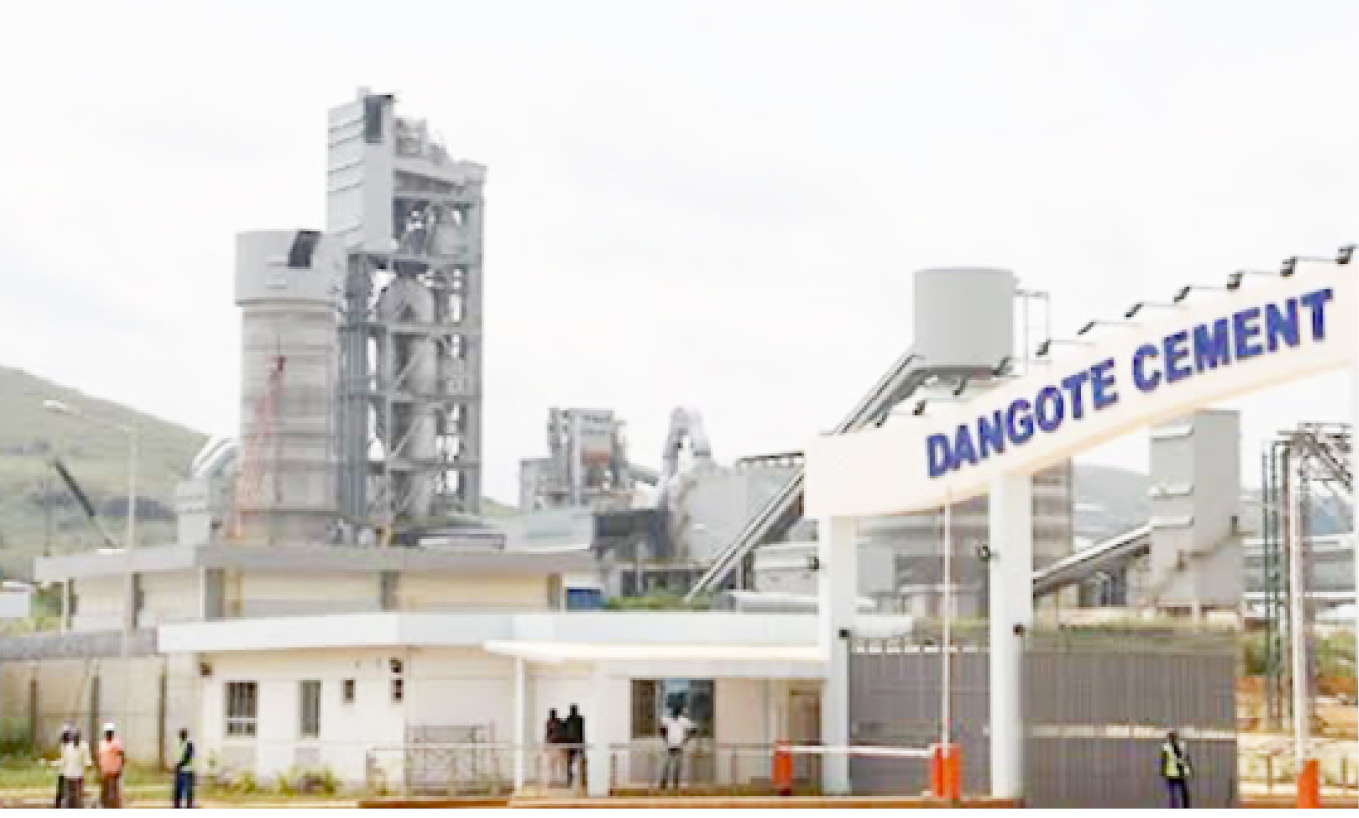
Dangote Cement, one of Africa’s largest industrial groups, has returned to Nigeria’s money markets with plans to raise up to N100 billion through a dual-tranche commercial paper issuance.
The offer, comprising Series 1 (180-day) and Series 2 (265-day) notes under its N500 billion Commercial Paper Programme, opened on November 17 and closes on November 19. The 180-day tranche carries a 16.10 per cent discount rate, implying a yield of 17.50 per cent at maturity in May 2026, while the 265-day tranche is priced at a 16.70 per cent discount, translating to an implied 19% yield at its August 2026 maturity.
Though Dangote Cement routinely taps the commercial paper market, the scale and pricing of this round stand out in an environment of rising short-term interest rates and volatile liquidity conditions.
The proceeds, according to the company, will be deployed for working capital, a phrase that in Dangote Cement’s case covers everything from energy procurement to clinker exports, cross-border logistics and inventory financing across 11 African markets. The issuer carries an AA rating from DataPro and A+ from GCR, placing it among the highest-rated Nigerian corporates in the debt capital markets.
Stronger earnings, tighter cash cycle
The capital raise comes on the back of an improvement in earnings. The group’s unaudited nine-month results to September 2025 show that revenue jumped 23.2 per cent to N3.154 trillion, while profit before tax rose to N1.04 trillion, compared with N406.38 billion in the same period last year. Net profit rose 166.3 per cent to N743.3 billion, pushing earnings per share to N43.8, up nearly 165 per cent year-on-year.
Yet despite these headline gains, Dangote Cement’s cash requirements have grown in tandem with its expanding operating base. The commissioning of its 3Mta Côte d’Ivoire grinding plant in October raised total group capacity to 55Mta, intensifying the company’s need for liquidity to backstop raw-material procurement, distribution, maintenance and regional supply-chain networks.
Arvind Pathak, the company’s chief executive, highlighted the expansion and the funding that underpins it as part of a strategy to cement regional self-sufficiency. “The commissioning of our Côte d’Ivoire plant marks another major step in our growth journey. It strengthens our position as the continent’s leading cement producer and reinforces our commitment to regional self-reliance,” he said.
He added that the strong earnings performance was supported by proactive management initiatives,an improved energy mix in Nigeria and cost-efficiency measures across markets. EBITDA rose 57.2 per cent to N1.428 trillion, supported by lower cash costs linked to alternative fuels and improved energy procurement strategies.
Though group cement volumes slipped marginally to 20.3Mt, a reflection of softer demand in a few African markets, exports told a different story. Shipments from Nigeria rose 23 per cent, boosted by 27 clinker shipments to Ghana and Cameroon. The company sees clinker exports as a strategic buffer amid fluctuating domestic volumes and a source of foreign exchange that eases pressure on its balance sheet.
Dangote Cement is also pushing ahead with a fleet renewal programme involving 1,600 CNG-powered trucks, part of its bid to cut logistics costs and carbon emissions. The rollout is aligned with Nigeria’s broader shift toward gas as a transition fuel and with investor pressure on large industries to improve sustainability metrics.
“Construction of the Itori Integrated Plant in Ogun State is progressing well,” Pathak said, positioning it to expand domestic capacity and open additional export corridors into West Africa. The plant is widely seen as a strategic asset that could reshape pricing power and supply dynamics in the Nigerian market once operational.
Why the CP market matters now
The commercial paper issuance underscores an important shift in corporate funding dynamics in Nigeria. With Eurobond markets largely shut to African issuers and domestic banks facing tighter capital requirements, CP programmes have become a crucial liquidity tool for large corporates.
According to Dangote Cement, the structure provides access to relatively low-cost naira funding without adding foreign-exchange risk to its balance sheet. For institutional investors—pension funds, asset managers and insurers, the company’s rating profile and cash-flow strength offer a rare high-yield, low-risk opportunity in a market hungry for quality paper.
As the company enters the final quarter of the year, Pathak said the focus will remain on sustaining earnings momentum, deepening efficiency and executing our long-term growth strategy. With one of the strongest balance sheets in the Nigerian industrial sector, Dangote Cement appears poised to continue its dominance.