
Onome Amuge
In 2025, Nigerians turned to Google Search not merely as a tool for information, but as a cultural compass and a gateway to consumption. From tracking political shifts to decoding viral slang, the country’s online behavior showcased a snapshot of economic and social currents, and the Year in Search data published by Google provides an unprecedented lens into these trends.
Political discourse as a digital engagement driver
Politics dominated the online consciousness of Nigerians in 2025. Senator Natasha Akpoti emerged as the most searched Nigerian personality, reflecting a nation closely attuned to its domestic political scene.
Analysts note that spikes in search interest often coincide with broader commercial opportunities. Media houses, online news portals, and digital advertisers track these developments to optimise content delivery and ad targeting. “High-profile political events now have measurable commercial impact. Search interest can indicate where consumer attention, and therefore spending, will flow,”msays Taiwo Kola-Ogunlade, communications & public affairs manager for West Africa at Google.
International events also captured attention. The Israel-Iran War and the U.S. elections generated significant search volume, reflecting an increasingly globally aware populace. For fintech, media, and information services, such trends point to a market eager for real-time analysis and content tailored to a globally connected audience.
Even moments of national reflection, such as the passing of former President Muhammadu Buhari, Pope Francis, or former Super Eagles goalkeeper Peter Rufai, triggered waves of searches, indicates that sentiment and memorialization are intertwined with digital engagement. Publishers, streaming platforms, and e-commerce operators can harness these moments to promote commemorative content, merchandise, or subscription services, transforming attention into revenue.
Entertainment and culture showcases a booming digital market
Entertainment remains one of the most significant drivers of online search in Nigeria. Music, streaming content, and local film continue to command widespread attention, providing a glimpse into the monetisable potential of cultural production.
Afrobeats dominated the audio landscape, with gospel hit “Oluwatosin (Jesus Is Enough)” by Tkeyz ft. Steve Hills topping the search charts, and upbeat tracks like “Joy is Coming” by Fido complementing mainstream offerings. Collaborations such as Davido and Omah Lay’s With You underscore how the Nigerian music scene blends local creativity with global appeal.
Film and streaming content mirrored this trend. Kemi Adetiba, director of the hit series To Kill a Monkey, ranked among the most searched personalities, highlighting the rising influence of Nigerian storytelling on both local and international audiences. Streaming platforms that can identify and invest in content with proven search interest are likely to see strong engagement and subscription growth, particularly as the country’s digital infrastructure improves and mobile-first internet consumption dominates.

The influence of online searches extends to lifestyle and culinary trends. Searches for recipes like traditional Chinchin, health-conscious Ginger Shots, and even the globally inspired Pornstar Martini indicate a population experimenting with both local and international flavors. For consumer goods and food-and-beverage companies, these insights translate directly into product development, marketing campaigns, and menu innovation.
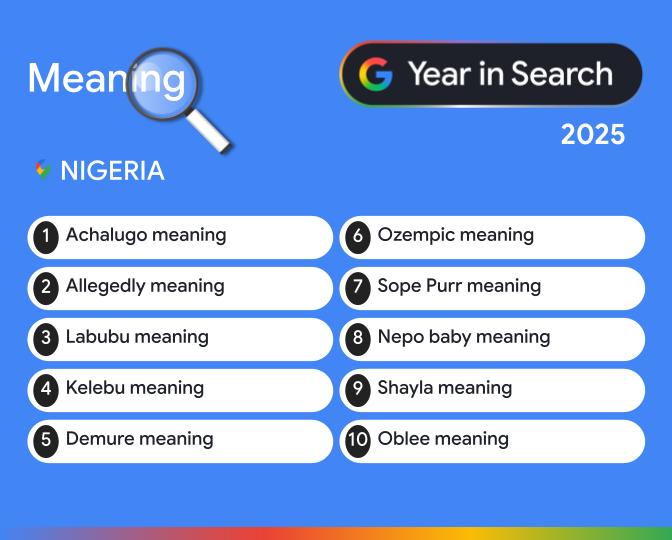
Nigeria’s online behaviour in 2025 also reveals the country’s fascination with viral trends and emerging slang. Questions like “What is Labubu?” and the search for the meaning of “Achalugo” from YouTube’s Love in Every Word demonstrate how quickly internet culture permeates everyday life.
Search data also points to evolving hardware preferences, with devices such as the iPhone 17, Tecno Pop 10, and Redmi 15 dominating attention
From data to strategy: Lessons for investors and policymakers
The 2025 Year in Search illustrates how tightly interwoven Nigeria’s culture, digital economy, and consumer behavior have become. Investors, media companies, and policymakers can draw actionable insights:
- Content Investment: High search interest in local series, music, and viral personalities signals strong opportunities for streaming services, record labels, and online media.
- Consumer Goods Innovation: Culinary and lifestyle searches show evolving preferences, guiding product launches and marketing campaigns.
- Tech Engagement: Device popularity and mobile-first search behavior point to opportunities in app development, fintech, and mobile commerce.
- Political and Social Insight: Digital engagement with politics and global events can inform risk assessments, media strategy, and corporate social responsibility initiatives.
Search behavior has effectively become a real-time indicator of both cultural attention and economic potential. Understanding these patterns allows companies and policymakers to anticipate demand, target new audiences, and innovate in ways that align with public interest.
Google’s Year in Search is seen as more than a reflection of curiosity; it is a blueprint for economic opportunity. From politics to music, from viral slang to culinary exploration, the data reveals a society where digital engagement drives not only conversation but commerce.
As Nigeria’s digital infrastructure expands and mobile connectivity deepens, search behaviour increasingly maps onto market dynamics. Companies that interpret this behavior effectively can convert attention into tangible economic outcomes, while policymakers can better understand the pulse of the nation.
“In 2025, Nigerians didn’t just consume information,they shaped markets through their searches. Search is no longer merely a tool; it is a window into culture, commerce, and the economy of attention,” says Kola-Ogunlade.
He added: “The 2025 Year in Search is more than just data; it’s a vibrant, unfiltered mirror of our collective attention. Whether it’s tracking the biggest headlines, reflecting on the legacies of icons we lost, or simply figuring out the latest slang, these lists show that Nigerians are using Search to actively engage with the world around them.”