Onome Amuge
Nigeria is attempting to turn one of its longest-running environmental and economic liabilities into a source of investment, jobs and cleaner energy, as regulators move to unlock billions of dollars tied up in gas that has for decades been burned off at oilfields across the country.
The federal government says it expects as much as $2 billion in new investment to flow from the Nigerian Gas Flare Commercialisation Programme (NGFCP), following the latest step in a process that aims to bring private capital, technology and market discipline to one of the world’s most persistent flaring problems. On Friday, the Nigerian Upstream Petroleum Regulatory Commission (NUPRC) issued permits granting access to flare gas sites to 28 companies that have completed commercial agreements under the scheme, marking a transition from policy ambition to execution.
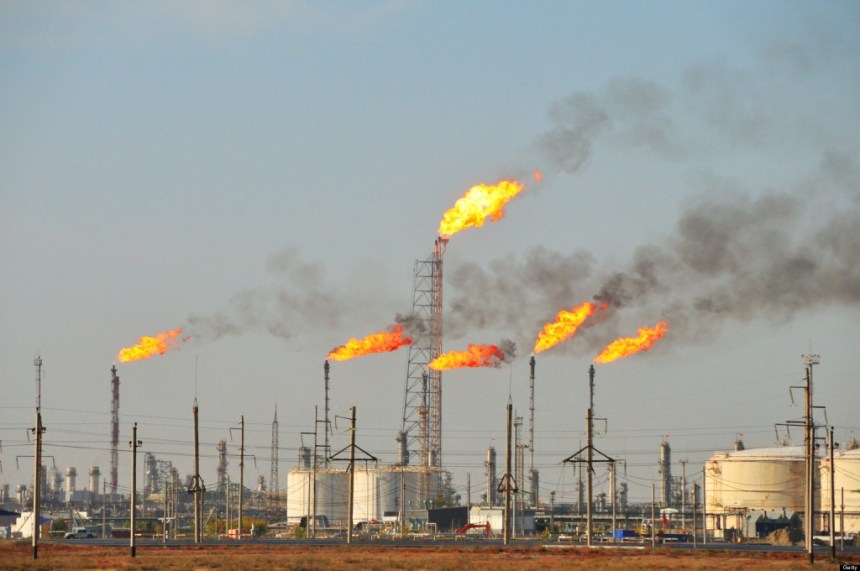
For investors and policymakers alike, the move is considered a test of Nigeria’s ability to align energy transition goals with commercial realities in an oil-dependent economy. Gas flaring (the routine burning of associated gas produced during oil extraction), has long symbolised regulatory weakness, infrastructure gaps and lost value. Nigeria is among the world’s top flaring nations, wasting gas that could otherwise power homes, supply industry or be exported as liquefied petroleum gas.
Gbenga Komolafe, chief executive of the NUPRC, described the allocation of flare sites to third-party developers as a shift towards a commercially viable model in which environmental challenges are reframed as investment opportunities. By allowing independent operators to capture and monetise flare gas, the government hopes to eliminate routine flaring while reducing the financial and operational burden on oil producers.
The strategy sits at the intersection of climate commitments and economic necessity. Nigeria’s Energy Transition Plan commits the country to reducing emissions while maintaining energy security and growth. Gas, considered cleaner than oil and coal, but still a fossil fuel, is positioned as a bridge in that transition. Regulators argue that capturing gas currently burned into the atmosphere delivers immediate emissions reductions while supplying fuel for power generation, fertilisers, petrochemicals and cooking gas.
The NGFCP has been several years in the making, shaped by setbacks that reflect Nigeria’s broader reform struggles. First launched before the pandemic, the programme was restructured after Covid-19 and following the passage of the Petroleum Industry Act (PIA), which overhauled the legal framework governing the oil and gas sector. According to Komolafe, the redesign was intended to improve commercial clarity and regulatory consistency, two factors that have historically deterred investors.
Interest has been strong. Of about 300 initial expressions of interest, 139 applicants qualified to bid formally, and 42 were eventually awarded 49 flare sites through a competitive process.
Regulators estimate that between 250 million and 300 million standard cubic feet of gas currently flared each day could be captured under the programme, eliminating around 6m tonnes of carbon dioxide emissions annually. The projects are expected to produce about 170,000 tonnes of LPG a year, enough to support cleaner cooking for roughly 1.4m households, while potentially unlocking close to 3 gigawatts of power generation capacity.
Beyond the environmental arithmetic, the government is betting on broader economic spillovers. Officials project that more than 100,000 direct and indirect jobs could be created across engineering, construction, operations and downstream industries. For host communities in oil-producing regions, flare capture projects are being promoted as a way to improve local relations and provide tangible economic benefits in areas where resentment over pollution and neglect has often boiled over.
For oil producers, the incentives are equally clear. Under Nigeria’s regulatory regime, companies face penalties for flaring gas. By handing flare sites to third parties, producers can eliminate flare payment obligations, reduce environmental liabilities and improve environmental, social and governance (ESG) metrics, an increasingly important consideration for international partners and financiers.
Investors, in turn, are being offered diversified revenue streams that extend beyond domestic gas sales. Carbon credits linked to emissions reductions, long-term gas monetisation contracts and exposure to fast-growing segments such as LPG and embedded power generation all feature in the programme’s pitch. NUPRC officials say engagement has deepened with international financiers and technology providers, reflecting renewed interest in Nigeria’s gas value chain after years of capital flight.
Kelechi Ofoegbu, executive commissioner for corporate services and administration at the NUPRC, said the programme’s design deliberately integrates market incentives with environmental requirements, seeking to ensure that flare gas is converted into economically valuable streams rather than becoming another stranded asset. He described the NGFCP as a break from legacy practices, embedding accountability and investor confidence into a more modern regulatory framework.