Onome Amuge
Nigeria’s accelerating urbanisation is reshaping not only where people live, but how they earn, save and invest. Each year, millions of young Nigerians migrate from smaller towns to fast-growing cities such as Lagos, Abuja and Kano, driven by the search for economic opportunity in a country where formal employment has struggled to keep pace with population growth.
By 2024, more than half of Nigeria’s population (about 128 million people), were living in urban areas. This demographic transition is altering the structure of the economy, expanding the informal and self-employed segment that now underpins much of urban livelihoods. Street traders, artisans, small-scale manufacturers and service providers increasingly dominate city economies, creating a dense network of micro and small enterprises.
Yet urban migration does not automatically translate into financial inclusion. For many new city residents, especially those operating outside the formal economy, access to basic financial services remains a persistent challenge. Traditional banks have historically struggled to serve this segment, constrained by risk concerns, documentation requirements and cost structures that make small, short-term transactions unattractive.
It is against this backdrop that digital financial platforms have gained prominence. With a mobile phone, internet access and a Bank Verification Number, individuals can now open accounts, make payments, save and access credit without visiting a physical bank branch. These platforms are increasingly positioning themselves as an alternative financial backbone for Nigeria’s growing cities.
FairMoney, a digital bank that began as a lending platform, is among the institutions seeking to capitalise on this shift. Its proposition, fast account opening, app-based transactions and instant credit, has found traction among small business owners and self-employed workers who prioritise speed and flexibility over traditional banking relationships.
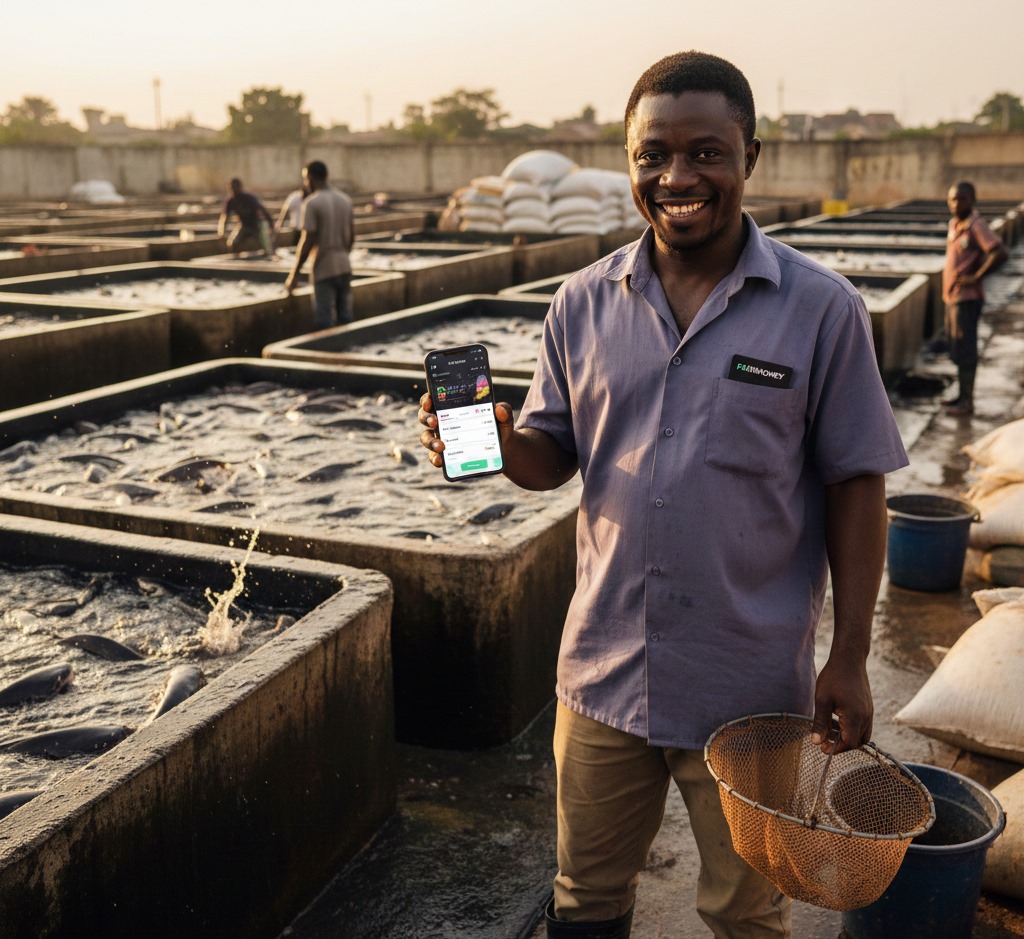
The experience of Aigbe Osasere, a fish farmer operating in Ijegun, a densely populated area of Lagos, showcases how digital finance intersects with urban entrepreneurship. After relocating from Benin City, Aigbe set out to establish a modest fish farming operation supplying local buyers. His business, like many small agricultural ventures in urban and peri-urban areas, depends heavily on timing: delays in purchasing fingerlings, feed or equipment can disrupt production cycles and erode margins.
Through FairMoney’s mobile app, he was able to open a bank account after completing BVN verification and gain access to short-term loans. The availability of instant credit allowed him to manage working capital gaps and maintain steady output. For businesses operating on thin margins, the ability to respond quickly to operational needs can be decisive.
Digital banking also offered a degree of formalisation. By receiving payments directly into his account, Aigbe gained clearer visibility over daily revenue and transaction flows. This shift away from cash reduced operational risk and created basic financial records, an often-overlooked step towards business sustainability and potential scale.
Savings tools play a complementary role. By setting aside a portion of daily sales through the app, Aigbe is gradually accumulating capital to expand his operation, including adding fish tanks and increasing capacity. For many small entrepreneurs, structured savings are the primary pathway to growth, particularly in an environment where long-term credit remains scarce and expensive.
Beyond business use, digital platforms increasingly function as all-purpose financial utilities. Paying bills, transferring money, purchasing airtime and settling electricity costs can be handled within a single interface. For urban workers juggling long hours and congested commutes, this consolidation of services reduces friction and frees up time for income-generating activity.
As self-employment and small-scale enterprise become central to Nigeria’s urban economy, demand is rising for financial tools that combine accessibility with speed and operational flexibility. Platforms such as FairMoney are increasingly positioning themselves as trusted enablers, offering services that align with the ambitions, working rhythms and long-term aspirations of a growing generation of urban entrepreneurs.