Onome Amuge
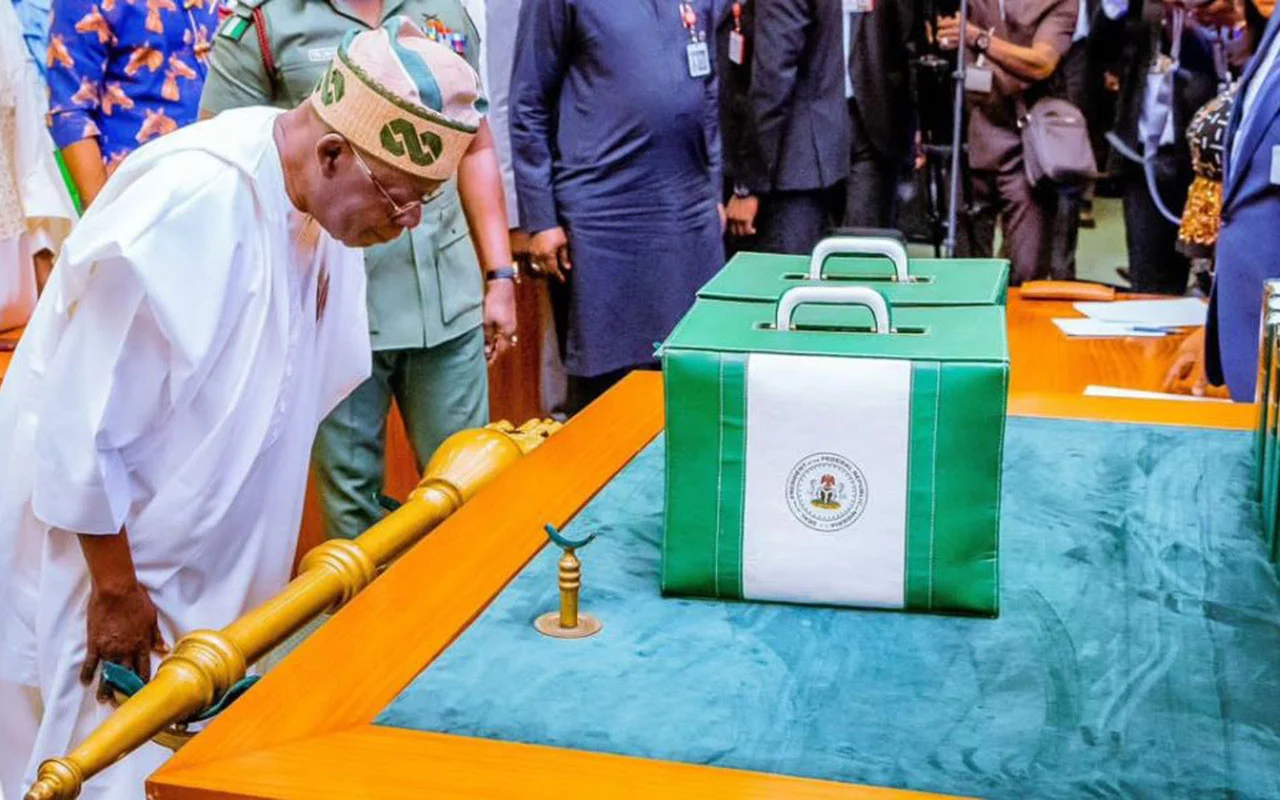
President Bola Ahmed Tinubu recently presented the 2026 National Budget to a joint session of the National Assembly, heralding it as the “Budget of Consolidation, Renewed Resilience and Shared Prosperity.” With a proposed size of N58.47 trillion, the budget represents a significant escalation from the N43.56 trillion and N54.99 trillion allocations of 2024 and 2025 respectively, reflecting the federal government’s intention to consolidate macroeconomic gains, stimulate job creation, and boost investment across critical sectors.
However, while the budget signals an ambitious fiscal vision, analysts caution that structural constraints, historical implementation gaps, and heavy debt obligations could limit its effectiveness. The proposed allocations prioritise security, infrastructure, education, and health, highlighting the administration’s focus on stabilising Nigeria’s socio-economic environment and strengthening human capital. Yet, experts argue that the plan’s feasibility will depend heavily on disciplined execution, realistic revenue assumptions, and accountability at both federal and subnational levels.
The 2026 budget is anchored on projected revenue of N34.33 trillion and estimated expenditure of N58.18 trillion, leaving a projected deficit of N23.85 trillion, or 4.28 per cent of GDP. The budget assumes crude oil at $64.85 per barrel, daily production of 1.84 million barrels, and an exchange rate of N1,400 to the US dollar. Capital expenditure is set at N26.08 trillion, while recurrent non-debt spending accounts for N15.25 trillion.
While the administration portrays these assumptions as cautious, economists warn that Nigeria has historically struggled to achieve sustained oil production at such levels due to sabotage, pipeline vandalism, and operational inefficiencies. Any significant deviation from these targets could widen the fiscal deficit and constrain the government’s capacity to implement planned programs.
Muda Yusuf, CEO of the Centre for the Promotion of Private Enterprise (CPPE), observed that while the assumptions are more conservative than in previous years, they still appear optimistic. “$64 per barrel is achievable under ideal circumstances, but historically, Nigeria has faced repeated disruptions that reduce output. A downward review of these assumptions would enhance the budget’s credibility,” Yusuf said.
Debt servicing and fiscal space: Nearly half the cake gone
One of the most pressing challenges for the 2026 budget is debt servicing. With N15.52 trillion earmarked for debt obligations, nearly 50 per cent of projected revenue is committed before any developmental or social spending. Analysts warn that such a heavy allocation significantly reduces fiscal flexibility, limiting the government’s ability to fund infrastructure, health, education, and other growth-enhancing initiatives.
“The burden of debt service is acute. Without a serious review of debt management strategies and moderation of debt accumulation rates, Nigeria risks perpetuating a cycle of high borrowing and limited developmental spending,” Yusuf noted.
The slow pace of capital budget execution in previous fiscal years compounds the problem. By Q3 2025, only 17.7 per cent of the capital budget had been released, as priority was given to completing projects from 2024. With over 70 per cent of the 2025 capital expenditure expected to roll over into 2026, analysts caution that the ambitious 2026 allocations could also remain largely unspent unless strict adherence to execution timelines is ensured.
Revenue mobilisation: Structural bottlenecks and unrealistic targets
The 2026 budget relies heavily on both oil and non-oil revenue streams, including optimised collection from government-owned enterprises through digitisation, interoperable payment systems, automated reconciliation, and real-time dashboards. While these reforms aim to improve efficiency and curb leakages, historical underperformance of revenue-generating agencies raises doubts about the feasibility of achieving the projected N34.33 trillion in revenue.
“Revenue from government agencies that generate non-tax income has historically fallen short of expectations. Optimizing this revenue is critical for fiscal consolidation, but it remains a recurring challenge,” Yusuf stressed. Analysts warn that misalignment between projected revenue and historical performance could undermine the credibility of the budget and complicate fiscal planning.
Experts also emphasise the importance of resisting political pressures that often lead to budget inflation through constituency projects. Repeated upward revisions in past budgets have undermined implementation and eroded public trust. “The beauty of a budget is in its credibility. Poorly implemented budgets erode confidence in the fiscal system,” Yusuf remarked.
Security spending: Necessary but demanding
Security remains the highest allocation in the 2026 budget, with N5.41 trillion set aside to address persistent threats from terrorism, banditry, kidnappings, and organised crime. The administration unveiled a new counterterrorism doctrine designed to strengthen unified command, intelligence gathering, and community-based interventions.
While the prioritisation of security is widely welcomed, experts caution that allocation alone does not guarantee enhanced safety. Historical challenges, including procurement delays, mismanagement, and operational inefficiencies, may prevent funds from delivering the intended impact.
Gbolade Idakolo, CEO of SD & D Capital Management, observed: “Security spending is critical for investor confidence and sustainable growth. However, without strict accountability, oversight, and performance-based monitoring, there is a risk that these funds may not achieve their objectives.”
Infrastructure spending: Growth potential vs execution risks
Infrastructure received the second-largest allocation at N3.56 trillion, targeting transport, energy, ports, and agricultural logistics. Effective investment in infrastructure is essential for economic growth and job creation.
Yet, delays in project execution remain a recurring problem. Minister of Finance Wale Edun has acknowledged that over 70 per cent of capital expenditure from previous budgets would roll over, highlighting persistent implementation bottlenecks. Analysts warn that unless timely disbursement and completion of projects occur, the budget’s potential to stimulate growth and attract investment may be severely constrained.
“Allocating funds is one thing; ensuring timely release and effective implementation is another. The economic impact depends on execution,” Idakolo emphasised.
Education and health: Human capital investment at risk
Allocations to education (N3.52 trillion) and healthcare (N2.48 trillion) underscore the government’s commitment to human capital development. The budget aims to expand the Nigerian Education Loan Fund, which has supported over 788,000 students in partnership with 229 tertiary institutions, and leverage $500 million from the United States for health programmes.
Nevertheless, past experiences indicate that bureaucratic bottlenecks, slow capital budget releases, and weak monitoring mechanisms could limit the tangible benefits of these allocations. Analysts warn that delays in disbursement could compromise human capital development objectives, undermining long-term productivity and competitiveness.
Agriculture and food security: Ambitious goals, implementation gaps
The 2026 budget places a strong emphasis on agriculture, aiming to boost mechanization, irrigation, storage, and agro-processing initiatives. The Bank of Agriculture plans to mechanise seven regional hubs and provide affordable financing to millions of smallholder farmers, with targets including the cultivation of one million hectares and the creation of hundreds of thousands of jobs.
Despite these ambitious goals, experts highlight the risk of funding shortfalls, mismanagement, and logistical challenges. Without effective monitoring, timely fund release, and enforcement of accountability mechanisms, the agricultural transformation envisioned in the budget could remain largely aspirational.
Procurement and local content: Reforms in need of enforcement
The administration has introduced comprehensive procurement reforms and the “Nigeria First” policy, designed to prioritise domestic goods and services and support local industries. While laudable in principle, the success of these reforms hinges on enforcement and transparency. Analysts note that past procurement irregularities indicate systemic challenges that could undermine the effectiveness of these initiatives.
“The success of procurement reforms will determine whether allocated funds translate into tangible benefits. Historical experience suggests consistent enforcement and accountability remain significant hurdles,” Yusuf said.
Implementation credibility: The Achilles’ heel
Perhaps the most significant challenge for the 2026 budget is execution. Capital budget disbursement delays, overlapping fiscal regimes, and weak subnational budget accountability persist as structural obstacles. Analysts stress that the credibility of the budget will ultimately be determined by disciplined implementation and alignment of revenue and expenditure targets.
“Fiscal ambition must be matched by execution discipline. The president acknowledged the risk, but translating words into action remains the critical test,” Yusuf said.
Subnational budgets: Accountability beyond the federal level
Experts highlight the growing fiscal significance of states and local governments, many of which now control budgets exceeding N1 trillion. Effective federal programmes require synergy with subnational governments, yet monitoring and accountability mechanisms remain weak. Misalignment between federal and state-level spending could dilute the impact of the 2026 budget.
“Subnational budgets are increasingly influential. Federal allocations must be coordinated with states to ensure development objectives are met,” Yusuf emphasised.
Oil price and production risks: Fragile revenue base
The heavy reliance on oil revenue exposes the 2026 budget to global market volatility. Analysts warn that any drop in crude prices or disruptions in production could reduce revenue, exacerbate the deficit, and constrain funding for priority programs. Adjustments to oil price assumptions may be necessary to maintain fiscal sustainability and credibility.
Debt accumulation and fiscal sustainability
The large allocation for debt servicing underscores the ongoing challenge of fiscal sustainability. Experts caution that continued high debt levels, coupled with ambitious spending targets, may restrict investment in critical capital projects, social programmes, and infrastructure. Effective debt management strategies and revenue optimisation are essential to prevent further fiscal strain.
While the 2026 budget reflects a deliberate effort to consolidate reforms and stimulate growth, economists stress the need for grounded, realistic assumptions. Gbolade Idakolo noted that the budget has the potential to stabilise and grow the economy if fully implemented, but stressed that rigorous scrutiny of projections and allocations is essential.
Yusuf emphasised that credibility, disciplined execution, and alignment between federal and subnational budgets are paramount to ensuring that allocations translate into tangible economic outcomes. Without these, the ambitious N58.47 trillion plan risks becoming another well-intentioned but underdelivered fiscal blueprint.