Onome Amuge
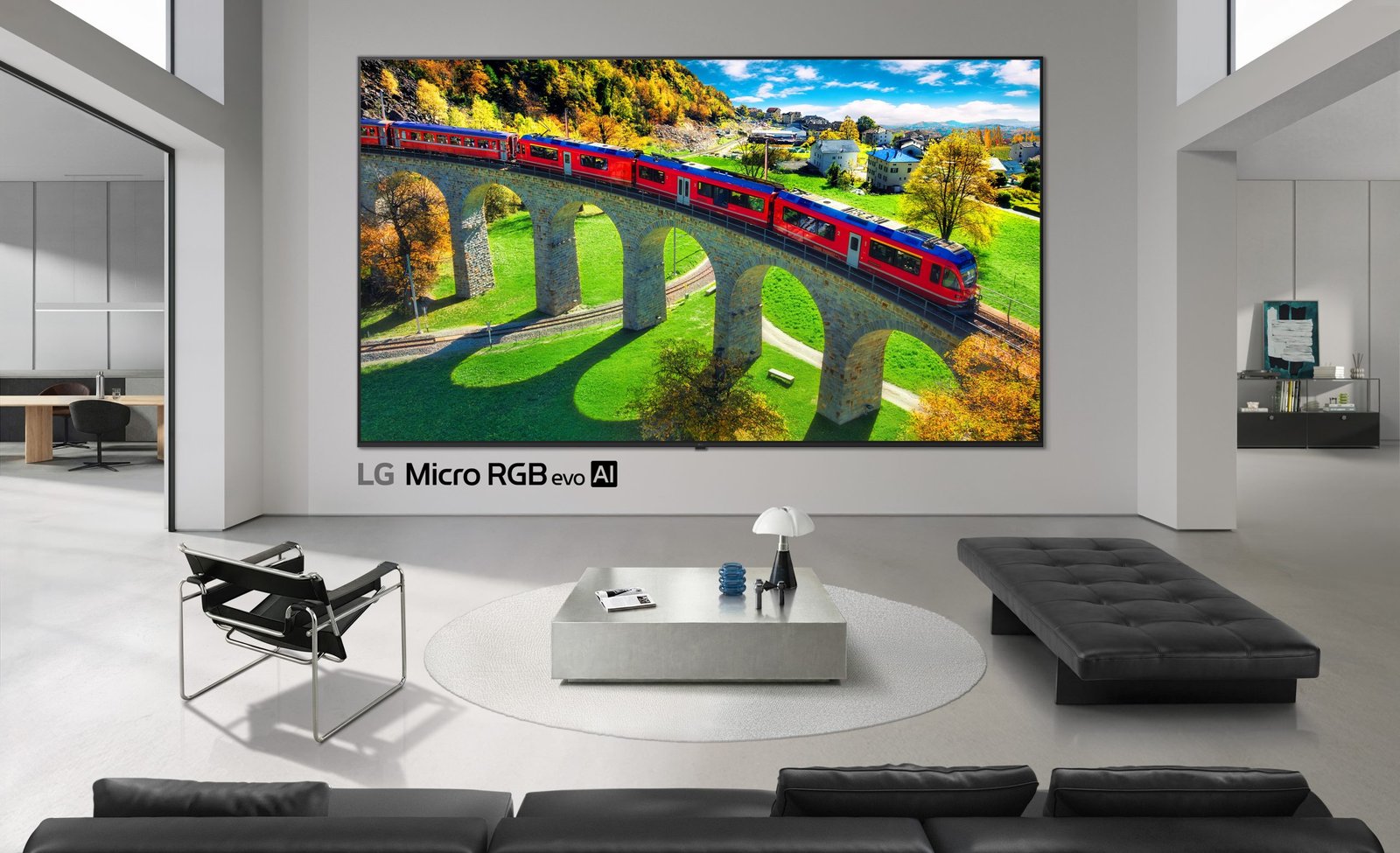
LG Electronics is set to push the boundaries of premium television technology with the unveiling of its first flagship RGB television at CES 2026, signalling a renewed effort to redefine the high end of the global TV market.
The South Korean electronics group said it will debut the LG Micro RGB evo, a model that has already secured a CES 2026 Innovation Award, positioning the product as a step beyond existing MiniLED displays and a strategic extension of LG’s long-running dominance in OLED technology.
At the core of the new television is what LG describes as Micro RGB Technology, which uses the smallest individual RGB LEDs the company has deployed in a consumer display. Unlike conventional LCD-based systems, the Micro RGB evo applies OLED-style precision to the control of RGB LED backlighting, drawing directly on more than a decade of engineering expertise accumulated from LG’s OLED TV business.
Powering the display is the latest version of LG’s proprietary α11 AI Processor, now in its third generation. The Dual AI Engine-based chip introduces what LG calls Dual Super Upscaling, allowing two forms of artificial intelligence image processing to operate simultaneously. The result, according to the company, is sharper imagery with more natural colour balance and greater overall clarity, aimed at viewers who increasingly expect cinema-grade visuals at home.
One of the product’s most striking claims lies in colour reproduction. The Micro RGB evo features what LG refers to as RGB Primary Color Ultra, a system designed to deliver an exceptionally broad colour spectrum. Independent certification by testing group Intertek confirms that the display achieves 100 per cent coverage of the BT.2020, DCI-P3 and Adobe RGB colour spaces, benchmarks typically associated with professional-grade monitors used in film production and digital content creation.
For the TV industry, where differentiation at the premium end has become increasingly difficult, such specifications underscore LG’s ambition to blur the lines between consumer entertainment displays and professional visual tools. The company says the technology is intended to serve applications ranging from high dynamic range cinema viewing to advanced digital editing and next-generation content formats.
Contrast performance is handled through a feature dubbed Micro Dimming Ultra, which deploys more than 1,000 dimming zones. By finely controlling brightness and colour across these zones, LG claims the system delivers one of the highest contrast levels available among LCD-based televisions, preserving detail in both shadow-heavy and brightly lit scenes.
LG is also leaning heavily into software and personalisation as part of the product’s appeal. The Micro RGB evo runs on the company’s webOS platform, which incorporates features such as Voice ID, AI Picture and Sound Wizard tools, and a customised My Page home screen. An upgraded AI Concierge, alongside AI Chatbot and AI Search functions, is designed to help users navigate content and access information more intuitively, reflecting the industry-wide shift towards AI-driven user interfaces.
“Achieving the utmost visual fidelity is the goal of any display, and with the LG Micro RGB evo, we have reached a milestone previously thought unattainable for this category,” said Park Hyoung-sei, president of LG’s Media Entertainment Solution Company. He added that the launch represents an evolution of the RGB TV segment, setting new benchmarks for colour accuracy and performance.
The LG Micro RGB evo, model MRGB95, will be offered in 100-inch, 86-inch and 75-inch formats, sizes that place it firmly in the ultra-premium segment of the market. While pricing details have not yet been disclosed, the product’s specifications and positioning suggest LG is targeting affluent consumers and technology enthusiasts seeking the highest-end home viewing experience.