Ben Eguzozie
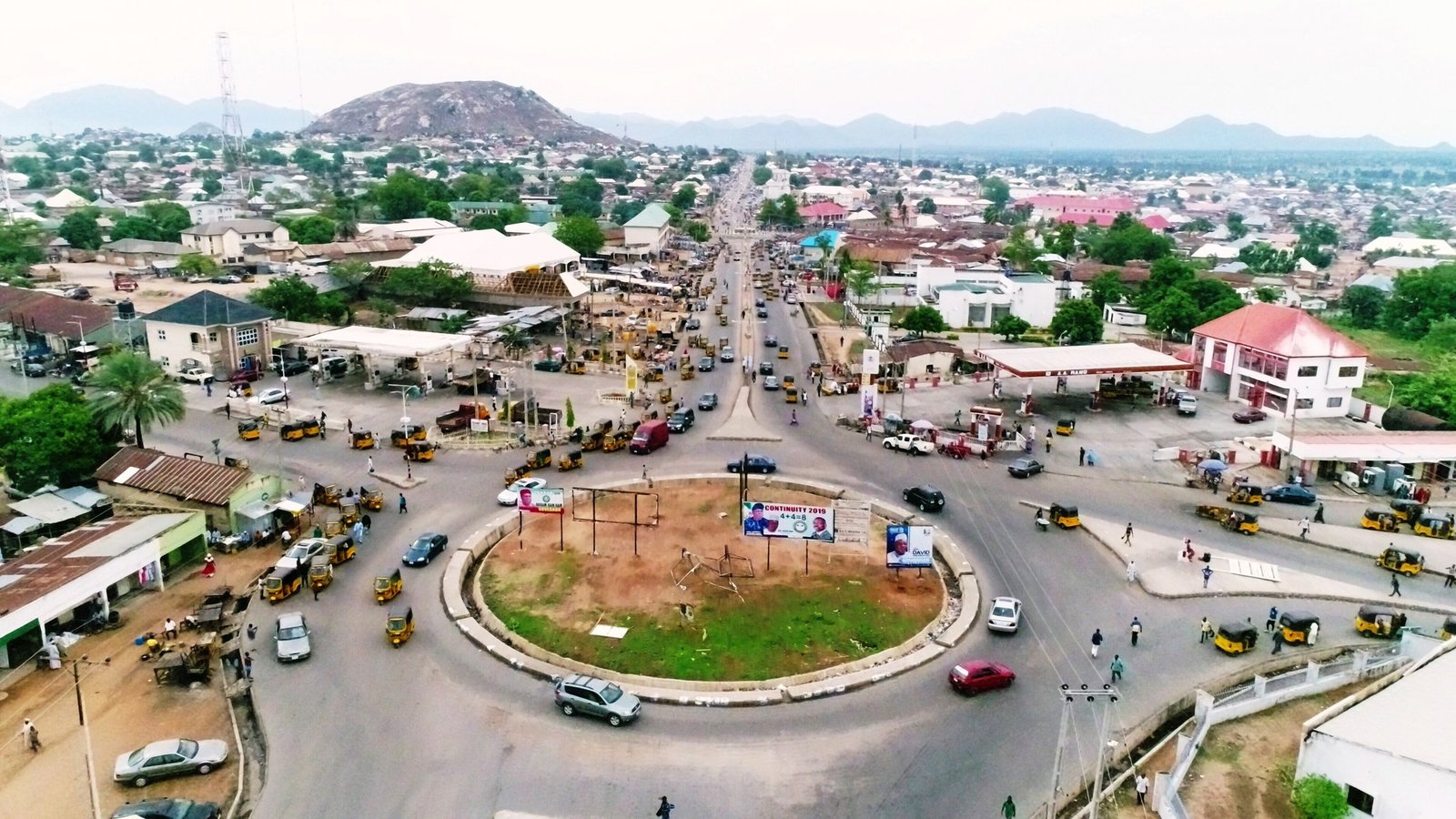
From aerial view, Taraba, a north central subnational, with a N2.04 trillion GDP ($13.27 billion) promises abundance, with broad land and liberal contours. Yet, the state, just like Nigeria its country, reminds a development analyst that: potential is not prosperity. Today, Today, Taraba, harried by insecurity, does not struggle for resources, rather for effective systems. According to Dakuku Peterside, turnaround expert and former chief executive of NIMASA, “when governance, infrastructure, and recognition break down, prosperity remains distant”.
The state’s roads takes distance to a new meaning—from modest—to time lost to potholes, fatigue from constant jolts. about 200–220 kilometres. On the road, distance takes on a new meaning: time lost to potholes, fatigue from constant jolts, and the challenge of broken infrastructure. What should have been a straightforward drive stretched into five grinding hours on a federal road that stands as an indictment of the system.
There are moments on Nigeria’s roads when you stop thinking of potholes as engineering failures and begin to see them as policy statements. Each crater says, “You can endure this. Each collapsed shoulder says, “Your inconvenience does not matter. Each missing stretch says, you are far from the centre of attention. I felt that the language was clear on the road to Wukari.
And then there was the Namnai Bridge, which had collapsed in August 2024 and remained unrepaired. More than a fact, it was a symbol. A bridge is not just concrete and steel; it is a connection. Its collapse is a failure of urgency, attention, and governance.
The road winds through agricultural settlements—communities surrounded by land that could feed cities, drive agro-processing, and anchor prosperity. Yet Taraba is a paradox: fertile but poor, possessing all it needs to thrive except recognition and essential tools for development. The core issue is clear: in Nigeria, poverty persists not from a lack of resources but from broken systems. In Taraba, blessings turn into hardship when infrastructure is neglected, and federal governance remains inconsistent.
By the time we reached Wukari, the town unfolded with the layered presence of history. Wukari is not the kind of settlement that arrives neatly; it sprawls, alive, spacious, carrying the echoes of deep traditions alongside the pulse of modern life. You feel it in the rhythm of conversations, the pride in identity, the steadiness of local confidence. We stayed at the T.Y. Danjuma Governor’s Lodge, a recent construction symbolising progress and heritage. Buildings themselves can represent development and future potential.
That evening, the people welcomed us with the kind of openness that cannot be manufactured. There were local delicacies, storytelling, laughter, and the easy intimacy of a community that has learned to survive without waiting for permission to hope. As I listened, I watched the governor among his people. Here, he was not simply “the Governor” as an office. He was “our own”—a leader who belongs to the emotional geography of the place, not only to its administrative map. There is something powerful about that bond. In places that have been neglected for too long, trust is not automatic; it is earned, renewed, and tested daily.
Monday, January 12, 2026, brought the long-awaited launch of the 12-kilometre Takum–Lissam Road. Relief and hope filled the air as the community finally saw concrete action to address their infrastructure needs, making the event truly historic.
As we travelled from Wukari to Takum, the road told two stories. The segment from Wukari showed federal neglect, while from Abakor to Takum, community initiative—driven by T.Y. Danjuma—had transformed the region.
In Takum, Danjuma’s legacy is not abstract; it is concrete, visible, and lived. I saw world-class hospitals, educational institutions, roads and other infrastructure built by his foundation. The message was unmistakable: when public systems fail, committed individuals sometimes become the fulcrum of development. Yet even as I admired what one man’s love for community can accomplish, I also felt the uncomfortable question beneath it: why should any community’s access to basic infrastructure depend on the benevolence of exceptional individuals? Philanthropy can supplement development, but it must never substitute for the state.
We returned to Wukari for what I consider the defining project of the trip: the construction of the 41-kilometre Wukari Township Road Network and the Takum Junction Flyover Bridge with dual-carriage interchange roads (Phase 1). Standing there, it was difficult not to reflect on the underrated power of roads.
Roads do not give speeches. They do not trend on social media. Yet they are the silent engines of economic life. They shape how farmers reach markets, how traders move goods, how workers commute, how ambulances arrive, how children get to school, and how a town becomes a city. Roads are not mere infrastructure; they are opportunities arranged into movement.
Improved connectivity for Wukari will lower transport costs, boost trade, and support growth. The flyover is designed for long-term needs, not just short-lived acclaim.
The contrast with the neglected federal road projects across the state is striking. Here, in the midst of what often feels like national forgetfulness, a state government is choosing to invest where it matters most. This supports the main point: even when federal attention wanes, consistent, transparent, and people-centred sub-national leadership can still drive real transformation.
From Wukari, we headed to Ikyior, where the governor inspected the ongoing construction of a Forward Operating Base for the army—a state-led intervention aimed at consolidating security gains in areas marked by instability. Taraba has lived with the burden of insecurity in places like Wukari–Kente, Akwana, Takum–Katsina Ala, Wukari–Takum, Bali–Serti, and Karim–Lamido. In such contexts, security is not an abstract concept; it is the difference between night-time rest and night-time fear, between farming and fleeing, between investment and abandonment.
The 35-kilometre stretch from Wukari to Ikyior–Kente–Chinkai is notoriously rough. Describing it as a “trip to hell” is no exaggeration; it is an honest account of what poor infrastructure does to the human experience. Bad roads not only delay journeys but also isolate communities. They make services distant. They make livelihoods fragile. They turn geography into punishment.
That is why the governor’s decision to award the road project is already being received as a lifeline. When a government builds a road in a forgotten corridor, it is not merely laying asphalt; it is restoring citizenship. It is saying, in practical terms, you are part of us.
But no visitor to Taraba can ignore the reality: the deplorable condition of federal roads. The list is long—Wukari to Jalingo to Zing; Mararaba Zing to Numan; Mararaba to Baissa to Abong; Bali to Serti to Gembu; Takum to Katsina Ala; Wukari to Ibi; Wukari to Zakibiam; Donga to Mararaba; Wukari to Kente to Akwana; Ibi to Shendam. Each route repeats the story of potholes, broken promises, and normalised neglect.
Even the Ibi Bridge, which once drew federal attention, now stands abandoned—a silent monument to bureaucratic indifference. At some point, patterns become conclusions. And the logical conclusion here is difficult to escape: for all practical purposes, the federal government behaves as though Taraba is not fully within its circle of care.
The neglect extends beyond roads. If roads are abandoned, many federal educational institutions in the state feel like relics—present in name, absent in transformative impact. This disconnect sharpens Taraba’s challenge: underdevelopment persists not for lack of potential, but because federal systems fail to deliver the basics. The Federal Medical Centre Jalingo, Federal University Wukari, Federal Polytechnic Bali, Federal Government Girls College Jalingo, Federal Government College Wukari, and the Federal Science and Technical College Jalingo stand as reminders of what could have been.
Yet for all the frustration, Taraba is not a story of despair. Instead, it is defined by resilience—communities and leaders pressing for development despite the odds. The struggle for recognition and functioning systems continues, but Taraba’s determination underscores the main argument: progress stems not from potential alone, but from the resolve to overcome neglect.
Travelling through the state, I sensed a state on the edge of rebirth. Roads that were once dusty tracks now echo with construction. Markets feel more alive where access improves. Communities speak with a cautious confidence—hopeful, but not naïve. In conversations with residents, a recurring theme surfaced: the Governor is investing heavily in education, launching new schools and preparing for sweeping renovations and upgrades of existing primary and secondary schools. Healthcare is also receiving attention, with hospitals being upgraded and a pledge to revive primary health care centres.
This journey reinforced a truth I have come to trust: progress is rarely a straight path. It bends. It slows. It meets resistance.
Taraba is still struggling for recognition, but it is also insisting on its place—through the grit of its people and the practical choices of a government determined to move the state forward. If development is the reward of consistent effort, then Taraba’s time is not a question of “if,” but “how soon.”
And after travelling its roads—broken and rebuilding—I left with a conviction that will not leave me: a land with this much potential, and a people with this much spirit, cannot remain forgotten forever. Not by potholes. Not by collapsed bridges. Not by bureaucratic amnesia. Taraba is rising—stubbornly, steadily, and unmistakably.