Sade Williams
Bi-Courtney Aviation Services Limited (BASL), operator of Lagos’s Murtala Muhammed Airport Terminal Two (MMA2), has begun a series of strategic engagement sessions with its airline partners as it prepares for rising passenger traffic and seeks to address capacity and operational pressures at one of Nigeria’s busiest domestic terminals.
The discussions, which began last week, involved senior BASL executives visiting the headquarters of United Nigeria Airlines, Aero Contractors and ValueJet Airlines. Meetings were held with the managing directors and chief executives of the carriers, focusing on operational performance during the December peak travel period and the implications of anticipated traffic growth.
According to participants, the sessions allowed for frank exchanges on infrastructure readiness and coordination challenges. United Nigeria Airlines outlined its fleet expansion plans for 2026, underscoring the need for terminal capacity and operational systems to scale in line with airline growth. Aero Contractors and ValueJet raised similar concerns, particularly around crowd management and passenger processing as traffic volumes increase.
BASL management, led by Remi Jibodu, acting chief operating officer and head of aeronautical and cargo services, said passenger demand patterns at MMA2 had evolved significantly over nearly two decades of operation, requiring a recalibration of terminal processes and capacity management.
In the short term, the terminal operator plans to deploy mobile check-in counters during peak periods, increase manpower across security and baggage handling, and strengthen crowd control measures to stabilise operations.
Medium-term initiatives discussed with the airlines include the introduction of an International Air Transport Association (IATA)-aligned slot coordination framework aimed at balancing demand with terminal and airside capacity. BASL also plans to reintroduce self-service check-in kiosks, implement apron decongestion measures and tighten aircraft parking discipline, including the possible use of a progressive fee structure to discourage prolonged apron occupancy. Upgrades to baggage handling systems are also under consideration.

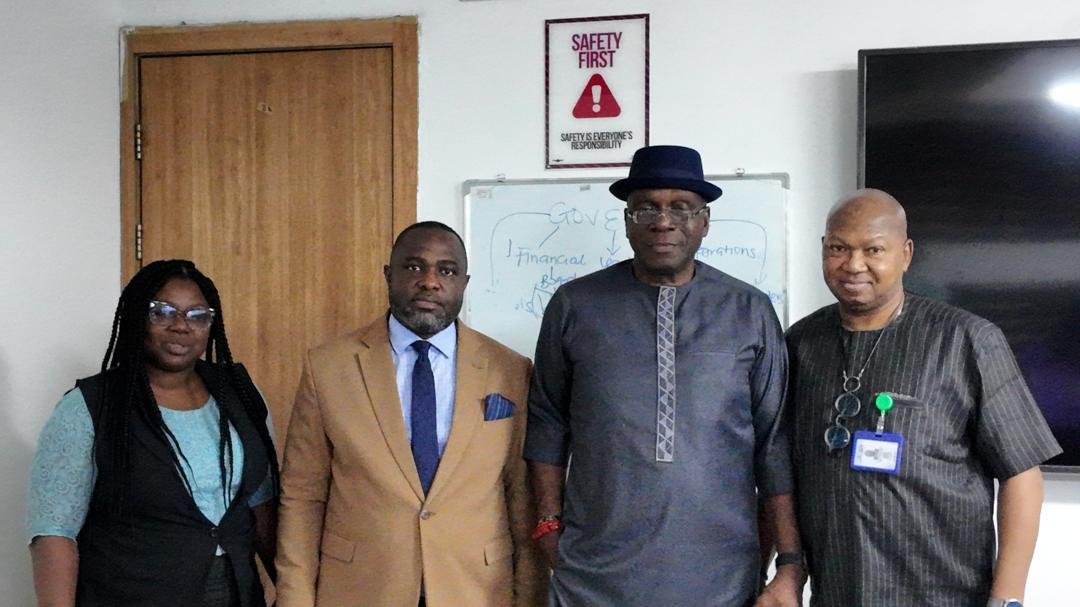
L-R: Bisola Ademola-Davies, airline manager, BASL; Remi Jibodu acting chief operating officer/head, aeronautics and cargo services BASL; Omololu Majekodunmi, managing director/CEO, ValueJet Airline; Kehinde Smith, director of operations, ValueJet Airline, during the engagement with airline operators
Jibodu said BASL was seeking airline collaboration on the proposed slot guidelines, noting that the framework would be transparent, aligned with carriers’ commercial objectives and focused on improving the passenger experience.
The engagements also highlighted the need for improved data sharing and communication. BASL and its airline partners discussed the development of a digital platform to provide real-time operational updates to airlines and other stakeholders, with the aim of improving transparency and predictability in flight operations.
In addition, BASL said it was exploring closer coordination with road traffic authorities, including the Federal Road Safety Corps and the Lagos State Traffic Management Authority, to manage surface access to the terminal during periods of high passenger influx.
BASL said it would continue engaging airlines, regulators and other stakeholders as it seeks to support traffic growth at MMA2 while maintaining operational efficiency and service quality.