Rail transport (also known as train transport) is a means of mobility through wheeled vehicles running on tracks, which usually consist of two parallel steel rails, the spacing of which is called gauge. Rail transport is one of the two primary means of land transport, next to road transport. The government of the United Kingdom has described transport as “not just how you get around” and that “the effects of transport are felt much more widely” because “it is something that fundamentally shapes our towns, our cities, our countryside, our living standards, our health, and our whole quality of life. It can shape all these things for good – or for bad”.
Rail transport is used for about eight percent (8%) of passenger and freight transport globally, thanks to its energy efficiency and potentially high speed. In the UK, rail transport represents two percent (2%) of the means of transport of an average resident. In Nigeria, it represents less than 0.01 percent of transport means of an average resident, caused basically due to limited networks of rails across different parts of the country.
Whereas, there is no airport that is not connected by train in the UK, only Nnamdi Azikiwe International Airport is connected by train in Nigeria. Rail transport is comparatively the safest means of transport! The rail track spreads the weight of the train which means larger amounts can be carried than with trucks on roads. The revitalisation of Nigeria’s railway sector presents significant business opportunities in passenger service, freight logistics, and infrastructure development, driven by modernisation projects like the Lagos-Kano and Port Harcourt-Maiduguri lines. Opportunities include private sector investment in rolling stock, cargo services, and station management, aimed at transforming the country into a regional logistics hub. Elite nations consider rail transport as a critical factor in their mobility as a service (MaaS) programme.
President Bola Ahmed Tinubu, in his stride to modernise train transport in Nigeria, appointed Kayode Opeifa as the managing director of the Nigerian Railway Corporation (NRC) in early 2025, based on his experience in the transport sector with the belief that there will be monumental improvements in the rail transport sector in the country. Some years before his assumption of office, NRC was operating below global average, intermittently on odd days of the week. Now, the transport service provider is operating daily, though there is still room for improvement. Watching AMTRAK coaches transiting from the north-side to the south-side of Chicago, USA, with, at times, over 178 coaches in a journey leaves much to be desired about rail transport in Nigeria. The concourse of the Iddo Terminus needs to be rehabilitated! Grand Central Terminal, located at 42nd Street and Park Avenue in Midtown Manhattan, New York, is a world-famous, historic commuter rail hub that opened in 1913.
As the southern terminus for Metro-North Railroad and home to the Grand Central Madison Long Island Rail Road (LIRR) station, it is one of the world’s busiest, largest stations, featuring iconic Beaux-Arts architecture, a celestial ceiling and a $20 million opal-faced clock. The terminal boasts over 70 shops and restaurants, including the upscale Grand Central Market and the Apple Store on the east balcony. Though there is improved trust of travellers in the over 113 years old corporation (formally established on October 3, 1912), there is still wide room for improvement.
The sour story of NRC is changing gradually with a new man at the helm of affairs. Dr Kayode Opeifa’s transformation agenda is anchored on five strategic initiatives of (1) legal enabling architecture, (2) rehabilitation and optimisation of railway assets, (3) railing with the states and track access policy, (4) a freight revolution and (5) the ambitious Vision 2-5-10-20 roadmap.
Watching the enormous growth of the rail transport service providers is a thing of joy. But rather than celebrate, we still need to go to the drawing room and strategise on how to become the biggest rail transport provider in Africa and make rail transport the backbone of the Nigerian economy. South Africa, with a population of 65,453,084 people (2026), has the biggest rail system in Africa. Nigerians’ perception of rail transport service has not changed much. There is a need for nationwide engagement of stakeholders; especially the travellers on rail about their experiences and what they would like to see improved (feedback management).
Within six months of assuming office, there was the flag-off of landmark freight collaboration with terminal operators which signalled a deliberate shift toward rail-led logistics and trade facilitation. The percentage of freight service being covered by NRC is ridiculously low compared to that of South Africa. Rail can no longer be treated as a ceremonial public service but as a commercial backbone of the economy. Transnet owns South Africa’s railway, seaports and pipelines infrastructure. Transnet covers all six major rail corridors in South Africa to transport commodities for export, regional and domestic markets.
NRC has an unacceptable number of abandoned assets due to many years of neglect! In this regard, asset optimisation should be adopted. Asset optimisation is the strategic process of maximising the value, performance and efficiency of an organisation’s physical and intangible assets throughout their lifecycle. It balances operational costs, risks and performance to improve return on investment (ROI), reduces downtime and extends asset life. It relies on data-driven insights to achieve maximum utilisation. Asset optimisation of a corporate organisation is best handled by professional estate surveyors and valuer who will identify all critical assets, create an asset register, tag all the assets for easy tracking, carry out valuation of the assets and regularly evaluate the values with performance of the assets to determine the point of retention, overhauling and disposal. NRC will definitely benefit from this exercise.
Rail stations are now used as commercial hubs, malls and centres of attraction. Liverpool train station in London is a site to behold for tourists. It serves as a meeting point for those who like good foods. Victoria Station in Central London has 24 retail outlets including restaurants, pharmacy (Boots), luggage sales, pubs, boutiques (Holland & Barrett, Marks & Spencer, WHSmith) etc and Barclays Bank. Public engagement can best be made through corporate social responsibilities (CSR) by NRC. NRC, under directives from the federal government, has consistently implemented, and in some years, upgraded, discounted or provided free train travel during major festive seasons (Christmas/New Year and sometimes Sallah). To better humanise the rail experience and subtly reposition train travel as dependable, reliable and culturally relevant, more promotions of the train services need to be done.
Within his first year in office, the NRC headquarters experienced scores of sector-wide engagements. Inland container operators have also expressed confidence in the corporation to move their cargoes from Lagos to the northern hinterland. More patronage of rail transport by freight operators means less pressure on our congested highways.
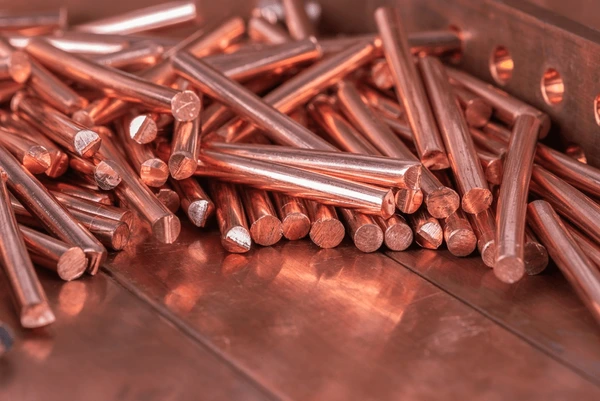
Security of life of customers and NRC staff and asset protection challenges are a big test for the young administration. There are many cases of incidents of vandalisation of rail tracks by vandals, and attacks by terrorists, especially in the north. This led the managing director to warn scrap dealers, iron smelters and collaborators to steer clear of railway assets, and to partner with the Nigerian Army to strengthen rail security.

Olufemi Adedamola Oyedele, MPhil. in Construction Management, managing director/CEO, Fame Oyster & Co. Nigeria, is an expert in real estate investment, a registered estate surveyor and valuer, and an experienced construction project manager. He can be reached on +2348137564200 (text only) or femoyede@gmail.com