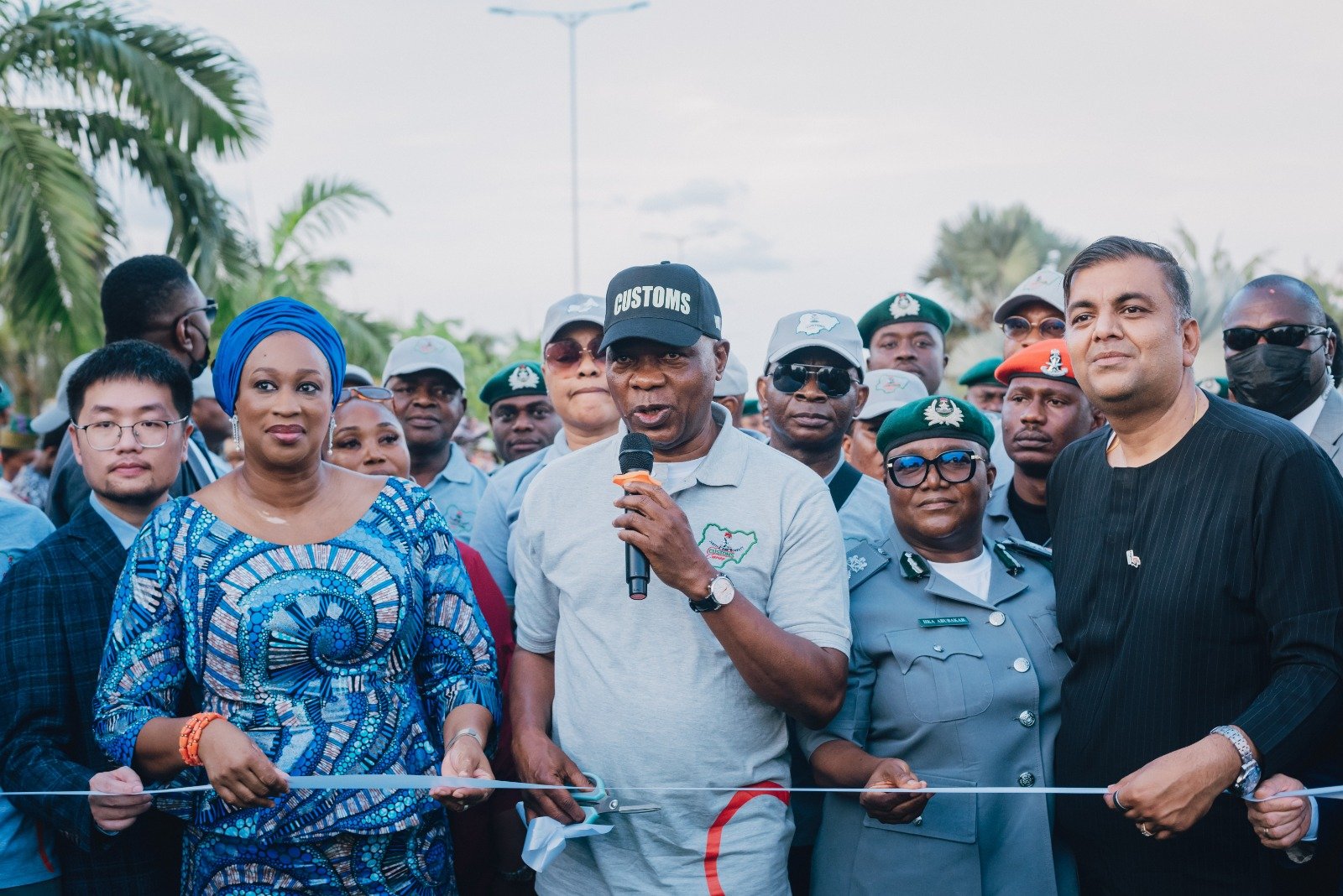
Nigeria has taken a major step towards modernising its trade facilitation framework following the approval by the Nigeria Customs Service (NCS) of a dedicated logistics corridor linking the Lekki Deep Sea Port directly to the Lagos Free Zone (LFZ). The initiative, described by officials as a structural reform aimed at reducing cargo clearance friction, is expected to strengthen Nigeria’s attractiveness to manufacturers, exporters and international investors seeking more predictable supply-chain infrastructure in West Africa.
The newly sanctioned Green Channel enables the controlled movement of cargo from the deep-sea port into the free zone without the procedural bottlenecks that have historically characterised port logistics in Africa’s fourth largest economy. By providing a streamlined port-to-zone transit system under direct customs oversight, authorities hope to improve efficiency while maintaining regulatory visibility.
Lagos Free Zone occupies a distinctive position in Nigeria’s industrial ecosystem as the only special economic zone anchored directly to the Lekki Deep Sea Port, one of the country’s most ambitious maritime infrastructure projects. The integration of port and free zone infrastructure mirrors models used in established trade hubs across Asia and the Middle East, where proximity between maritime gateways and industrial zones has proven central to export competitiveness.
Industry observers say the development addresses a long-standing structural challenge in Nigerian trade logistics, particularly the “last mile” problem between ports and industrial clusters. Cargo congestion, administrative delays and high demurrage costs have historically constrained manufacturing efficiency and deterred some foreign investment. A dedicated customs-approved corridor could help mitigate these risks, potentially lowering operating costs for companies operating within the zone.
Officials argue that the move will enhance both compliance and transparency. Cargo transported through the corridor will remain under continuous monitoring through digital tracking systems, surveillance infrastructure and tamper-evident documentation protocols. This approach is intended to strengthen customs oversight while reducing the operational uncertainty often associated with cargo transit in emerging markets.
Bashir Adeniyi, comptroller-general of customs, considers the initiative as part of a significant effort to modernise Nigeria’s trade environment. “This approval is a testament to our commitment to trade modernisation. The Lagos Free Zone Green Channel will enhance customs visibility while significantly improving investor confidence in Nigeria’s Special Economic Zones,” he said.
From a commercial perspective, faster cargo movement could translate into improved inventory turnover, reduced logistics costs and more reliable production timelines for manufacturers operating in the zone. Companies involved in industrial processing, consumer goods distribution and export-oriented manufacturing stand to benefit most from predictable inbound logistics flows.
Adesuwa Ladoja, managing director and chief executive of Lagos Free Zone, described the development as a milestone in efforts to improve ease of doing business. “The activation of the Lagos Free Zone Green Channel is the latest testament to our customer-centric approach and our commitment to continually deliver enhanced ease of doing business for our tenants. By integrating the port physically and digitally with the zone, we have effectively addressed longstanding logistics uncertainties,”she said.
The initiative comes as Nigeria seeks to position itself as a regional manufacturing and distribution hub at a time of intensifying competition among African economies to attract industrial capital. Special economic zones have become a key policy instrument across the continent, offering tax incentives, infrastructure access and regulatory efficiencies to stimulate export-oriented growth.