
With electronic transmission approved but diluted by fallback discretion, and INEC projecting nearly ₦1 trillion for 2027, Nigeria faces a deeper question: is it reforming its electoral system, or preserving ambiguity at great fiscal and democratic cost?
Nigeria’s electoral reform debate has entered a decisive phase. The Senate has agreed to electronic transmission of results, but with a proviso: where electronic transmission is “not possible,” the manual Form EC8A may be used. Simultaneously, the Independent National Electoral Commission (INEC) has released the timetable for the 2027 general election in line with the 2022 Electoral Act and projected a staggering ₦873 billion budget for the exercise. On paper, these developments suggest progress, preparation, and institutional continuity. Beneath the surface, however, they reveal the deeper political economy of discretion, trust, and the fiscal cost of democratic credibility.
The Senate’s concession on electronic transmission is often presented as a progressive step. Electronic transmission became the symbolic reform of the 2023 election cycle, representing transparency, immediacy, and insulation from physical interference. For many Nigerians, it offered the assurance that results declared at polling units would be faithfully reflected at collation centres. By allowing a fallback to Form EC8A where electronic transmission is “not possible,” lawmakers have chosen compromise over absolutism, reflecting the practical realities of Nigeria’s infrastructure and security challenges.
But in a system where trust in institutions is fragile, discretion is rarely neutral. In high-trust systems, discretion functions as administrative flexibility. In low-trust systems, it can become a strategic opportunity. The phrase “where not possible” is pregnant with risk. Who determines impossibility? A presiding officer at the polling unit, a state-level official, or INEC headquarters? What qualifies as impossible, a brief network disruption, device malfunction, or systemic outage? Without tight procedural definition, the space between law and execution becomes elastic, offering fertile ground for litigation and contestation. History teaches that such elasticity, particularly in politically sensitive constituencies, is often weaponised.
Form EC8A itself is not problematic. It has been the cornerstone of Nigeria’s polling unit results architecture for decades. The issue lies in its coexistence as a quasi-parallel pathway. Where dual systems operate without rigid hierarchy, political actors evaluate which offers greater strategic advantage. In Nigeria, fallback mechanisms in contested elections have historically become the flashpoints for litigation, delay, and political manipulation. The Senate’s compromise thus reflects elite bargaining: reform is permitted, but only within tolerance thresholds that preserve fallback power, modernisation proceeds, but absolute enforcement is postponed.
It is at this point that the role of the Conference Committee becomes pivotal. A Conference Committee of the National Assembly is now sitting to harmonise the Senate’s position with that of the House of Representatives before a final Bill is transmitted to President Bola Ahmed Tinubu for assent. This stage is more than procedural reconciliation. It is the decisive arena where reform substance is strengthened, clarified, or diluted. Conference Committees in Nigeria function as quiet laboratories of elite negotiation. Wording is refined, thresholds are adjusted, and discretion is either contained or preserved. For electoral reform, this harmonisation phase will determine whether electronic transmission becomes a firmly insulated standard or whether fallback discretion remains broadly elastic. The credibility architecture of 2027 may ultimately depend less on plenary debate and more on the precision of language crafted in committee rooms. Once harmonised, the Bill will move to the President for assent, completing the institutional triangle: legislature designs, the executive affirms, and INEC implements. Each stage carries implications for how discretion is structured, monitored, and constrained. In political economy terms, this is the inflection point where reform either gains traction or becomes another exercise in procedural compromise.
INEC’s timely release of the 2027 timetable is, institutionally, a stabilising signal. Predictable calendars reduce uncertainty, allow political parties to prepare, and lower procedural volatility. In a region where delayed or ambiguous election schedules have undermined democratic credibility, timetable discipline is commendable. Yet credibility is not secured by schedules alone. It is secured by consistent execution. The 2023 elections demonstrated that even robust legal frameworks can produce controversy if operational implementation diverges from expectations. Timelines provide structure, but execution delivers legitimacy.
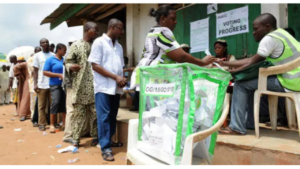
The ₦873 billion budget projected for 2027 raises equally profound questions. At a time of fiscal strain, the public is right to ask why elections are so costly. Scale explains part of it: Nigeria has over 176,000 polling units, often across challenging terrain, requiring extensive logistics, technology procurement, biometric infrastructure, staff training, and security deployments. Contingency reserves for litigation and technological failure further inflate costs. Yet scale alone does not fully account for the expenditure. The deeper driver is trust deficit. Where institutions enjoy public confidence, elections can be lean. Where trust is fragile, redundancy multiplies, creating what can be described as a “democratic insurance premium.” Every backup device, security deployment, or legal contingency is effectively an investment in mitigating the risk of dispute. Nigeria is paying for credibility, both financially and politically.
This reality reframes the debate. The question is no longer whether ₦873 billion is excessive. The question is whether it produces measurable improvements in electoral certainty. Public confidence cannot be purchased merely by expenditure; it must be earned through demonstrable transparency and consistent implementation. If electronic transmission remains subject to undefined fallback conditions, cost escalation may occur without meaningful reductions in litigation or dispute. Rational actors will continue to exploit operational ambiguity, perpetuating the cycle of contested results.
For reform to be meaningful, discretion must be tightly structured. If fallback mechanisms are unavoidable, they must operate under objective technical criteria, mandatory incident documentation, real-time public disclosure, and independent post-election audit triggers. Discretion that is auditable reduces suspicion, whereas discretion that remains opaque magnifies distrust. Transparency in spending must also improve. Electoral expenditure should be accompanied by granular public reporting detailing technology allocation, logistics, training, and contingency reserves. Transparency in cost strengthens legitimacy, dampening suspicion about undue influence or misallocation.
Performance benchmarks must accompany fiscal investment. If Nigeria invests nearly a trillion naira, measurable outcomes should follow: faster result uploads, reduced litigation, shorter adjudication timelines, and demonstrably fewer cancelled polling units. Democratic spending should correlate with measurable quality improvements in electoral integrity. Otherwise, the system risks becoming a high-cost cycle of repeated controversy, litigation, and public mistrust.
Reform sequencing is equally critical. Overnight transformation is unlikely in a politically complex federation. Incremental tightening of procedures, consistent enforcement of standards and gradual reduction of discretionary space is a more sustainable pathway than imposing absolute mandates that lack political and operational buy-in. Political economy teaches that laws alone do not transform systems; incentives do. When incentives reward transparency and penalise opportunism, behaviour changes. When incentives remain ambiguous, actors adapt strategically.
Nigeria’s electoral journey has always been iterative. From the annulment crisis of 1993 to the democratic transition in 1999, from the flawed elections of 2007 to gradual improvements in 2015, progress has been achieved through contested negotiation rather than linear evolution. The task before policymakers today is to ensure that 2027 represents a step forward rather than a replay of past disputes. Discretion must be calibrated, execution must be credible, and investment must translate into legitimacy.
The final piece of the puzzle is the broader economic and investor perspective. The outcomes of the Conference Committee, the clarity of fallback rules, and the credibility of INEC’s implementation have direct consequences for investor confidence. Markets and foreign investors monitor governance signals closely; transparent, predictable elections reduce risk premiums and attract capital. Conversely, perceived ambiguity or high-probability litigation inflates political risk, raises borrowing costs, and undermines economic stability. The stakes are not merely democratic, they are economic. Effective electoral reform, executed with precision, clarity, and transparency, becomes a stabilising force for macroeconomic policy, investment planning, and national growth.
Nigeria stands at a crossroads. The 2027 elections will test whether reform promises can translate into credible execution. The Senate’s e-transmission proviso, the Conference Committee negotiations, INEC’s timetable, and the near-₦1 trillion budget are more than technical details; they are indicators of the health of the political system. If discretion is structured and auditable, if resources are deployed with accountability, and if institutional procedures are respected, Nigeria can reduce uncertainty, strengthen trust, and demonstrate that democracy and economic stability are mutually reinforcing. If not, the familiar cycle of contested results, litigation, and distrust will persist, exacting both political and fiscal costs.
In the end, the question is as much about incentives as it is about law or money. Nigeria can spend nearly a trillion naira on elections, but without credible structures, that spending buys neither trust nor legitimacy. The Conference Committee’s harmonisation process, therefore, is not simply a legislative step; it is a test of the nation’s capacity to translate political compromise into democratic certainty, investor confidence, and sustainable economic growth. How discretion is defined, monitored, and constrained within the final Bill will signal to both citizens and markets whether the system prioritises transparency and fairness over ambiguity. Investors and economic actors interpret the clarity of electoral rules as a proxy for predictability in governance and policy, meaning that poorly harmonised legislation could ripple beyond politics into fiscal risk, investment hesitation, and volatility in capital flows. In this sense, the outcome of legislative negotiations is as much an economic signal as a democratic one.
- business a.m. commits to publishing a diversity of views, opinions and comments. It, therefore, welcomes your reaction to this and any of our articles via email: comment@businessamlive.com

John Onyeukwu, is a lawyer and public policy analyst with interdisciplinary expertise in law, governance, and institutional reform. He holds an LL.B (Hons) from Obafemi Awolowo University, an LL.M from the University of Lagos, and dual master’s degrees in Public Policy from the University of York and Central European University. He also earned a Mini-MBA. John has managed development projects on governance, public finance, civic engagement, and service delivery. He can be reached on john@apexlegal.com.ng