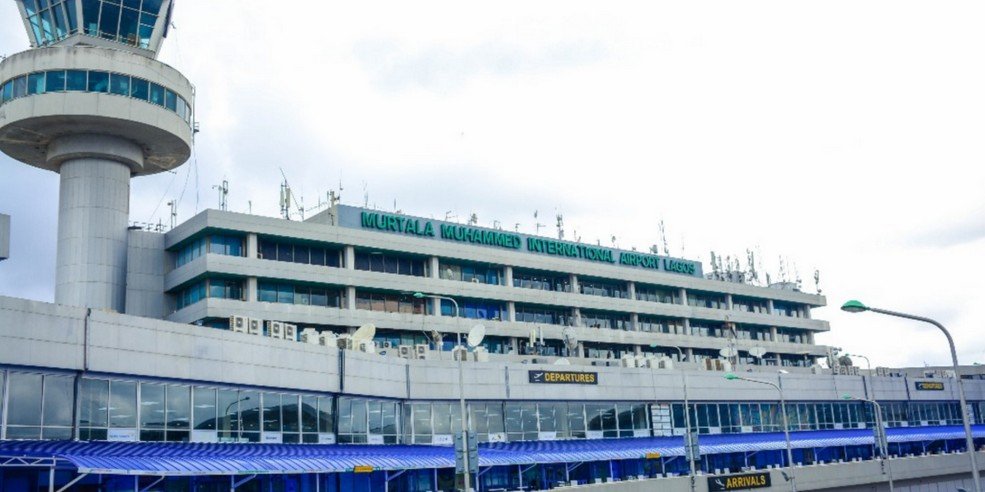
Lagos, Nigeria’s commercial nerve centre, is betting big on aviation as a growth catalyst, placing infrastructure at the centre of its strategy to reposition the country as West Africa’s dominant air transport hub. The N712.26 billion rehabilitation of Murtala Muhammed International Airport (MMIA) is considered as not just a facelift for an ageing terminal, but a high-stakes economic play aimed at unlocking connectivity, boosting investor confidence and restoring competitiveness in regional air traffic flows.
Approved by the Federal Executive Council on July 31, 2025, the modernisation plan ranks among the most capital-intensive aviation investments in Nigeria’s history. The contract was awarded to China Civil Engineering Construction Corporation (CCECC), the engineering firm behind the airport’s Terminal Two. Under the agreement, International Terminal One will be stripped to its structural core and rebuilt with upgraded mechanical, electrical and passenger systems designed to meet international standards.
For decades, MMIA has functioned as both a gateway and a bottleneck. Commissioned in 1979 with three terminals to serve a growing oil economy, the airport gradually outgrew its original capacity as passenger numbers surged. Successive expansions temporarily alleviated congestion, but demand consistently outpaced design projections. International Terminal Two, introduced to relieve pressure, soon faced similar strain.
Government officials now see the current overhaul as a corrective intervention after years of underinvestment. President Bola Ahmed Tinubu’s administration has positioned the project within its “Renewed Hope Agenda”, arguing that infrastructure modernisation is critical to economic revival. Festus Keyamo, the aviation minister, has described the airport upgrade as an investment in credibility, contending that Nigeria cannot compete for global airline traffic without a facility that aligns with international benchmarks for safety, efficiency and passenger experience.
From an operational standpoint, the rehabilitation is extensive. Engineers are reinforcing structural components, installing new façade systems and reconfiguring interior layouts to improve passenger flow. Ageing HVAC, plumbing and electrical systems are being replaced with energy-efficient alternatives. On the airside, apron expansion and upgraded taxiways aim to ease aircraft congestion and reduce turnaround times, a crucial metric for airlines operating on tight margins.
Equally significant are the landside improvements. Traffic bottlenecks around the airport complex have long undermined the passenger experience. The project introduces dedicated arrival and departure ring roads, modernised parking facilities and redesigned access points intended to streamline vehicular movement and improve predictability for travellers and logistics operators.

To sustain operations during the reconstruction, the Federal Airports Authority of Nigeria (FAAN) has constructed a temporary 8,000-square-metre departure terminal, reportedly over 90 per cent complete. The interim facility is expected to maintain throughput while Terminal One undergoes phased redevelopment. Olubunmi Kuku, FAAN’s managing director, has assured stakeholders that safety, accessibility and passenger comfort remain priorities throughout the transition.
The airport overhaul forms part of a N900 billion aviation infrastructure programme encompassing runway rehabilitation, perimeter security upgrades and improvements at regional airports nationwide. Policymakers argue that aviation serves as an economic multiplier, supporting tourism, trade, business travel and cargo operations. A modernised Lagos hub, they contend, could enhance Nigeria’s attractiveness to global carriers and stimulate ancillary sectors from hospitality to logistics.
However, the scale of spending has sparked debate. Critics question cost transparency and fiscal prioritisation, particularly in a macroeconomic environment marked by currency volatility, debt servicing pressures and competing infrastructure needs in power and healthcare. Some analysts caution that capital-intensive projects must demonstrate measurable returns in traffic growth, route expansion and foreign direct investment to justify their outlays.
Industry observers note that airport competitiveness extends beyond infrastructure. Policy consistency, currency convertibility and regulatory efficiency remain decisive factors in airline route planning. Nigeria has historically struggled with challenges such as trapped airline revenues and fluctuating foreign exchange regimes, issues that have influenced carrier capacity decisions.
Nonetheless, the consensus among many aviation stakeholders is that MMIA’s modernisation is overdue. Airlines require predictable turnaround times, reliable passenger processing systems and efficient ground handling to optimise operations. A revitalised terminal could strengthen Lagos’s claim as a regional transit point, particularly as intra-African trade expands under continental integration frameworks.
For passengers, the transformation is tangible. Scaffolding and heavy machinery frame a terminal in flux. Circulation routes have shifted, and parking arrangements are evolving. FAAN has urged travellers to arrive earlier and adhere to updated advisories as construction progresses.
Economically, the airport’s trajectory mirrors Nigeria’s aviation ambitions. Lagos competes with Accra, Addis Ababa and Nairobi for hub status in West and East Africa. Modern facilities have enabled competitors to consolidate transit traffic and attract intercontinental connections. Nigeria’s demographic scale and commercial depth offer latent advantages, but infrastructure constraints have historically limited their realisation.
By investing heavily in MMIA, the government seeks to close that gap. Industry analysts assert that if delivered on schedule and within budget, the upgrade could enhance Nigeria’s aviation profile and signal a renewed commitment to infrastructure excellence.
The airport is expected to settle into a new operational rhythm. Temporary facilities will support steady passenger flow while construction advances behind the scenes. Ultimately, the Nigerian government envisions a gateway that reflects Nigeria’s economic stature; efficient, secure and globally competitive.
For the tens of thousands who traverse MMIA each week, the inconvenience of construction may represent a transitional phase toward a more seamless travel experience. For investors and airlines, the project stands as a litmus test of Nigeria’s capacity to translate infrastructure ambition into sustained economic value.