Nigeria’s fast-growing on-demand economy is reshaping how urban consumers access meals, groceries and everyday logistics services, turning mobile applications into indispensable gateways for modern commerce. What began as an offshoot of ride-hailing convenience has matured into a competitive digital ecosystem in which delivery platforms now compete on technology architecture, logistics optimisation, pricing efficiency and customer experience design.
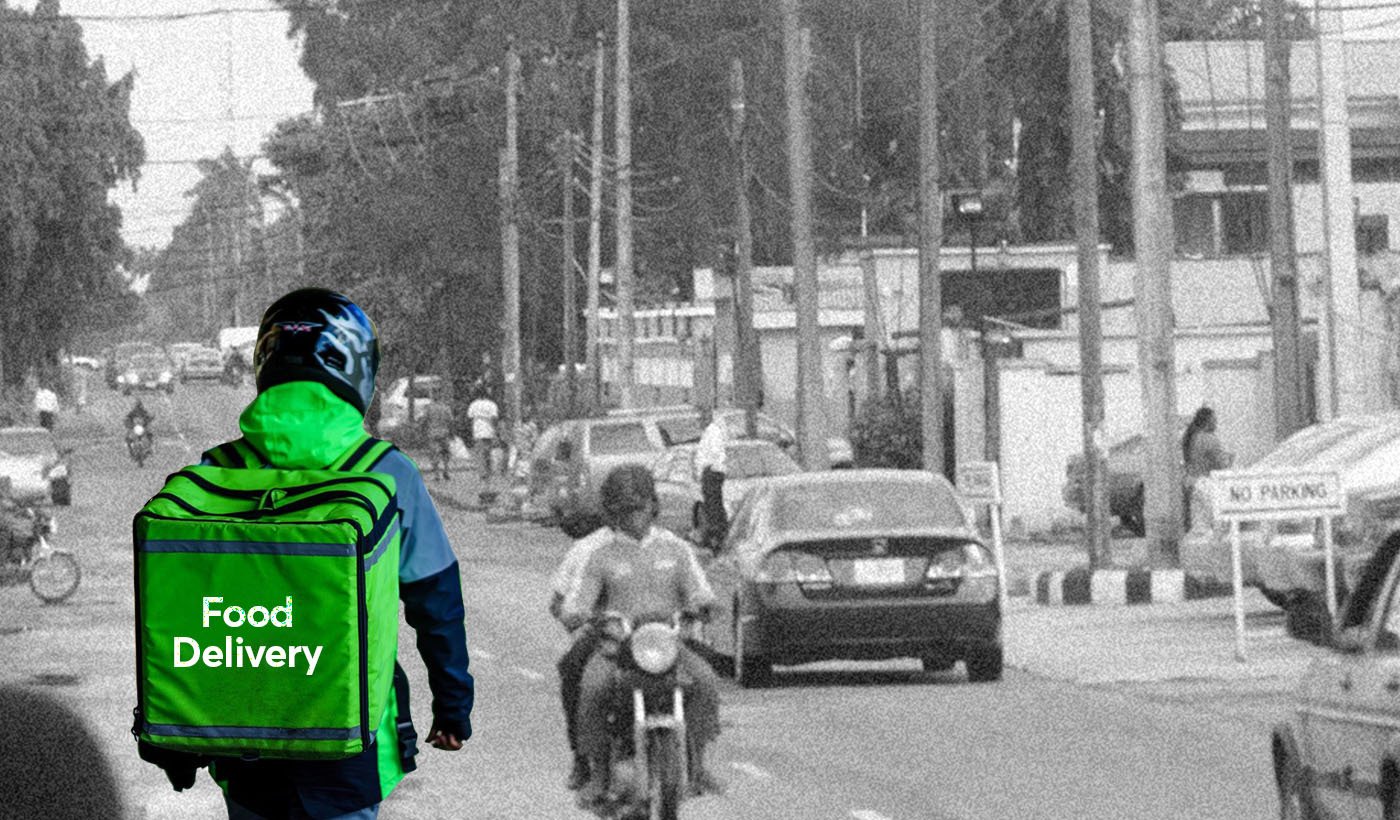
Across major urban centres, particularly Lagos, food delivery applications have transitioned from novelty services to embedded components of daily life. Corporate professionals routinely place lunch orders through mobile apps; households depend on digital platforms for groceries and essentials; and small businesses increasingly rely on third-party delivery networks to navigate congested transport corridors. The result is an expanding platform economy where digital convenience is evolving from discretionary spending into functional necessity.
Market growth signals expanding opportunity
Nigeria’s online food delivery market is experiencing sustained expansion, underpinned by structural drivers including smartphone penetration, improvements in digital payments infrastructure and shifting urban consumption patterns.
Data from Deep Market Insights estimates that the Nigerian online food delivery sector reached approximately $0.92 billion in 2024 and projected growth to $2.27 billion by 2033. That trajectory implies a compound annual growth rate (CAGR) of 10.55 per cent between 2026 and 2033.
Several structural enablers are converging, including rising smartphone adoption across income brackets, increased restaurant digitisation and point-of-sale integration, rapid urban population growth, heightened demand for time-saving services, and the expansion of gig-economy rider networks.
As fintech adoption deepens and mobile banking reduces payment friction, ordering food via apps has become operationally seamless. Consumers now transact through cards, bank transfers and wallet systems with minimal latency. For restaurants, particularly small and medium-scale operators, delivery platforms provide immediate access to expanded customer bases without heavy capital expenditure on in-house logistics fleets.
In effect, delivery platforms operate as shared infrastructure, lowering entry barriers and democratising market access within Nigeria’s fragmented food service industry.
The rise of delivery platforms mirrors developments in Nigeria’s metropolitan living patterns. Longer commuting hours, dense residential clusters and worsening traffic congestion have elevated convenience services from lifestyle perks to essential urban utilities.
Lagos remains the epicentre of this transformation. Chronic congestion and extended commute times render traditional food pickup inefficient. In response, delivery companies have intensified efforts to expand rider fleets, onboard merchants and refine last-mile logistics.
International operators and indigenous startups alike are investing aggressively in route optimisation algorithms, fleet management systems, real-time order tracking, customer analytics, and merchant integration platforms.
To evaluate consumer reach and platform visibility, Business A.M. reviewed food delivery applications listed on the Google Play Store, ranking selected platforms by download figures, ratings and review volumes.
While download statistics do not necessarily reflect active users, revenue generation or profitability, they offer directional insight into brand penetration, user sentiment and market awareness.
Seven platforms currently shape Nigeria’s Android-based food delivery landscape.
1. Glovo
Among the most globally recognised delivery brands operating in Nigeria, Glovo entered the market in 2021 promising rapid, multi-category delivery services.
Founded by Oscar Pierre and Sacha Michaud, the Spanish startup connects users to restaurants, supermarkets, pharmacies and retail stores through a single integrated application. Operating in more than 20 countries, Glovo leverages international logistics expertise while tailoring its operations to local markets such as Lagos, Abuja and Ibadan.
-
Downloads: 50 million+
-
Rating: 4.6
-
Reviews: 1 million+
Glovo’s international footprint enhances brand credibility and operational discipline. However, its Nigerian operations face intensifying competition from nimble local startups capable of deeper cultural localisation and pricing flexibility.
2. Chowdeck
Launched in October 2021 and backed by Y Combinator, Chowdeck has emerged as one of Nigeria’s fastest-scaling indigenous delivery platforms.
Founded by Femi Aluko, Olumide Ojo and Lanre Yusuf, the company operates across 11 cities in Nigeria and Ghana. It reports serving over 1.5 million users supported by a delivery fleet exceeding 20,000 riders.
-
Downloads: 500,000+
-
Rating: 4.6
-
Reviews: 16,000+
Chowdeck’s expansion strategy reflects the growing competitiveness of Nigeria’s local tech ecosystem. By focusing on operational efficiency and broad cuisine offerings, from traditional Nigerian meals to international options, the platform has positioned itself as a culturally embedded alternative to global incumbents.
3. MANO
MANO positions itself as a hybrid model combining restaurant delivery with grocery and essentials distribution.
Founded by Lebanese-Angolan entrepreneur Moe A. Nesr, MANO operates in Lagos, Abuja and Luanda, reflecting a regional expansion blueprint that extends beyond Nigeria’s borders.
-
Downloads: 500,000+
-
Rating: 4.6
-
Reviews: 2,400+
Its multi-category approach aligns with global “super app” trends, where delivery platforms evolve into integrated commerce ecosystems spanning food, groceries and household essentials.
4. FoodCourt
Established in 2021 by Henry Nneji and Paul Adokiye Iruene, FoodCourt differentiates itself through a cloud-kitchen model rather than aggregating independent restaurants.
The platform prepares meals within proprietary digital kitchens, enabling tighter quality control, inventory management and delivery optimisation. Operating across Lekki, Ikoyi, Marina, Yaba and Ikeja, the company reports serving over three million meals since inception.
-
Downloads: 100,000+
-
Rating: 4.4
-
Reviews: 1,715
By vertically integrating food production and delivery, FoodCourt reduces merchant fragmentation and improves cost predictability, a strategic hedge against thin delivery margins.
5. HeyFood
Founded in 2021 by Akinropo Taiwo, HeyFood initially targeted campus-based demand before expanding into broader urban markets such as Ibadan, Lagos and Abuja.
-
Downloads: 50,000+
-
Rating: 4.5
-
Reviews: 3,180+
The platform filled service gaps in cities previously underserved by formal delivery networks, replacing informal errand systems with structured logistics solutions.
6. ChowCentral (formerly 500Chow)
Originally launched during the COVID-19 lockdown, ChowCentral evolved to serve high-density Lagos neighbourhoods including Lekki, Victoria Island, Surulere and Yaba.
Founded by Tosin Onafuye, Christopher Obasi and Adeyemo Onafuye, the platform focuses on urban clusters where order density improves delivery economics.
-
Downloads: 10,000+
-
Rating: 4.6
-
Reviews: 150
7. Foodelo
Founded in November 2021 by Eunice Anthony, Foodelo operates across Lagos neighbourhoods and Abeokuta, while maintaining a presence in Maryland, United States.
-
Downloads: 10,000+
-
Rating: 4.6
-
Reviews: 33
Its cross-border positioning hints at diaspora-driven demand and the potential globalisation of Nigerian cuisine through digital channels.
Competition, profitability and structural risks
Despite rapid growth, sustainability remains a central question. Delivery economics are notoriously thin, with high rider costs, fuel price volatility, customer discount expectations and merchant commission disputes pressuring margins.
The 2023 exit of Bolt Food from Nigeria showcases the operational complexity of the market. Scale alone does not guarantee profitability, particularly in a price-sensitive economy facing inflation and currency pressures.
To survive, platforms must optimise delivery density per route, merchant acquisition costs, rider retention and incentive structures, customer lifetime value, and data-driven demand forecasting.
Artificial intelligence and predictive analytics are increasingly deployed to streamline dispatch efficiency and reduce idle time.
Digital payments as the enabler
Nigeria’s fintech ecosystem plays a catalytic role in platform expansion. As mobile transfers, card payments and wallet systems become mainstream, friction in digital ordering declines.
Seamless payment processing not only improves user experience but also enhances revenue predictability for restaurants and delivery operators. The integration of financial technology with logistics platforms effectively transforms food delivery apps into nodes within Nigeria’s broader digital financial architecture.
The trajectory of Nigeria’s on-demand economy indicates that delivery platforms are evolving beyond convenience tools. They now function as distributed commerce infrastructure, linking consumers, merchants and gig workers within a digitally coordinated network.
Urbanisation trends support continued demand expansion. Nigeria’s population growth and migration toward metropolitan hubs amplify the need for efficient last-mile services. At the same time, digital literacy improvements and falling data costs widen the consumer base.
As competition intensifies, industry observers anticipate eventual consolidation. Smaller players may merge, pivot or exit, while stronger operators deepen technological investments and diversify service categories.
There are also projections that super-app ambitions, cloud kitchen integrations, grocery expansion and cross-border scaling could define the next growth phase. Investors continue to view the sector as strategically important, albeit capital-intensive.