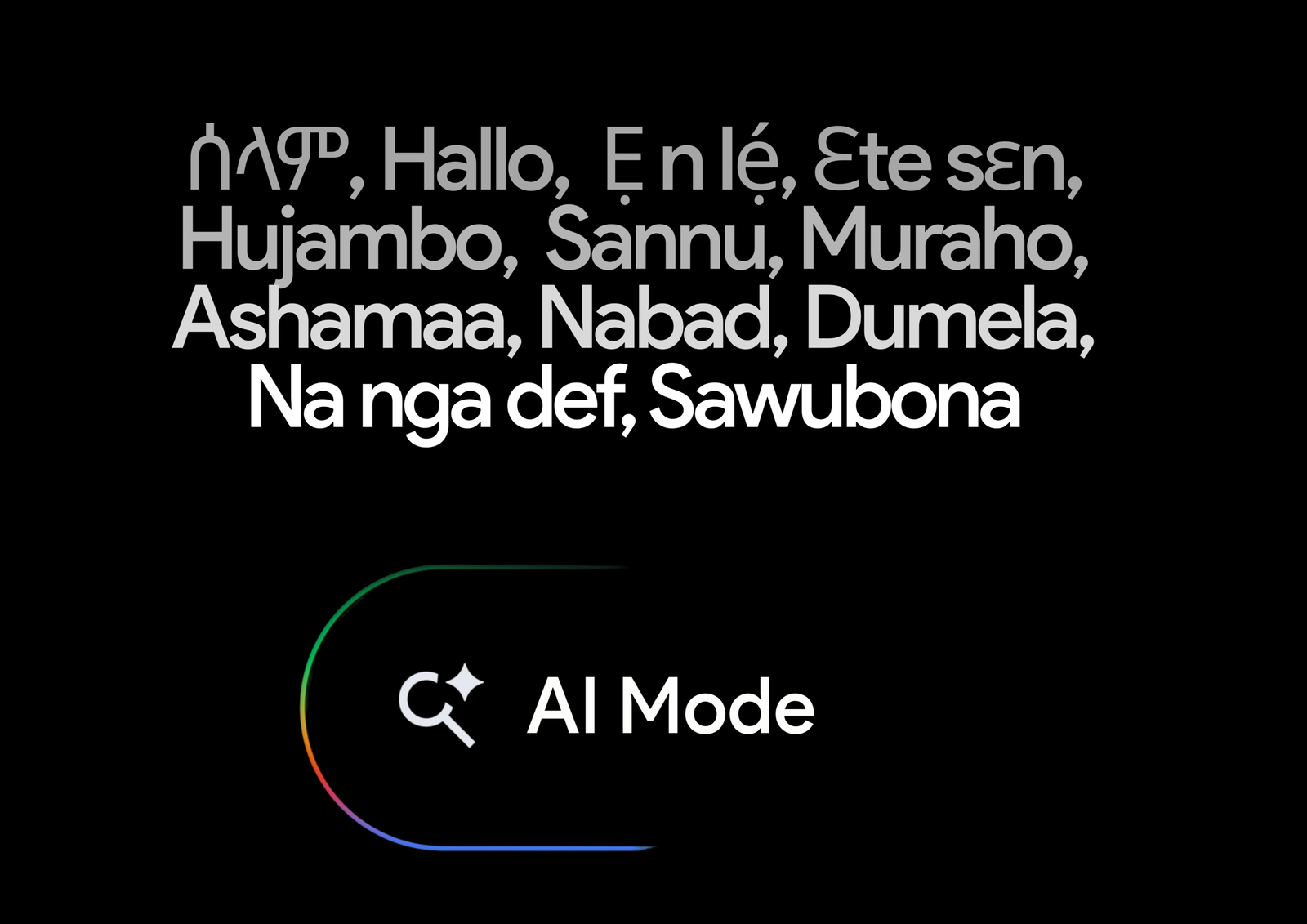
Google has expanded the language capabilities of its artificial intelligence-powered search tools to include Yorùbá and Hausa, a move aimed at improving digital accessibility for millions of Nigerian users and strengthening the relevance of AI services across Africa’s diverse linguistic landscape.
The update enables speakers of the two widely used Nigerian languages to access the company’s AI-driven search features (AI Overviews and AI Mode) in their native languages. The development means users can now ask questions, receive summaries, and explore information online using conversational queries in Yorùbá or Hausa rather than English.
. With the latest rollout, Google’s AI-powered Search now supports 13 African languages, reflecting growing demand for digital services tailored to local contexts and linguistic diversity.
For Nigeria’s vast digital population, the upgrade could significantly enhance how people interact with online information. A student in Kano, for instance, can now pose academic or research questions in Hausa, while a trader in Ibadan can search for business tips or market insights in Yorùbá, receiving AI-generated responses and summaries in their preferred language.
Technology analysts say the inclusion of indigenous languages is a critical step in addressing one of the major barriers to digital inclusion in emerging markets. By enabling people to engage with AI in their mother tongues, technology companies can extend the benefits of digital tools to wider segments of the population, including those who are less comfortable using English.
Google said the new capability is powered by advanced artificial intelligence technology embedded in its search engine, including a customised version of its Gemini AI model, which improves language understanding and contextual reasoning across multiple languages.
According to Taiwo Kola-Ogunlade, communications and public affairs manager for West Africa at Google, the initiative goes beyond simple translation to ensuring that search technology understands the cultural and informational context of each language.
“Building a truly global Search goes far beyond translation, it requires a nuanced understanding of local information.
“With the advanced multimodal and reasoning capabilities of our custom version of Gemini in Search, we’ve made huge strides in language understanding so our most advanced AI search capabilities are locally relevant and useful in each new language we support,” he said.
He added that the goal is to enable Nigerians to interact with search technology in a more natural and culturally familiar way.
“This is about ensuring Nigerians can converse with Search in their mother tongues, making information more helpful for everyone,” he noted further.
Beyond Yorùbá and Hausa, the expanded language support across Africa now includes Afrikaans, Akan, Amharic, Kinyarwanda, Afaan Oromoo, Somali, Sesotho, Kiswahili, Setswana, Wolof and isiZulu.
Users can access the new language features through the Google app on Android and iOS devices or via the web interface. By selecting AI Mode within the search experience, users can type or speak queries in their preferred language and receive AI-generated responses designed to guide deeper exploration of online content.