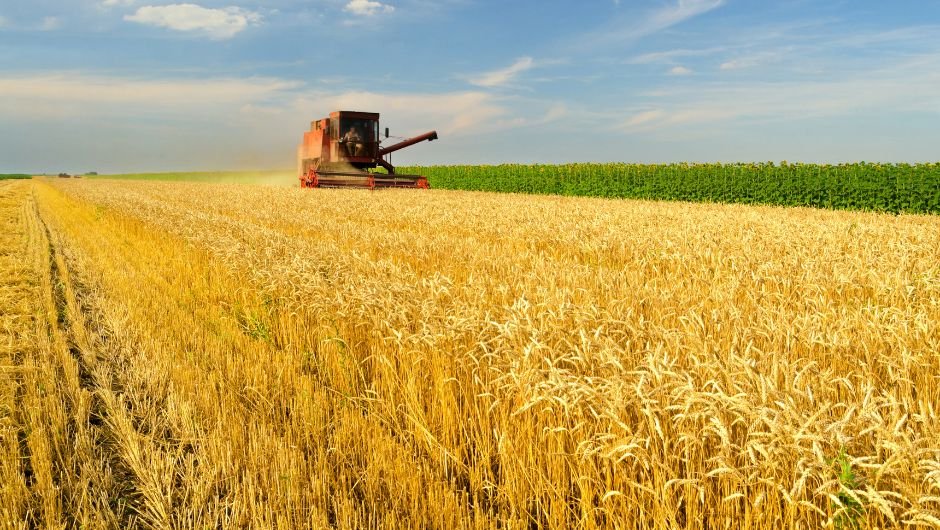
A record-high global cereal production is expected to bring a period of relative stability to international food markets, potentially easing grain import costs for Nigeria, although domestic structural challenges are likely to continue influencing food prices.
According to new estimates by the Food and Agriculture Organization (FAO), global cereal production for 2025 has been revised slightly upward to 3.029 billion tonnes, marking a 5.6 per cent increase year-on-year and reinforcing what is now projected to be the largest cereal harvest ever recorded.
The adjustment reflects improved output estimates for maize and rice in several producing countries, particularly in Latin America and Asia, where favourable weather conditions and expanded planting areas have bolstered production.
As Africa’s fourth largest economy and a major buyer of wheat and rice on international markets, Nigeria is particularly exposed to changes in global grain supply dynamics. These shifts could influence inflation patterns, food security outcomes, foreign exchange pressures and agricultural policy direction. Nonetheless, analysts warn that structural challenges, including weak domestic production, exchange-rate instability and supply-chain bottlenecks, may dilute the benefits of rising global cereal output.
Global cereal output reaches new highs
The FAO’s latest forecast underscores the scale of expansion in global grain production, which has been supported by improved yields and policy-driven increases in planting areas in several major agricultural economies.
A significant contributor to the upward revision was maize production in Paraguay, where updated yield estimates pushed the country’s harvest to record levels.
Rice production also received a major boost, particularly in Southeast Asia. Indonesia’s output estimate was revised upward after final government assessments revealed a sharp increase in cultivated area, pushing the country’s rice production to a decade-high level.
Similarly, Thailand recorded upward revisions to output figures following adjustments to its 2024/25 harvest estimates and a faster-than-expected sowing pace for the 2025/26 offseason crop.
Combined with smaller adjustments in other producing countries, the revisions lifted FAO’s forecast of global rice production in 2025/26 to 563.4 million tonnes, a 2.1 percent increase year-on-year and a new record.
The growth in global rice supply is expected to be driven mainly by large producers including Bangladesh, Brazil, China, India and Indonesia, whose expanding output is projected to offset production declines in countries such as Madagascar, Pakistan, Thailand and the United States.
For Nigeria, which relies heavily on rice as a staple food and has struggled for decades to achieve self-sufficiency in production, the abundance of global rice supply may help soften international prices. However, import restrictions, domestic production costs and currency depreciation remain major determinants of local rice prices.
Despite record production levels, global cereal consumption is also expanding.
FAO forecasts world cereal utilisation in the 2025/26 marketing season to reach 2.943 billion tonnes, representing an increase of 5.2 million tonnes from previous estimates and marking another record.
Much of the growth is expected to come from rising demand for animal feed, particularly maize and barley.
Feed consumption of maize and barley has been revised upward, especially in South America where abundant supplies are encouraging greater livestock production.
In the European Union, official projections indicate a shift in feed usage patterns. While maize consumption in feed rations has been revised downward, demand for wheat, barley and sorghum has been adjusted upward.
Meanwhile, rice consumption globally is projected to expand by 2.7 percent in 2025/26, reaching 555.5 million tonnes.
This growth is driven largely by rising populations and dietary demand across Asia and Africa.
Beyond production and consumption trends, global grain inventories are also expanding, reinforcing supply resilience in international markets.
FAO projects world cereal stocks to reach 940.5 million tonnes by the end of the 2026 marketing season, representing an increase of 4.1 million tonnes from previous estimates.
This would maintain the global cereals stocks-to-use ratio at 31.9 per cent, a level considered comfortable and indicative of a well-supplied market.
Wheat inventories alone are projected to reach 339.9 million tonnes, reflecting upward revisions in storage levels in the European Union and Ukraine.
Compared with opening levels, global wheat stocks are expected to increase by 24.2 million tonnes, supported by large stock accumulations in major producing countries such as Argentina, China, India, Ukraine and the European Union.
Stocks of coarse grains, including maize, barley and sorghum, are also forecast to expand significantly, rising by as much as 38.5 million tonnes in 2026.
Global rice inventories are projected to reach 219.3 million tonnes, driven by increased reserves in Bangladesh, Indonesia and Thailand.
However, FAO noted that stock levels are expected to decline in certain countries, including Japan and Nigeria, reflecting domestic supply constraints and procurement policies. For Nigeria, the downward revision in rice reserves underscores the country’s ongoing struggle to balance local production with growing consumption demand.
Global cereal trade rebounds
International trade in cereals is also expected to recover in the coming season.
FAO forecasts global cereal trade in 2025/26 to reach 501.7 million tonnes, representing a 3.5 per cent increase from the previous season and the second-highest level on record.
The rebound is expected to be driven primarily by wheat trade, which is projected to rise by 11.9 million tonnes to 204.8 million tonnes.
A key factor behind this increase is the expected return of imports by Türkiye to normal levels after an import ban limited purchases in the previous season.
Trade in coarse grains is projected to remain relatively stable, with only minor adjustments in maize and barley shipments.
Meanwhile, global rice trade is expected to decline slightly to 60.4 million tonnes in 2026, representing a 1.1 per cent drop from the record levels seen in 2025.
Wheat production expected to ease in 2026
Despite record cereal output in 2025, the outlook for wheat production in 2026 is less robust.
FAO forecasts global wheat production to decline by nearly 3 per cent to around 810 million tonnes, largely due to reduced planting areas following softer prices and a return to average yield levels after the strong harvests recorded in 2025.
In the European Union, weaker wheat prices have led to a reduction in winter wheat sowings.
Although some regions experienced cold spells during the planting season, overall weather conditions remain favourable and yields are expected to remain above average.
Even so, total wheat production in the bloc is projected to decline modestly in 2026.
In the United Kingdom, a shift away from barley and improved planting conditions are expected to support a modest expansion in wheat cultivation, while yield recovery following dry conditions in 2025 could lift output toward near-average levels.
Production declines are also anticipated in major exporters such as the United States, Canada and Russia.
In Russia, the area planted with wheat is expected to continue declining as farmers increasingly shift toward oilseed crops that offer higher returns.
Meanwhile, in India, the world’s second-largest wheat producer, government incentives have encouraged record sowings, supporting expectations that output in 2026 will remain close to the previous year’s all-time high.
Maize production remains strong in the southern hemisphere
South of the equator, maize production prospects remain favourable.
Brazil is expected to maintain above-average maize production in 2026, supported by favourable weather conditions and expanded planting areas driven by strong export demand.
Argentina is also projected to achieve above-average maize output, thanks to larger planting areas and forecasts for normal rainfall during the latter part of the growing season.
In Africa, South Africa is expected to harvest a second consecutive bumper maize crop in 2026, although output could be slightly lower than the previous year due to irregular weather conditions in some provinces.
What the global cereal outlook means for Nigeria
The implications of these developments are considerable. The country still relies heavily on imported wheat and continues to supplement local rice production with imports to meet rising demand. As a result, global grain supply trends remain a key factor shaping Nigeria’s food inflation outlook and the pressure on its foreign exchange reserves
A record global cereal harvest could help stabilise international prices, reducing the import bill for Nigerian food processors and millers.
This may be particularly beneficial for the country’s wheat-dependent industries, including flour milling, baking and food processing sectors.
However, the transmission of global price relief to Nigerian consumers is far from automatic.
Several domestic factors,including exchange rate volatility, transportation costs, insecurity in farming regions and infrastructure gaps, continue to exert upward pressure on food prices.
Nigeria has struggled with persistently high food inflation in recent years, driven by supply disruptions, rising input costs and climate-related shocks.
Even when global grain prices decline, these internal constraints often prevent local food prices from falling proportionately.
The evolving global cereal landscape also highlights the urgency of strengthening Nigeria’s domestic agricultural production.
Despite multiple government initiatives aimed at boosting rice and maize output, the country still faces significant productivity gaps compared with major producing nations.
Low mechanisation levels, limited irrigation coverage, inadequate storage infrastructure and restricted access to credit remain key barriers to large-scale agricultural expansion.
At the same time, Nigeria’s population continues to grow rapidly, increasing pressure on food supply systems.
As global markets become more competitive and climate variability intensifies, economists argue that Nigeria must accelerate efforts to improve agricultural productivity and reduce dependence on imports.
This includes investing in irrigation systems, expanding access to improved seeds and fertilizers, strengthening rural infrastructure and enhancing market access for farmers.
The FAO’s outlook indicates that global cereal markets are entering a phase of relative abundance, supported by strong harvests and comfortable stock levels.
For Nigeria, this presents a temporary opportunity to ease pressure on food imports and stabilize inflation.
However, experts caution that global agricultural markets remain vulnerable to climate shocks, geopolitical tensions and policy shifts that can quickly disrupt supply chains.
They added that without sustained investment in domestic production capacity, Nigeria could continue to face food security risks even in periods of global surplus.