As tensions escalate in the Middle East, oil prices, shipping routes, and sovereign risk premiums are reacting in real time. For Nigeria, the crisis is a reminder that geopolitical instability is no longer a distant headline; it is a structural input into fiscal planning, monetary policy, and institutional reform.
Global wars no longer belong solely to distant battlefields, visible only in news headlines. In an interconnected global economy defined by financial integration, complex supply chains and real-time capital flows, conflict rapidly mutates into an economic variable. It alters commodity prices, shifts risk premiums, reconfigures trade routes and tests the resilience of national institutions. The escalating confrontation involving the United States, Israel and Iran is a clear manifestation of this new geopolitical-economic reality.
For Nigeria, this is not an abstract foreign policy development. It is a test of our fiscal architecture, monetary policy framework and structural reform trajectory.
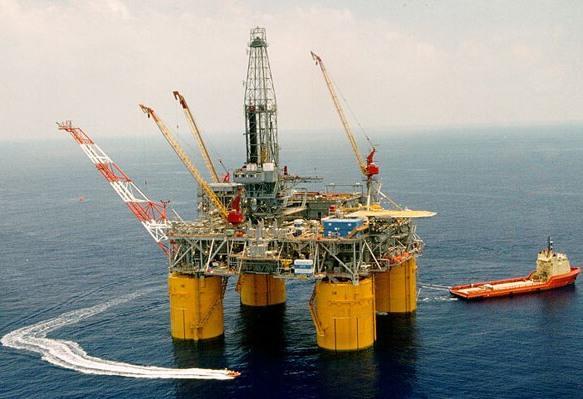
Tensions around the Strait of Hormuz, through which roughly one-fifth of global oil supply transits, have introduced significant risk premiums into energy markets. Brent crude’s upward movements reflect not just physical supply fears, but expectations of disruption, retaliation and prolonged instability. Markets price uncertainty quickly.
Nigeria’s macroeconomic exposure to this volatility remains substantial. Crude oil still accounts for more than 85 percent of export earnings and roughly half of consolidated government revenue. Budget benchmarks are highly sensitive to oil price assumptions. When prices spike above projections, revenue appears buoyant. When they reverse sharply, fiscal gaps widen.
There is a temptation to interpret rising prices as a windfall opportunity. Indeed, if sustained above $95–$100 per barrel, Nigeria’s gross export receipts could improve materially, strengthening external reserves and easing short-term foreign exchange liquidity pressures. However, two structural caveats limit this optimism.
First, Nigeria’s production capacity has remained below potential. Output constraints linked to oil theft, pipeline vandalism, underinvestment in upstream infrastructure and regulatory bottlenecks limit our ability to fully capitalise on price surges. Second, conflict-driven price spikes are inherently unstable. They are driven by risk sentiment rather than structural demand growth. As diplomatic conditions evolve, so too can market sentiment.
A fiscal strategy anchored to volatile revenue without adequate stabilisation buffers is not strategy; it is exposure.
Beyond oil revenue, the conflict’s implications for maritime trade are equally consequential. Heightened tensions in the Gulf region and adjacent corridors have triggered higher insurance premiums and rerouting of vessels. Freight rates for energy cargo and containerised goods have responded accordingly.
Nigeria’s economic structure amplifies the impact of these developments. The country still imports a proportion of refined petroleum products, capital goods, pharmaceuticals, food inputs and industrial machinery. An increase in shipping and insurance costs translates directly into higher landed costs at Nigerian ports. These costs cascade through the distribution chain and eventually manifest in consumer prices.
Energy costs, in particular, have a powerful transmission effect. Higher global crude prices influence domestic petrol and diesel pricing dynamics, whether through direct pass-through or through fiscal subsidy adjustments. Transportation costs then feed into food prices, logistics expenses and broader inflation metrics. In this way, external conflict amplifies domestic inflationary pressures.
The Central Bank of Nigeria (CBN) is then confronted with a familiar dilemma: tighten monetary conditions to anchor inflation expectations, or accommodate growth concerns in an already fragile economy. Either choice carries trade-offs. External geopolitical shocks complicate domestic policy calibration.
Geopolitical escalation historically drives capital toward perceived safe-haven assets, U.S. Treasuries, gold and highly rated sovereign debt instruments. Emerging markets often experience portfolio outflows during such episodes, particularly where structural vulnerabilities exist.
Nigeria’s capital markets, while evolving, remain sensitive to shifts in global risk appetite. Foreign portfolio investment can be volatile. Heightened risk perception may exert additional pressure on the naira, particularly if oil production volumes do not rise commensurately with price increases. Sovereign borrowing costs may also edge upward as global investors reassess emerging market exposures.
Debt service already absorbs a substantial share of Nigeria’s federally retained revenue. A widening in sovereign spreads, even modest, can constrain fiscal maneuverability further. The connection between geopolitical risk and domestic borrowing costs is therefore direct and material.
It is important to state clearly: Nigeria’s vulnerability to external shocks is not an accident of geography. It is the cumulative outcome of structural choices.
For decades, economic diversification has been articulated as policy doctrine but implemented unevenly. Hydrocarbons remain dominant in external earnings. Non-oil exports contribute a comparatively small share of foreign exchange inflows. Manufacturing’s contribution to GDP has struggled to gain durable traction. Agricultural productivity improvements have been incremental rather than transformative.
As long as a narrow commodity base anchors fiscal stability, geopolitical conflict in energy-producing regions will continue to function as a macroeconomic disruptor.
The US–Israel–Iran conflict simply exposes this structural fragility with renewed clarity.
Diversification must now be reframed not as developmental aspiration but as macroeconomic risk management. Expanding agro-processing exports, deepening manufacturing value chains, promoting technology-enabled services and leveraging regional trade frameworks such as the African Continental Free Trade Area are not optional growth strategies; they are hedging instruments against external volatility.
Export diversification reduces concentration risk. Domestic refining capacity reduces imported fuel vulnerability. Local industrial capacity shortens supply chains. Each incremental structural reform reduces exposure to exogenous shocks.
The key question is execution. Policy declarations must be accompanied by regulatory coherence, infrastructure investment, logistics modernisation and export facilitation. Without implementation discipline, diversification remains rhetorical.
Commodity volatility need not produce a crisis if institutional buffers are credible. Countries with robust stabilisation funds and counter-cyclical fiscal frameworks absorb price shocks more effectively. The principle is straightforward: save during boom periods to cushion downturns.
Nigeria possesses institutional vehicles designed for such purposes, including the Nigeria Sovereign Investment Authority and stabilisation mechanisms historically linked to excess crude revenues. However, scale, political discipline and rule-based withdrawals determine effectiveness.
Embedding scenario modelling into medium-term fiscal frameworks would enhance resilience. Budget planning should incorporate stress scenarios linked to oil price reversals, shipping disruptions and capital flow volatility. This is standard practice in advanced economies; it should become standard in Nigeria.
Similarly, coordination between fiscal and monetary authorities must deepen. Exchange rate stability, inflation control and reserve management cannot operate in silos during geopolitical turbulence.
Macroeconomic variables eventually converge at the household level. When global conflict drives fuel and food price increases, citizens experience tangible strain. Inflation erodes purchasing power. Small businesses face higher input costs. Transport fares rise. Wage adjustments lag.
Governance quality determines whether such stress translates into instability or resilience. Transparent communication about fiscal constraints, targeted safety nets for vulnerable populations and data-driven subsidy calibration can mitigate social tension.
History demonstrates that external shocks often become catalysts for domestic political friction when institutions are perceived as opaque or unresponsive. Conversely, credible policy responses can strengthen institutional legitimacy even amid a crisis.
The deeper lesson from the US–Israel–Iran confrontation is conceptual. Geopolitical risk is no longer episodic; it is structural. Wars, climate events, supply chain disruptions and financial contagions now interact with national economies in real time.
Economic planning frameworks must evolve accordingly. Ministries of finance, central banks and national planning commissions should institutionalise geopolitical risk assessment as part of macroeconomic modelling. Strategic reserves, diversification metrics and fiscal buffers should be tracked with the same rigour as inflation and GDP growth. Risk is not a peripheral variable; it is a core input.
Nigeria’s strategic objective should not be to predict every external shock, which is impossible. It should be to design an economic architecture capable of absorbing shocks without systemic breakdown.
This requires three interlocking pillars: diversified revenue streams, disciplined fiscal management and strong institutions. Without these, each global conflict will trigger cyclical debate, short-term interventions and prolonged recovery periods. With them, external shocks become manageable disturbances rather than existential threats.
Global wars reshape emerging economies not merely by altering trade routes or commodity prices, but by exposing structural imbalances long tolerated during periods of relative calm. They force uncomfortable clarity. They reveal whether fiscal buffers are real or rhetorical, whether diversification strategies are operational or aspirational, whether governance systems can adapt under pressure.
Nigeria stands at a moment where these questions are practical and consequential. The policy response to external conflict must extend beyond diplomatic posture to economic architecture. Diversification, institutional reform, disciplined fiscal management and structured risk contingency planning are prerequisites for stability in an era where geopolitical tremors travel at the speed of global markets.
Wars may begin in specific territories, but their economic aftershocks respect no borders. For Nigeria, the imperative is unmistakable: build an economy that can withstand shocks it did not create and institutions capable of anticipating risk before it crystallizes into crisis.
War has become an economic variable. The strategic question before us is whether we will remain exposed to it, or engineer resilience against it. Engineering resilience requires intentional design, not episodic reaction. It demands that we treat fiscal buffers as sacrosanct, diversification as measurable policy with timelines and benchmarks, and institutional reform as a non-negotiable foundation rather than a political slogan. It means embedding risk analytics into budgeting, strengthening domestic productive capacity, deepening export sophistication, and aligning monetary and fiscal coordination around stability objectives. In an era where geopolitical shocks can reprice currencies, commodities and capital flows overnight, resilience is not defensive, it is competitive advantage.
- business a.m. commits to publishing a diversity of views, opinions and comments. It, therefore, welcomes your reaction to this and any of our articles via email: comment@businessamlive.com

John Onyeukwu, is a lawyer and public policy analyst with interdisciplinary expertise in law, governance, and institutional reform. He holds an LL.B (Hons) from Obafemi Awolowo University, an LL.M from the University of Lagos, and dual master’s degrees in Public Policy from the University of York and Central European University. He also earned a Mini-MBA. John has managed development projects on governance, public finance, civic engagement, and service delivery. He can be reached on john@apexlegal.com.ng