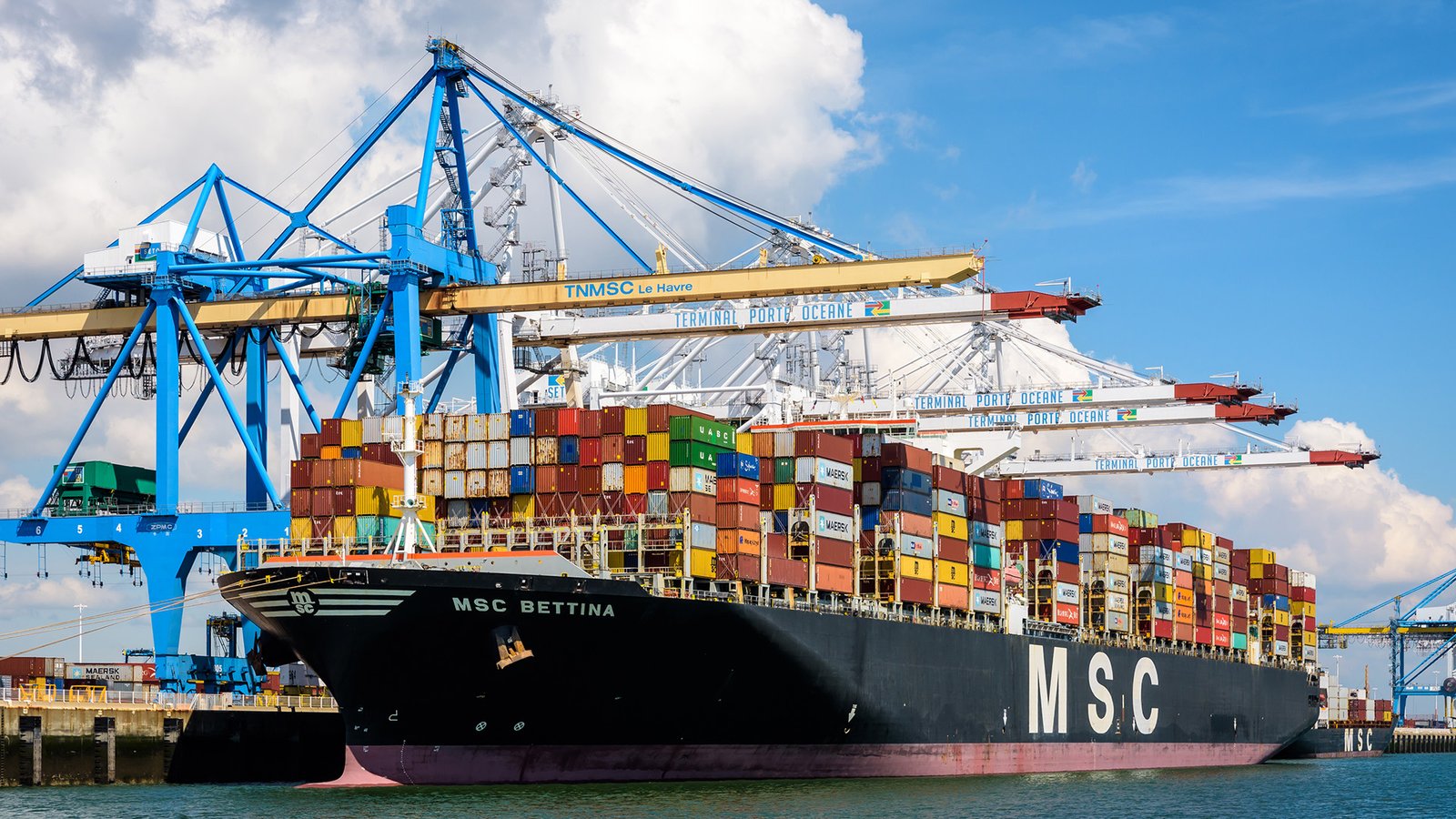
Tension is mounting across Nigeria’s maritime sector after global shipping giant Mediterranean Shipping Company (MSC) introduced a war risk surcharge of up to $4,000 on cargo shipments destined for Nigeria and other African markets, raising fears of higher import costs, rising inflation and reduced trade volumes.
The surcharge, announced by the Switzerland-based shipping line in a notice to customers, took effect from March 5, 2026, and will remain in place until further notice.
According to the advisory, the new charge applies to shipments moving from the Arabian Peninsula; including Bahrain, Iraq, Kuwait, Oman, Qatar, Saudi Arabia and the United Arab Emirates, to West Africa, East Africa, Southern Africa, Mozambique and Indian Ocean island destinations.
Under the revised pricing structure, the company will charge $2,000 for 20-foot containers, $3,000 for 40-foot containers and up to $4,000 for refrigerated containers, commonly known as reefers.
The shipping firm said the measure was necessary due to rising security risks affecting global shipping routes in the Middle East.
“The evolving security situation in the Middle East is affecting maritime traffic in the Straits of Hormuz and Bab El-Mandeb and causing disruption throughout our network,” the company said.
Industry stakeholders say the surcharge could significantly increase shipping costs for Nigerian importers and exporters, with ripple effects expected across the broader economy.
Kayode Farinto, a former acting national president of the National Association of Nigerian Licensed Customs Agents,said shipping companies were likely to pass the additional costs directly to cargo owners.
“Any shipping company bringing cargo will want to charge because the risk is high,” Farinto said.
According to him, insurance firms have begun reconsidering coverage for vessels operating along some Middle Eastern shipping routes, forcing carriers to seek alternative routes that are longer and more expensive.
“The whole world is at war. If you are bringing goods and taking a high risk, shipping companies will charge for the insurance and the route changes,” he said.
Farinto warned that the development could reduce cargo volumes arriving at Nigerian ports in the coming weeks as importers struggle with higher logistics costs.
“It means cargo volume will drop. Freight will increase and the cost of goods will also increase because whoever brings goods will add the overhead costs and insurance premiums,” he said.
Export-oriented manufacturers are also expressing concern that the new charges could weaken Nigeria’s competitiveness in international markets.
Benedict Obhiosa, the secretary of the Manufacturers Association of Nigeria Export Group, said the surcharge could discourage exporters and reduce the country’s non-oil trade volumes.
“The increment in charges by MSC will further weaken the competitiveness of manufactured products in the international market,” Obhiosa said.
He noted that some exporters might explore alternative routes, including overland transportation to neighbouring countries, to avoid the rising maritime shipping costs.
However, he warned that the surge in freight charges could discourage exports altogether if the situation persists.
“If the problem is not resolved quickly, it will affect the volume and value of non-oil exports in this quarter and possibly the next,” he added.
Economists say the impact of higher shipping costs will likely extend beyond the maritime industry, potentially feeding into inflation and raising the cost of doing business.
Muda Yusuf, the chief executive officer of the Centre for the Promotion of Private Enterprise (CPPE), said the surcharge would significantly affect trade flows and economic activity.
“It’s going to affect trade significantly because costs will go up, and they may even go higher,” Yusuf said.
He explained that rising logistics costs often lead to a decline in trade volumes, which could reduce business activity across Nigeria’s ports and maritime services sector.
“If trade drops, that means less business for the maritime industry, which translates to loss of jobs, loss of income and other economic consequences,” he said.
Freight forwarders have also expressed alarm over the potential economic impact of the surcharge.
The Africa Association of Professional Freight Forwarders and Logistics of Nigeria warned that the development could worsen the country’s already fragile import-dependent economy.
In a statement signed by its national president, Frank Ogunojemite, the group described the surcharge as an economic shock that could trigger price increases across key consumer goods.
Nigeria relies on maritime transport for more than 80 per cent of its international trade, meaning any sudden increase in shipping costs quickly feeds into higher prices for imported products.
Ogunojemite warned that refrigerated containers, which carry essential goods such as frozen food, dairy products, fish and pharmaceuticals, would be particularly affected by the $4,000 surcharge.
He said the resulting cost pressures could lead to higher food and medicine prices in the domestic market.
Industry groups are now calling on the government to intervene by engaging international shipping companies and maritime regulators.
Freight forwarders urged authorities including the Federal Ministry of Marine and Blue Economy and the Nigerian Shippers’ Council to urgently negotiate with shipping lines to cushion the impact on Nigerian businesses.