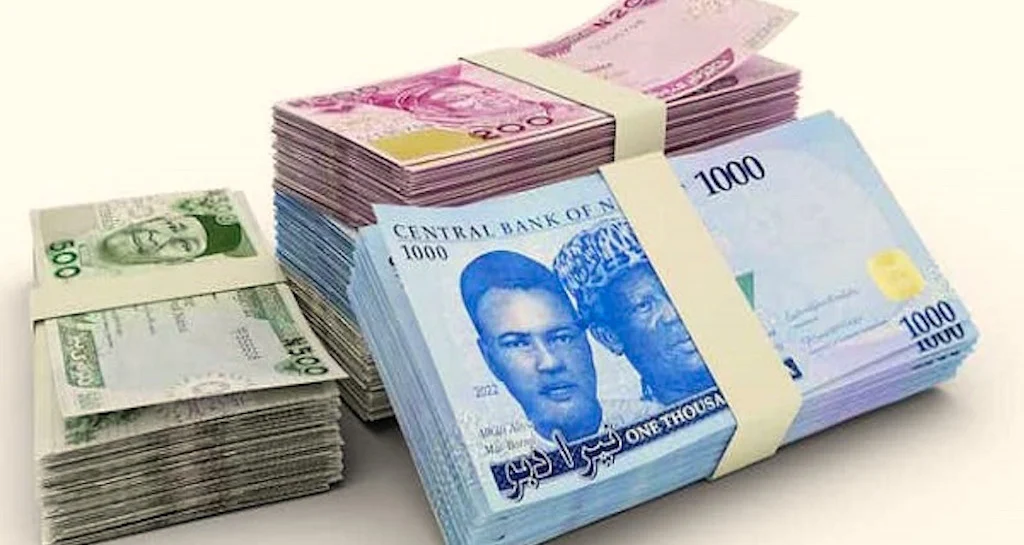
The Nigerian naira extended its recent gains on Tuesday, appreciating to N1,345 per dollar at the official foreign exchange market, according to data released by the Central Bank of Nigeria (CBN).
The latest performance marks an improvement from Monday’s closing rate of N1,355/$ and represents the currency’s strongest level since mid-February, signalling a gradual recovery in Nigeria’s foreign exchange market after months of volatility.
Trading data show that the naira maintained relative stability throughout the session, fluctuating within a narrow band of N1,340/$ to N1,355/$. The simple average exchange rate settled at N1,344.55/$, reinforcing signs of reduced intraday volatility and improved liquidity conditions in the market.
However, the currency’s gains come against the backdrop of a slight decline in Nigeria’s external reserves. Gross reserves fell to $49.86 billion, down from $50.45 billion recorded in February, indicating ongoing adjustments in the country’s foreign exchange buffers.
External reserves remain a critical pillar in supporting the naira, as they underpin the Central Bank of Nigeria’s ability to intervene in the currency market when necessary. While the recent dip could raise concerns about sustainability, the naira’s continued appreciation suggests that supply conditions in the FX market remain relatively robust.
Market participants are also closely monitoring global developments, which continue to shape currency movements. The U.S. Dollar Index hovered at 99.56 after a two-day decline.
Other major currencies showed limited movement. The euro traded flat at $1.1538, while the Japanese yen strengthened to 158.91 per dollar, indicating a cautious shift toward safe-haven assets. The British pound held steady at $1.3353.
The dollar had earlier rose to a 10-month high as investors sought safety amid escalating tensions in the Middle East. However, recent pullbacks suggest a temporary easing in demand for the greenback, which may have indirectly supported emerging market currencies, including the naira.
Attention is now firmly on major central banks, whose policy decisions are expected to influence global liquidity and capital flows. The Federal Reserve is set to announce its policy decision on Wednesday, with markets anticipating that interest rates will remain unchanged.
Other key institutions, including the European Central Bank, Bank of England and Bank of Japan, are also expected to unveil policy decisions later in the week. Investors will be watching closely for forward guidance on inflation and growth, particularly as geopolitical risks continue to cloud the global economic outlook.
Domestically, monetary policy adjustments have also played a role in shaping sentiment. At its most recent meeting, the Monetary Policy Committee of the Central Bank of Nigeria reduced the Monetary Policy Rate to 26.5 per cent from 27 per cent.
Meanwhile, the U.S. Federal Reserve’s earlier decision to hold rates steady within the 3.5–3.75 per cent range has contributed to a more predictable external environment, reducing pressure on emerging market currencies.