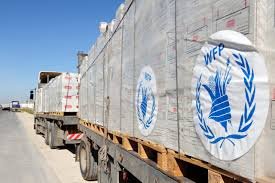
A looming increase in global hunger is being shaped less by failed harvests and more by a deepening energy-market disruption, according to new projections from the United Nations World Food Programme (UN-WFP). The agency warns that if conflict in the Middle East persists, the number of people facing acute food insecurity could rise by as much as 45 million in 2026.
Unlike the 2022 shock tied to the Russia-Ukraine war, which constrained grain exports from one of the world’s breadbaskets, the current threat originates from volatility in a critical energy-producing region. That distinction matters for markets as energy costs feed directly into nearly every stage of food production and distribution, from fertilizer manufacturing to transport logistics.
The WFP estimates that the global population facing acute hunger, defined as IPC Phase 3 and above, could rise from 318 million, approaching levels last seen during the early months of the Ukraine conflict, when the tally reached 349 million. However, analysts note that today’s risk profile may be more persistent, given the systemic role of energy in agricultural supply chains.
At the centre of the concern is the expectation that oil prices could remain above $100 per barrel. Elevated fuel costs are already translating into higher input prices for farmers, particularly fertilizers, many of which are energy-intensive to produce. This cost pressure is cascading through food systems, ultimately inflating retail prices and affecting purchasing power in vulnerable economies.
The WFP highlights that sub-Saharan Africa and parts of Asia are especially exposed, with projected increases in food insecurity of 21 per cent in West and Central Africa, 17 per cent in East and Southern Africa, and 24 per cent across Asia. Countries such as Sudan, which relies on imports for about 80 per cent of its wheat, face heightened vulnerability to global price swings. Meanwhile, in Somalia, where drought conditions persist, essential commodity prices have already climbed by at least 20 percent.
According to Carl Skau, WFP’s deputy executive director and chief operating officer, the continuation of conflict could send shockwaves across the globe, disproportionately affecting families already struggling to afford basic meals. In practical terms, this translates into reduced meal frequency, lower nutritional quality, and heightened risks of malnutrition, particularly among children.
Compounding the situation is a widening funding gap for humanitarian operations. Aid agencies are increasingly forced to scale back programmes due to insufficient financial support, even as demand rises. This mismatch threatens to accelerate the crisis, leaving millions without access to food assistance at a critical juncture.
From a business and policy perspective, the report highlights the growing interdependence between energy security and food security. It notes that mitigating future hunger crises will require not only humanitarian funding but also coordinated efforts to stabilise energy markets, invest in resilient agricultural systems, and reduce reliance on imports in high-risk regions.