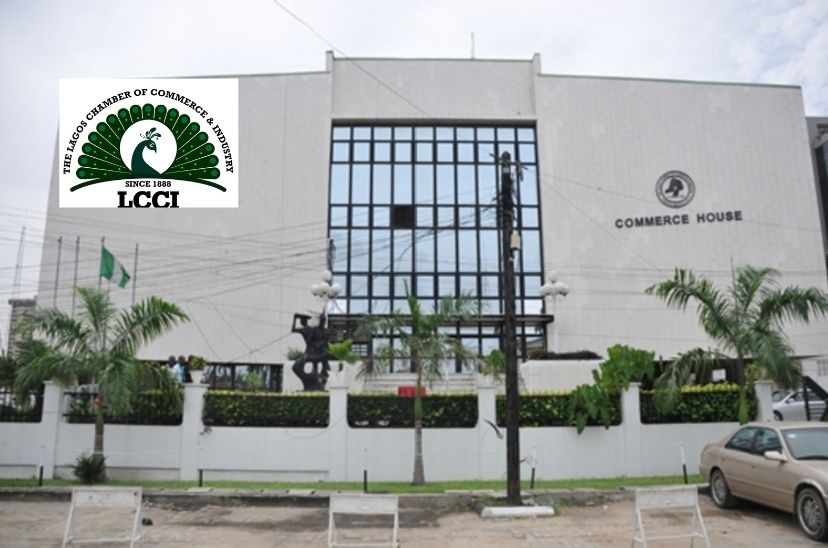
The Lagos Chamber of Commerce and Industry (LCCI) has called attention to escalating risks in Nigeria’s fuel market, warning that sustained increases in global crude prices and domestic refining costs are pushing petrol prices to critical levels.
The chamber, in a statement signed by Director General Chinyere Almona, said the combination of $112-per-barrel crude and rising depot prices at the Dangote Refinery reflects deeper structural imbalances within the downstream sector.
According to the chamber, the refinery’s gantry price has now climbed to around N1,245 per litre following its fourth upward revision, setting the stage for pump prices to approach N1,500 per litre in the near term. This trajectory, LCCI noted, is already transmitting inflationary shocks across transportation, food supply chains, and industrial production, reinforcing cost-push pressures in an economy still grappling with fragile recovery dynamics.
At the core of the crisis lies what the chamber describes as a persistent structural supply deficit. Nigeria’s daily petrol consumption, estimated at between 50 million and 53 million litres, continues to exceed effective domestic refining capacity. This imbalance has concentrated supply risks and heightened price sensitivity to both global oil movements and exchange rate volatility.
“The current fuel affordability challenge is fundamentally a supply problem,” the chamber stated, emphasising that without a significant expansion in domestic refining output, price instability will remain entrenched.
Rather than reverting to price controls or blanket subsidies, LCCI is advocating a more market-oriented stabilisation framework. It called for targeted, time-bound interventions aimed at cushioning the most vulnerable sectors of the economy, particularly transportation, agriculture, and small and medium-sized enterprises (SMEs), which are disproportionately affected by rising energy costs.
Such measures, the chamber argued, would help mitigate inflationary spillovers without distorting the deregulated pricing regime that Nigeria has sought to entrench in recent years.
A critical component of this strategy is exchange rate stability. LCCI underscored the strong pass-through effect of foreign exchange fluctuations on fuel pricing, noting that improved FX liquidity and coordinated monetary policy are essential to moderating domestic energy costs.
“Stabilising the naira is central to addressing fuel price volatility,” the statement noted, adding that policy clarity and consistency are equally important to sustaining investor confidence in Nigeria’s evolving energy market framework.
Despite the apparent fiscal upside associated with higher crude oil prices, LCCI cautioned that Nigeria is not fully positioned to benefit from the rally due to production constraints and systemic inefficiencies. Instead, the dominant macroeconomic impact remains adverse, with rising energy costs eroding business margins, weakening industrial competitiveness, and diminishing household purchasing power.
Energy, a key input across virtually all sectors, has become a major transmission channel for inflation, amplifying cost pressures throughout the economy. For manufacturers and logistics operators, higher fuel costs translate directly into increased operating expenses, which are often passed on to consumers in the form of higher prices.
To address the underlying supply imbalance, the chamber called for urgent enforcement of domestic crude supply obligations under the Petroleum Industry Act. Specifically, it urged the federal government and the Nigerian National Petroleum Company Limited (NNPC Ltd) to ensure the consistent allocation of more than 300,000 barrels per day of crude oil to local refineries, particularly the Dangote facility.
LCCI also advocated the implementation of a transparent and scalable “naira-for-crude” framework, which would allow domestic refiners to procure crude oil in local currency. Such a mechanism, it argued, could significantly reduce foreign exchange exposure, lower production costs, and enhance price stability in the downstream market.
Beyond crude supply, regulatory clarity remains a key concern. The chamber called on the Nigerian Midstream and Downstream Petroleum Regulatory Authority (NMDPRA) to establish a rules-based pricing framework that reflects verifiable cost fundamentals while preventing potential abuse of market dominance.
At the same time, it emphasised the need to accelerate the operationalisation of other licensed and modular refineries to reduce concentration risk within the sector. Increased competition, LCCI noted, would play a critical role in driving efficiency, improving supply resilience, and moderating prices over the medium to long term.
In the interim, the chamber acknowledged that strategic fuel imports may still be required as a buffer to stabilise supply and prevent extreme price volatility. However, it stressed that such measures should remain temporary, with long-term focus firmly anchored on domestic capacity expansion.
The current oil price shock, LCCI concluded, represents a decisive stress test for Nigeria’s energy and economic architecture. It argued that sustainable price moderation cannot be achieved through administrative interventions alone, but through comprehensive structural reforms that expand supply, foster competition, and enhance transparency across the value chain.
Looking beyond immediate challenges, the chamber also urged policymakers to adopt a forward-looking strategy that positions Nigeria as a competitive supplier of oil and gas to global markets. With ongoing geopolitical disruptions in traditional supply hubs, particularly in the Gulf region, new opportunities are emerging for alternative producers.