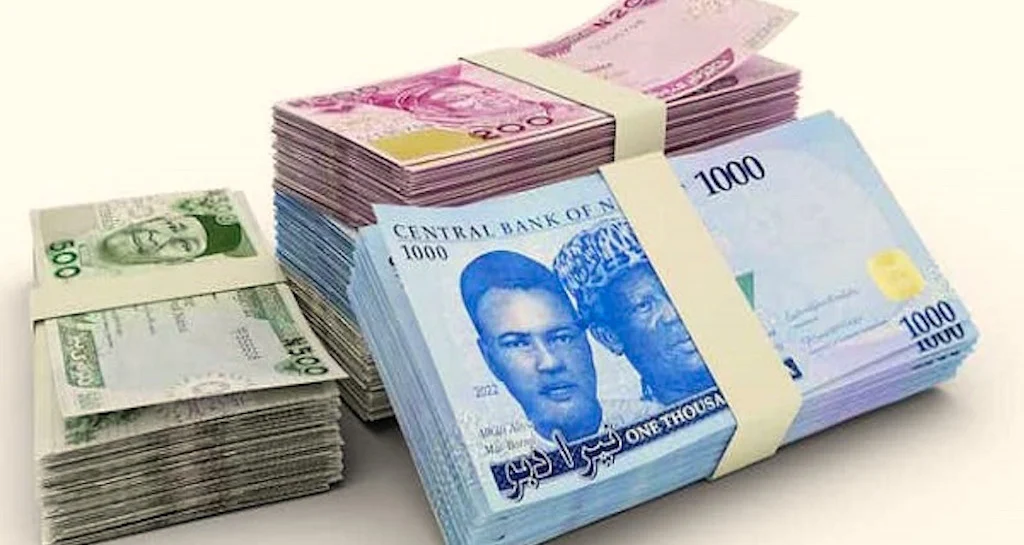
Nigeria’s naira is gaining support from surging oil prices as the Middle East conflict intensifies, but analysts caution that the currency’s strength may not be sustainable.
The ongoing blockade of the Strait of Hormuz has pushed crude prices above $100 per barrel, benefiting oil-exporting economies like Nigeria by boosting foreign exchange inflows and stabilising the currency.
However, experts warn that this improvement reflects a temporary commodity-driven windfall rather than any meaningful structural economic progress.
Data from Ebury Partners shows Nigeria among a narrow band of emerging markets gaining from the current volatility, alongside traditional safe havens like the US dollar and commodity-linked currencies such as the Canadian dollar and Brazilian real.
Rising oil prices are lifting Nigeria’s export revenues, expanding FX reserves beyond $50 billion, and strengthening the CBN’s ability to defend the naira.
Still, economists caution that the support is largely superficial.
Nigeria’s gains from higher oil prices come with a trade-off, as key trading partners and regional economies suffer from the same surge in energy costs.
Energy-importing countries across Europe, Asia, and parts of Africa are facing worsening trade balances and rising inflation, which is weakening demand for Nigeria’s non-oil exports.
Analysts warn this could create a feedback loop, where a prolonged period of high oil prices, between $120 and $160 per barrel, triggers a global slowdown that ultimately undermines demand for Nigeria’s crude.
Moreover, Nigeria’s own structural inefficiencies in refining capacity mean the country still imports a significant portion of its petroleum products, partially offsetting the benefits of high crude prices and exposing the domestic economy to inflationary spillovers.
The current environment presents both opportunities and challenges for the Central Bank of Nigeria (CBN).
Higher foreign reserves offer the bank room to stabilise the naira and restore investor confidence after prolonged volatility. However, analysts warn that reliance on oil-driven inflows could delay necessary reforms in non-oil exports, fiscal policy, and exchange rate management.
They add that the naira’s long-term stability will depend more on policy decisions than on elevated oil prices.
Beyond Nigeria, the broader FX landscape is being reshaped along a simple axis: energy independence versus energy dependence.
The US dollar continues to dominate as the ultimate safe haven, supported by both its reserve currency status and its net exporter position in energy markets. Meanwhile, currencies such as the euro and Japanese yen are under pressure due to heavy reliance on imported fuel,much of it historically routed through the now-disrupted Middle East corridor.
Emerging markets are seeing a similar divergence. Oil producers like Brazil are outperforming, while import-dependent economies from Eastern Europe to Sub-Saharan Africa face currency depreciation and inflation shocks.
Nigeria may be classified as a “winner” in the current cycle, but its position remains uncertain.
According to analysts, a ceasefire could trigger a sharp drop in oil prices, weakening FX inflows and exposing vulnerabilities in the naira. At the same time, a prolonged conflict could push the global economy toward recession, reducing oil demand and export revenues.
Analysts say Nigeria’s dependence on crude continues to pose a major risk, with the current gains representing more of a test than a lasting advantage.