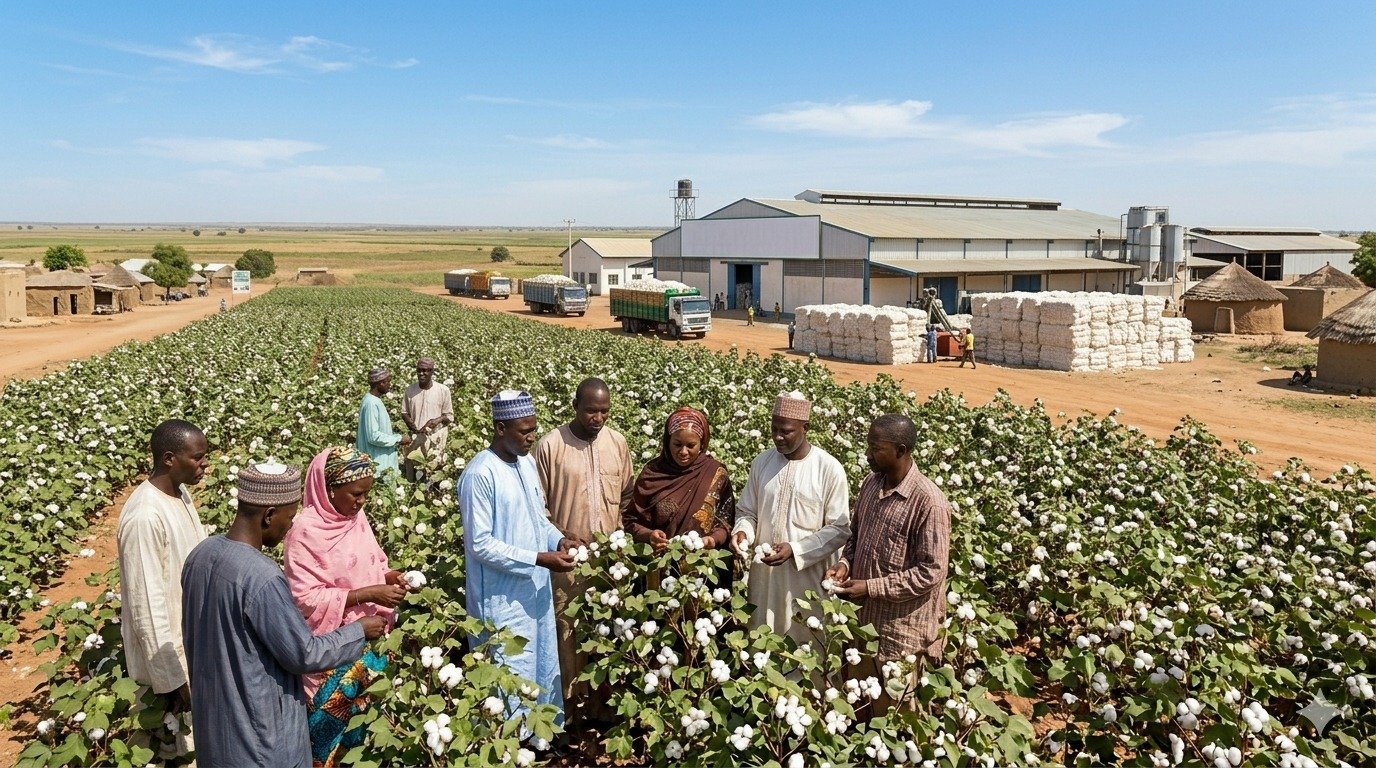
A fresh regulatory intervention by the National Biosafety Management Agency (NBMA) has brought Nigeria’s biotechnology oversight framework under scrutiny, following the suspension of four genetically modified cotton varieties over what the agency described as “serious compliance abnormalities” in their approval process.
The affected transgenic cotton hybrids (MIC 561 BGII, MIC 563 BGII, BIOSEED-FIYAH CH1001, and BIOSEED-FIYAH CH1002), were registered on March 26 by the National Committee on Naming, Registration and Release of Crop Varieties, Livestock Breeds and Fisheries without obtaining the statutory approval of the NBMA, according to an official statement issued by the agency.
The development has triggered fresh concerns over regulatory coordination, compliance enforcement, and governance gaps within Nigeria’s biotechnology sector, even as policymakers continue to position genetically modified crops as a pathway to food security and agricultural transformation.
In its directive, the NBMA stated unequivocally that no approval had been granted at any stage of the development process for the affected cotton varieties, including confined field trials, multi-locational trials, or commercial release.
According to the agency, its internal surveillance and compliance monitoring systems flagged irregularities, prompting a deeper investigation that uncovered procedural violations.
“At no time did the National Biosafety Management Agency grant any approval for the confined field trials, multi-locational trials, or commercial release of the new GM cotton varieties,” the agency stated.
Under the provisions of the National Biosafety Management Act 2015 (as amended), all activities involving genetically modified organisms (GMOs); from research and field trials to commercialisation, require explicit regulatory clearance from the NBMA.
The agency emphasised that any deviation from this process constitutes a breach of national biosafety laws, adding that it has directed the registration committee to suspend further action on the affected varieties pending the outcome of ongoing investigations.
It also signaled its readiness to apply appropriate sanctions and enforcement measures, underscoring the seriousness of the infraction.
While the NBMA sought to reassure the public that there is no evidence of immediate risk to human health or the environment, the incident has raised concerns about institutional oversight and regulatory discipline in Nigeria’s biotech ecosystem.
“There is no evidence at this time of any immediate risk to public health or the environment, and all necessary steps are being taken to ensure continued safety and regulatory integrity,” the agency said.
However, analysts argue that the issue goes beyond immediate safety concerns to touch on systemic weaknesses in regulatory coordination between agencies responsible for biotechnology approvals and agricultural innovation.
The fact that a key regulatory body could proceed with the registration of GM crop varieties without NBMA clearance indicates potential gaps in inter-agency alignment and enforcement mechanisms, a concern that could undermine investor confidence and policy credibility.
The suspension comes at a critical time for Nigeria’s biotechnology sector, which has been gradually expanding amid intense public debate over the adoption of genetically modified crops.
Genetically modified crops,engineered to enhance resistance to pests, diseases, and environmental stress while improving yields, are seen by proponents as a viable tool to boost agricultural productivity and food security in a country dealing with population growth and climate challenges.
According to the International Service for the Acquisition of Agri-biotech Applications, more than 30 major food crops have been genetically modified globally. Nigeria has approved four including maize, cowpea, cotton, and soybean, for commercial cultivation and is considered one of Africa’s leading adopters of biotech crops.
In 2024, the federal government approved additional varieties of Tela maize, further expanding the country’s biotech footprint and intensifying public discourse around biosafety, transparency, and regulatory accountability.
Persistent concerns over GM crop adoption
Despite these advances, GM crop adoption in Nigeria remains highly contested.
Supporters argue that biotechnology offers a viable solution to low agricultural yields, pest infestations, and food insecurity, while critics warn of environmental risks, potential health implications, and over-reliance on multinational seed companies.
Key concerns include:
-
Weak regulatory enforcement mechanisms
-
Limited farmer awareness of GM seed characteristics
-
Potential erosion of traditional farming systems
-
Inadequate labelling and consumer transparency
These issues have been amplified by past investigations, which revealed how external actors including agencies linked to the now-defunct USAID, supported advocacy campaigns promoting GM crops in Nigeria.
The report also highlighted efforts to profile and counter critics of biotechnology, further fueling public skepticism about the neutrality of pro-GMO campaigns.
Market and investment implications
For investors and agribusiness stakeholders, the NBMA’s decision introduces a new layer of regulatory risk in Nigeria’s agricultural value chain. This is as the suspension of the cotton varieties, despite being at an advanced stage of registration, is likely to delay the commercial rollout of new seed technologies, disrupt supply chains for cotton farmers and textile manufacturers, increase compliance costs for biotech firms operating in the country, and trigger tighter regulatory scrutiny across the sector.
At the same time, the decisive action by the NBMA may be interpreted positively by some investors as a sign of regulatory vigilance and institutional accountability, particularly in a sector where biosafety concerns carry significant reputational and legal risks.
The development also has implications for Nigeria’s cotton and textile industry, which the government stated that it has been working to revive as part of its economic diversification efforts.
Genetically modified cotton varieties are typically designed to improve yields and reduce reliance on chemical pesticides, making them attractive to farmers seeking higher productivity and cost efficiency.
However, analysts contend that disruptions in the approval and rollout of such varieties could slow progress in the sector, particularly at a time when Nigeria is seeking to reduce import dependence and strengthen local manufacturing capacity.
Regulatory enforcement and next steps
The NBMA has reiterated its commitment to ensuring that all biotechnology-related activities in Nigeria comply with national laws and international best practices.
The agency has also assured stakeholders that it will keep the public informed as investigations into the matter progress.
Industry observers expect the outcome of the probe to clarify the extent of the regulatory breach, determine accountability among the institutions involved, shape future compliance requirements for biotech firms, and influence the trajectory of genetically modified crop adoption in Nigeria.
A test case for Nigeria’s biotech governance
Ultimately, the suspension of the four GM cotton varieties represents more than a regulatory intervention, as it is considered a test case for Nigeria’s ability to balance innovation with oversight in a sensitive and high-stakes sector.
As the country continues to embrace biotechnology as part of its agricultural strategy,analysts assert that the need for robust governance frameworks, transparent processes, and effective inter-agency coordination will become increasingly critical.
The government currently faces the challenge of fostering an environment that encourages innovation and investment while maintaining strict adherence to biosafety standards and public trust, while for investors and industry players, the episode underscores that regulatory compliance is not merely procedural but fundamental to long-term sustainability and market credibility.
As investigations unfold, the outcome will likely shape not only the future of the affected cotton varieties but also the trajectory of Nigeria’s biotechnology sector; one that sits at the intersection of food security, economic development, and public confidence.