The title of this piece is necessitated by the continuing diminishing foreign direct investments (FDIs) inflow into Nigeria over the last couple of years, in spite of the ‘booming’ capital importation into the country. Available data show that, while foreign investors ‘throw in’ a lot of money into Nigeria via foreign portfolio investments (FPIs), only very few, with very little, have been willing to ‘step into’ the country, and invest as FDIs.
A pariah economy is one that is being avoided by other nations; or despised no matter what the country has or its people think about themselves and their country. It is a sort of total or partial isolation or rejection or marginalisation by a large chunk of the comity of nations, when it comes to choice of investment destinations.
The minuscule FDI inflow that Nigeria has recorded in recent time vis-à-vis the country’s burgeoning overall foreign investments tantamounts to near-isolation of the Nigerian economy by foreign direct investors. Specifically, Nigeria was able to attract a ‘paltry’ $2.15 billion in FDIs out of a total capital importation of $44.76 billion that entered the country in the last four years, 2022 to 2025. This shows that FDIs accounted for less than five percent of the total capital inflow; leaving the rest, over 95 percent or $42.61 billion, as “hot money” or foreign portfolio investments (FPIs).
In 2025, total capital importation into Nigeria stood at $23.22 billion, having jumped by 88.5 percent from $12.32 billion in 2024, again, driven mainly by portfolio investments in the re-capitalising banks. This was dominated by foreign portfolio investment at $19.74 billion or 85 percent of the total while FDI was just $923.01 million.
In the last quarter of 2025 alone, total inflow was $6.44 billion, essentially dominated by foreign portfolio investment of $5.49 billion, while FDI was only a relatively little amount of $357.80 million.
These figures are from the National Bureau of Statistics (NBS), which also released data showing that the banking sector attracted $13.53 billion (via foreign portfolio investments) in 2025 in pursuit of the industry’s recapitalisation exercise which closed March 31, 2026. This further validates the appetite of foreign investors to invest in the country only through money market instruments, fixed income securities, and equities.
The dominant inflow of these short-term foreign capital—“hot money”— to a very large extent has been responsible for the almost endless volatility of the macroeconomic environment of Nigeria. Some chunk of these FPIs have already begun to leave the country since the onset of the raging Middle East war (a month ago); discerning investors have embarked on ‘flight to safety’, as the conflict unleashes economic uncertainty across the globe.
Even in the face of this emerging reality, what has been obvious about Nigeria is the paucity of foreign direct investment. Rather than boosting in any visible form, the existing FDIs in the country have been exiting under various guises and excuses. The exodus of not a few multinationals, and international oil companies (IOCs) in the past three years or so is evidence of the worrisome trend.
Since his inauguration on May 29, 2023, President Bola Ahmed Tinubu has been practically touring the globe in search of foreign direct investors for Nigeria. Each time the president embarks on such a visit, a lot of real and imaginary (new investment) deals worth billions of dollars are usually publicised as outcomes of the outing.
From India to Brazil, the UK to France, Turkey to South Africa, Saint Lucia to United Arab Emirates, Equatorial Guinea to Saudi Arabia, China to the United States of America, Ethiopia to Qatar, and more, President Tinubu has ‘chased’ foreign direct investment with little or nothing to show for the trips. For instance, barely three months in office, President Tinubu visited India in August 2023, to attend the G-20 Leaders’ Summit in New Delhi.
During this outing, investment deals totalling nearly $14 billion were reportedly sealed. These included $8 billion by Indorama Petrochemical Limited, for the expansion of its fertiliser production and petrochemical facility in Rivers State; $3 billion by Jindal Steel and Power Limited, for iron ore processing and steel development in Nigeria; $700 million by Bharti Enterprises as additional investment in Nigeria.
Others include $1.6 billion by SkipperSeil Limited for the establishment of 20 power generation plants across Northern Nigeria; $1 billion investment in the Defense Industries Corporation of Nigeria (DICON) “to boost local manufacturing and production of defense equipment, aiming for 40 percent self-sufficiency by 2027.” There is also to be made by Hinduja Group — multi-billion dollar investment in Nigeria’s automobile industry, including bus and automobile manufacturing, etc.
Almost three years after these investment deals were ‘sealed’ in India, there is barely anything on ground here in Nigeria to show that they are being realised. Such is also the case with huge sums bandied as ‘gains’ from Mr. President’s visits to many other countries. Two years after his visit to India, President Tinubu made a state visit to Brazil in August 2025, where he signed several Memorandum of Understanding (MoUs) with Brazilian President Luz Lula Da Silva.
The agreements covered key sectors such as aviation, trade, energy, agriculture, and science and technology, with potential investment estimated at over $30 billion. Some of the notable deals sealed during the visit include: Bilateral Air Services Agreement (BASA), Agricultural Cooperation, Energy Partnership, a $1.1 billion Green Imperative Partnership — focused on improving agricultural production, and Science and Technology Cooperation — pushing digital transformation, biotechnology, energy innovation and raw materials research, etc.
Truth be told: those countries hosting our President know Nigeria much more than Nigerians can believe. The world is already a global village. In point of fact, it is most likely that it is Nigeria’s myriad internal challenges that ‘repel’ the foreign investors. Has Nigeria’s investment climate really become competitive vis-à-vis other major African countries or the developed nations? Over the years, the quality and state of Nigeria’s infrastructure has been awful, to put it mildly.
Whether it is the country’s road network, railway system, air or seaports — they are all in a largely obsolete or dilapidated state. And this is why the only highlight of the outcome of President Tinubu’s recent state visit to the United Kingdom (UK) has remained the signing of a 746 million pound sterling deal for the upgrading of the Lagos Port Complex Apapa and Tin Can Island Port Complex — Nigeria’s busiest ports.
This deal or contract aims to “modernize the ports’ infrastructure, introduce digital systems, and increase efficiency.” The upgrade is also expected to reduce vessel turnaround times, cargo dwell times, and logistics costs, while boosting government revenues. The project will involve British firms, with at least 236 million pound sterling worth of contracts going to UK companies, including a 70 million pound sterling steel supply agreement with British Steel.
With all these, one can imagine how archaic and dilapidated the ‘prime’ Lagos port complexes have been before this rescue mission by the British — Nigeria’s former colonial overlords. What about other seaports across the country; they have been certainly in worse state than the Lagos ports — as most of them have been left fallow for long.
Apart from infrastructural decay around the country, insecurity has become an existential threat — and no investor (foreign or local) would choose to lose their life in pursuit of any business venture. Terrorists, kidnappers (for ransom), bandits, brigands, hoodlums, and others have raised the tempo of insecurity in Nigeria in recent times.
Given this reality of the Nigerian investment climate, it is no surprise that the country’s monetary authorities have been using monetary tools and instruments to woo/attract largely portfolio investors. These hews of investors may never set their feet on Nigeria, but because of the highly attractive yields derivable from Nigeria’s financial assets, they ‘dump’ their capital on the country.
With this pattern of investment in Nigeria, the real sectors, productivity, employment generation, and sustainable economic development remain crippled. And as this investment pattern is sustained, Nigeria continues to be perceived as a pariah economy to foreign direct investors. Rightly or wrongly!
- business a.m. commits to publishing a diversity of views, opinions and comments. It, therefore, welcomes your reaction to this and any of our articles via email: comment@businessamlive.com

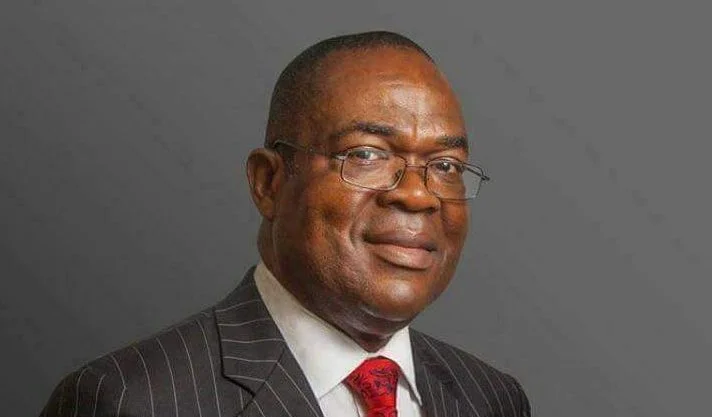
Marcel Okeke, a practising economist and consultant in Business Strategy & Sustainability based in Lagos, is a former Chief Economist at Zenith Bank Plc. He can be reached at: obioraokeke2000@yahoo.com; +2348033075697
(text only)