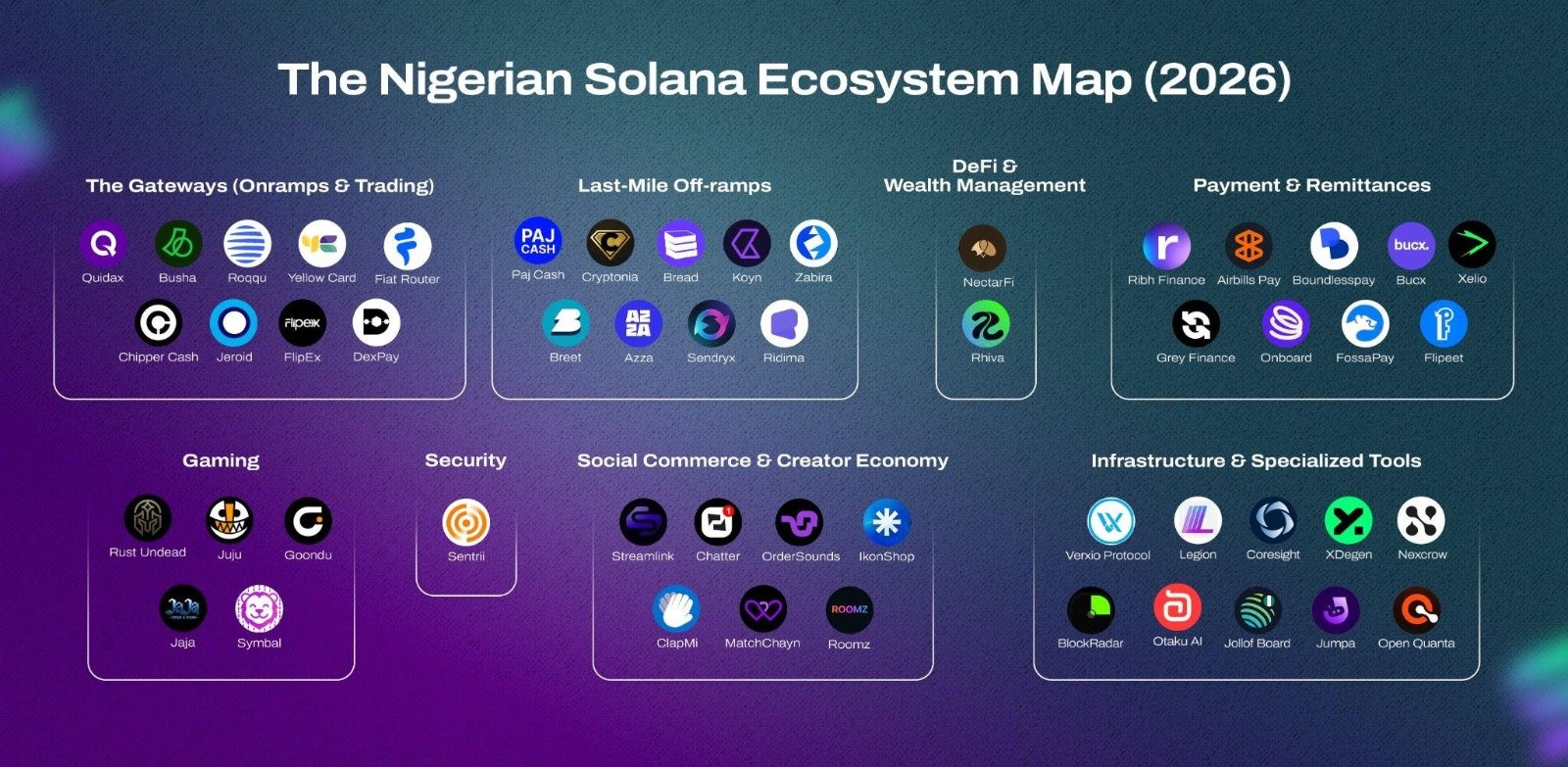
Nigeria is strengthening its position in the global blockchain ecosystem, emerging as the sixth-largest hub worldwide by developer share on Solana, while also attracting measurable financial inflows into its local economy.
This is according to the Q1 2026 Impact Report released by SuperteamNG, which highlights a combination of talent growth, capital inflow, and increasing real-world application of decentralised technologies within the country.
The report shows that Nigerian developers now account for 67 percent of all active Solana builders across Africa, reinforcing the country’s dominance in the continent’s Web3 landscape. This rise in participation is not merely symbolic, as it has translated into tangible earnings and economic contribution. Within the first three months of the year, the ecosystem attracted over $162,000 in direct capital, driven by $65,779 earned through ecosystem bounties and an additional $88,500 secured from grants provided by the Solana Foundation.
Beyond talent metrics and funding inflows, the report points to growing transactional activity across locally built platforms. Products developed within the SuperteamNG ecosystem are beginning to demonstrate commercial viability, with Evolution surpassing $4 million in total value processed, while NectarFi recorded over $6 million in transaction volume during its beta phase. This level of activity indicates a gradual shift from experimentation to real adoption of blockchain-based financial tools.
The expansion of use cases is also becoming more evident through partnerships with Nigeria’s fintech players. At least 15 local platforms, including Busha, Raenest, and Jeroid, integrated new Solana-based features within the review period. These integrations are enabling services such as stablecoin transactions and Solana-backed lending, underscoring a growing convergence between traditional financial services and decentralised finance.
The ecosystem’s growth is also being supported by deliberate grassroots expansion and talent development initiatives. SuperteamNG extended its reach to 30 states nationwide, organising 186 events across both physical and virtual platforms. These engagements are designed to bridge knowledge gaps between traditional finance and decentralised finance, while onboarding new participants into the ecosystem.
In addition, the report highlights efforts to build a sustainable talent pipeline through a 16-week developer bootcamp and specialised guilds targeting not just engineers, but also writers and designers. This broader approach reflects a recognition that the Web3 ecosystem requires diverse skill sets beyond coding alone.
Speaking on the development, Harrison Obiefule, lead at SuperteamNG, said the latest figures signal a structural shift in Nigeria’s role within the global technology landscape.
According to him, Nigeria is transitioning from being largely a consumer of global innovations to becoming an active creator of digital solutions. He noted that the country’s ranking as number one in Africa and sixth globally in Solana developer share, despite prevailing economic challenges, reinforces confidence in what he described as an emerging “internet capital markets” framework.
Obiefule further stated that Solana is increasingly becoming embedded within Nigeria’s financial services ecosystem, moving beyond an optional tool to a core infrastructure supporting payments, savings, and cross-border transactions.
He added that current performance trends indicate that the future of decentralised finance development is being written in Lagos, Enugu, Abuja, and across 30 Nigerian states.