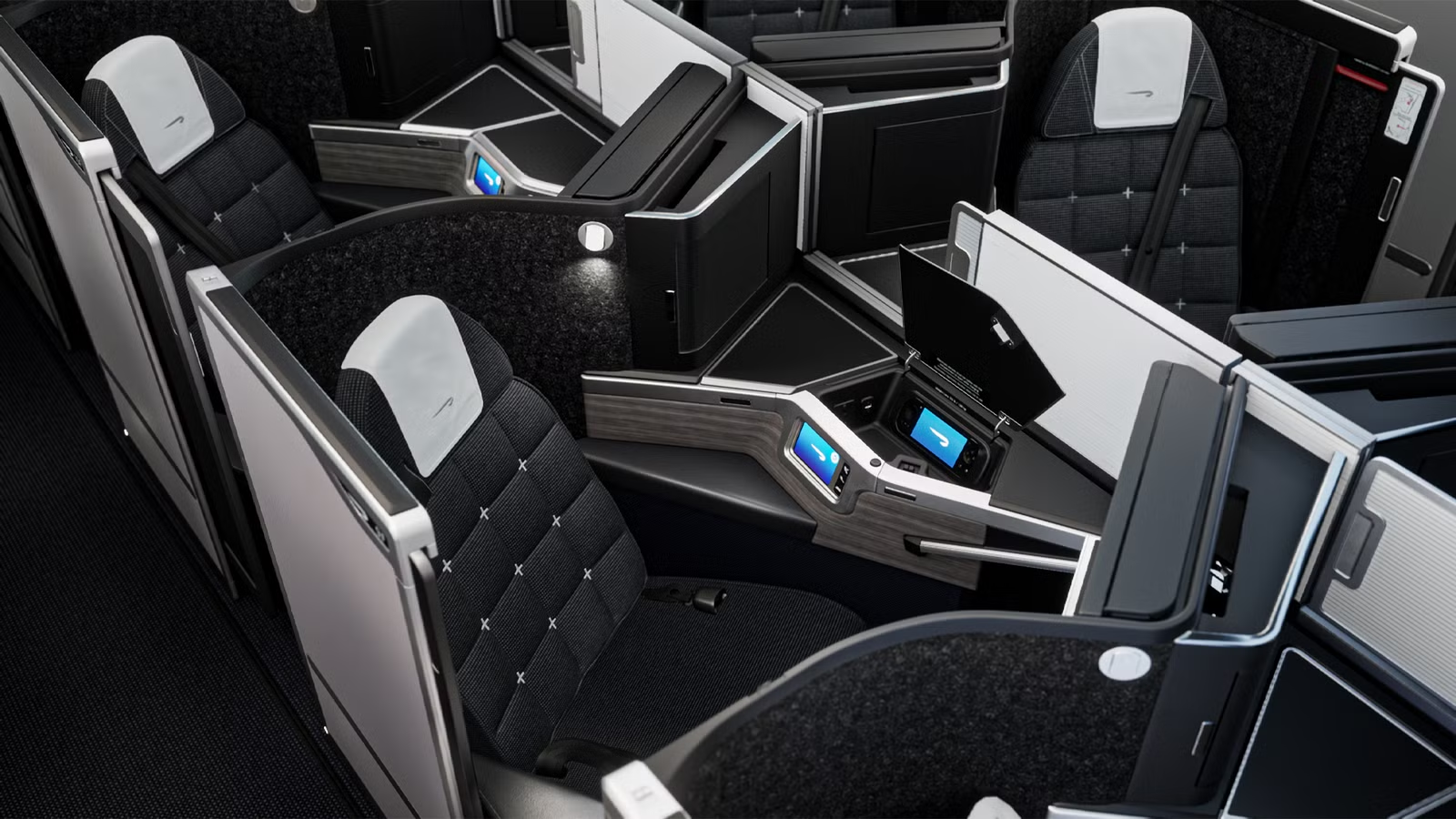
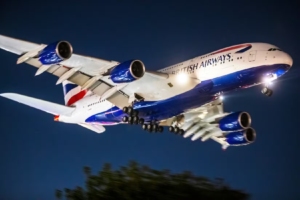
Per this report by Simple Flying, British Airways is embarking on a radical reconfiguration of its Airbus A380 fleet, a move that signals a fundamental shift in how the carrier views its flagship long-haul service. The airline will soon begin deploying its first retrofitted superjumbo, which features a significantly reduced seat count in favour of high-yield premium cabins. This guide explores the technical and strategic reasons behind the decision to remove 88 economy seats to create the largest business class cabin in the sky.
The importance of this guide lies in understanding the evolving economics of the double-decker aircraft in a post-pandemic market. The A380 was seen as a tool for mass transport, but British Airways is now reimagining it as a specialised luxury vessel for high-demand corridors like London to New York and Los Angeles. This retrofit represents a multi-million-pound investment in the longevity of the A380, ensuring that the world’s largest passenger jet remains competitive against newer, more fuel-efficient twins like the Airbus A350 and Boeing 777X.
Proving business is the way to go
British Airways has opted for a total conversion of the upper deck into a sprawling business class sanctuary. Consolidating 110 Club Suites into this single level, the airline has created the largest dedicated business cabin found on any commercial aircraft globally. This engineering feat requires a complete removal of the previous mixed-class configuration, allowing for a more streamlined service flow and a consistent passenger experience across the entire top floor.
The transition to the Club Suite, which features a reverse-herringbone layout with sliding privacy doors, corrects a long-standing criticism of the airline’s older yin-yang business class product. In the previous layout, passengers often had to step over their neighbor’s legs to access the aisle, but the new 1-2-1 configuration ensures direct aisle access for every traveler. This massive expansion from 97 to 110 seats on the upper deck alone demonstrates the carrier’s confidence in the sustained demand for premium travel. To accommodate this volume while maintaining a sense of space, the design utilizes the A380’s unique sidewall storage bins to provide passengers with extra room for personal items, turning the dead space of the curved fuselage into a functional amenity.
From a technical perspective, the upper deck takeover is far more than just a cosmetic upgrade. Supporting 110 individual suites, each with motorized seats, 18.5-inch (47-centimeter) high-definition screens, and multiple charging ports, necessitates a significant overhaul of the cabin’s power management systems. Additionally, the galley areas have been redesigned to handle the logistical challenge of serving over one hundred premium meals simultaneously.
Reducing First Class?
The upper deck focuses on the sheer volume of business class, and the forward section of the lower deck has been reimagined as an ultra-exclusive sanctuary for the airline’s most discerning travelers. British Airways has made the strategic decision to reduce its first class cabin from 14 suites to just 12, prioritizing personal space and architectural privacy over seat count. This reduction allows for a more spacious 1-1-1 or staggered 1-2-1 configuration, ensuring that the first experience remains distinct and significantly more elevated than the newly improved business class suites upstairs.
The hardware in this cabin represents a significant leap forward in aviation design, featuring a seat that is 36.5 inches (92.7 cm) wide—one of the widest in the industry. When converted into a fully flat surface, the bed extends to a length of 79 inches (200.7 cm), providing ample room for even the tallest passengers to sleep comfortably. Each suite is encased by a 60-inch (152.4 cm) curved privacy wall, which blocks the line of sight to the aisle and neighboring passengers. Entertainment is anchored by a 32-inch (81.3 cm) 4K display, which is a massive upgrade from the previous generation’s smaller, lower-resolution screens.
This redesign reflects a broader industry trend where first class must offer a truly residential feel to justify its price point in an era of high-quality business class doors. By including features like personal wardrobes, high-end acoustic dampening, and bespoke lighting scenes designed to reduce jet lag, British Airways is positioning itself to compete with the middle eastern three carriers. The focus here is on the soft product as much as the hardware, with the reduced passenger count allowing for a higher crew-to-guest ratio, ensuring that the service is as personalized as the physical environment.
The Economy buffer
The expansion of World Traveller Plus represents a significant pillar of the airline’s strategy to capture the lucrative premium leisure market. This cabin class, often described as the most profitable on a long-haul aircraft, is seeing a growth of over 50% in its footprint. Increasing the capacity from 55 to 84 seats, the carrier is acknowledging that many travelers are willing to pay a premium for more legroom and a smaller cabin environment without the full cost of a business class suite. This shift is particularly relevant on transatlantic routes where corporate budgets remain tight, yet the desire for extra comfort during a seven-hour or 11-hour flight remains high.
In the original A380 layout, premium economy was situated at the rear of the upper deck, which created logistical challenges for cabin crew and made the cabin feel like an afterthought. By moving these 84 seats to the main deck, positioned between the first class section and the economy section, the airline creates a more logical flow for boarding and service. The seats themselves will feature a 38-inch (96.5 cm) pitch and a wider frame compared to standard economy, providing the necessary physical differentiation to justify the higher fare.
This expansion serves as a buffer for the airline as it slashes economy capacity. The World Traveller cabin is being reduced to just 215 seats, and the larger premium economy section provides a mid-tier option for passengers who would have previously settled for a standard seat. From a passenger experience perspective, the move to the main deck is a double-edged sword; while the cabin is much larger and offers more availability, it loses the private feel of being on the upper deck. However, for the airline, the ability to sell nearly 30 more premium tickets on every flight outweighs the niche appeal of a smaller upper-deck cabin.
Looking to the market realities
The decision to eliminate 88 economy seats is really in response to the changing economics of long-haul aviation in the late 2020s. For a legacy carrier like British Airways, the revenue generated from a single business class seat can be up to five times that of a standard economy ticket, despite the seat occupying only three times the physical floor space. Through shifting the A380 toward a premium-heavy configuration, the airline is trading high-volume, low-margin passengers for a smaller group of high-yield travelers who are less sensitive to price fluctuations.
In the post-pandemic landscape, the premium leisure segment has exploded, with many travelers now willing to pay for World Traveller Plus or Club Suite rather than sitting in the back of the aircraft. On key business corridors such as London to New York, a flight often operates with nearly empty economy sections while the business class cabins are overbooked. Reducing the economy seat count from 303 down to 215, British Airways is optimizing the aircraft for these specific high-demand routes, ensuring that every square foot of the superjumbo is generating the maximum possible revenue per available seat kilometer.
| Cabin Class | Typical Fare Range (LHR-JFK) | Floor Space Factor | Yield Index (Revenue/sq ft) |
| First Class | $8,000 – $15,000 | 4.5x | Highest (Exclusive) |
| Club Suite | $3,500 – $7,000 | 3.0x | Optimized High Yield |
| Premium Economy | $1,500 – $2,800 | 1.5x | Most Profitable (Margin) |
| Economy | $450 – $1,100 | 1.0x | Volume Dependent |
Instead of trying to compete with low-cost carriers for the budget traveler, British Airways is leaning into its strength as a full-service carrier with a massive global hub at Heathrow. Even with 48 fewer total seats on the aircraft, the potential revenue from the 13 additional business suites and 29 extra premium economy seats far outweighs the loss of the 88 economy fares, and so ensures the A380 remains a profitable asset even as fuel prices and carbon taxes continue to rise, as the higher ticket prices in the front of the plane can more easily absorb these operational costs.
Certification may hold it back
As with any ambitious engineering project, the British Airways A380 retrofit has not been without its rumored setbacks, leading many to wonder if the 2026 launch date is overly optimistic. The leaked seat maps have provided a clear look at the physical layout, and industry insiders have pointed toward a specific regulatory hurdle that could ground the project before it even begins. This issue does not stem from the engines or the airframe itself, but rather from a fundamental mismatch between the new cabin layout and current aviation safety protocols regarding passenger management.
The core of the problem lies in the certification of flight attendant restraint kits, which are essential tools for managing disruptive or unruly passengers during a flight. These kits are only approved for use on standard economy and premium economy seats, which feature a traditional frame and belt structure. The entire upper deck of the retrofitted A380 consists exclusively of 110 Club Suites, so there are currently no approved seats on that level where a passenger can be legally restrained. In the previous layout, an unruly passenger could simply be moved to the economy section on the same deck, but the new design would require crew members to navigate a struggling individual down the aircraft’s notoriously narrow spiral staircase to reach the main deck, a maneuver that regulators view as a significant safety risk.
This regulatory friction is compounded by broader supply chain issues that have plagued the aviation industry since 2024. The complex manufacturing process for the Club Suite, which includes intricate privacy doors, motorized components, and integrated storage, means that even a minor delay in a single component can stall the entire retrofit program. British Airways officially maintains its mid-to-late 2026 timeline, but aviation analysts suggest that these hidden safety and logistical challenges may push the entry into service of the first aircraft toward the end of that year. Addressing the restraint kit issue will likely require a bespoke engineering solution or a change in operating procedures that must be rigorously tested and approved by aviation authorities before the first passenger boards.
Joining the list
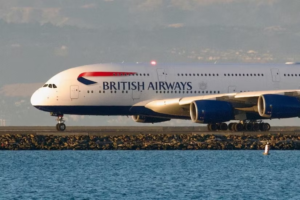
The decision to invest hundreds of millions of pounds into a fleet that many analysts expected to be retired by 2030 marks a definitive second life for the British Airways superjumbo. Rather than phasing out the four-engine giants in favor of smaller, twin-engine aircraft like the Boeing 787, the carrier is doubling down on the A380’s ability to move vast numbers of people through slot-constrained airports like London Heathrow. This longevity is secured by the fact that these airframes are being stripped down to the metal for these retrofits, allowing engineers to perform deep structural maintenance that effectively resets the clock on their operational lifespan.
Travellers often avoided the British Airways A380 because its business class was lagging behind the newer Club Suite found on the A350 and 777-300ER. Once the retrofit is complete, the superjumbo will transform from the most dated aircraft in the hangars to the most technologically advanced, boasting the best screen resolution and the widest seats in the entire network.
This fleet-wide overhaul ensures the A380 will remain a staple of the London skyline until at least the mid-2030s. While other carriers have retired their superjumbos, British Airways is joining the ranks of Emirates and Qatar Airways in proving that the double-decker remains the only viable solution for high-density, high-yield global hubs. This includes a potential return of the superjumbo to the London-Tokyo Haneda (HND) route, where the high concentration of business travelers and limited slot availability in Japan make the 110-suite configuration an ideal fit.
As reported by Simple Flying