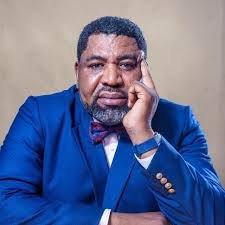
“Obi’s choice materially understandable but morally questionable” a renowned essayist and public affairs analyst, Professor Anthony Kila, has described the political choices of former Labour Party presidential candidate Peter Obi as “materially understandable but morally questionable,” while warning of what he termed the growing fragility of Nigeria’s democratic system.
Speaking at the Cambridge African Round Table (CARt)—an international platform that brings together analysts, corporate and public leaders, diplomats, and scholars—Kila noted that Obi’s decision to seek a viable political platform aligns with practical political realities.
“As a politician seeking to be on the ballot, he needs a viable platform to ensure he can run for office,” Kila said, describing the move as materially justified.
However, he cautioned against what he described as a troubling moral posture in Nigerian politics.
“The idea of saying ‘me or nobody else can save Nigeria’ is morally wrong,” he stated. “It casts Peter Obi—and indeed any politician, whether Atiku, Amaechi, or others—as more self-serving than willing to serve the country.”
Kila, a Professor of Strategy and Development, also turned his attention to the opposition landscape, noting that the African Democratic Congress (ADC) had an opportunity to reshape Nigeria’s political culture but seemed to be falling short.
According to him, the party could have provided a new model of leadership rooted in inclusion and collective purpose.
“The ADC had the chance to redefine leadership and offer Nigeria a collective and inclusive model,” he said. “A platform built on agreed programmes, where all capable aspirants have clear roles and opportunities to serve, and where whoever flies the flag represents the collective strength of the group.” He added pointedly, “Clearly, the APC of 2014 is doing better than today’s opposition.”
ALSO : Jim Ovia retires as Zenith Bank chairman after 12-year tenure
Beyond individual political actors, Kila expressed deep concern about the broader health of Nigeria’s democracy, warning that its institutional foundations are becoming increasingly vulnerable.
“There is a risk to democracy if entire political parties can be easily derailed by court cases instituted by individuals who do not get their way,” he said.
He emphasised the importance of political parties as pillars of democratic governance.
“Political parties are essential components of a liberal democracy. If we do not consciously protect them, then democracy itself is at risk,” Kila warned.
Kila concluded by framing the current political moment as a test of leadership for Nigeria’s opposition and the political class at large. He also called on the ruling party to do all it can to ensure it is not perceived as the invisible hand behind the travails of opposition parties in the country.
“There is a leadership test for the opposition, and the Nigerian political class seems to be doing badly overall,” he said.
His remarks come amid ongoing political realignments and debates over party structures, leadership models, and the future of Nigeria’s democratic system.